A cyclic engine exchanges heat with two reservoirs maintained atand 300°C respectively. The maximum work (in J) that can be obtained fromJ of heat extracted from the hot reservoir is
-
349 -
651 -
667 -
1000
Specific heat of a gas for a reversible adiabatic process is
-
negative -
zero -
infinity -
none of these
Isentropic process means a constant __________ process.
-
enthalpy -
pressure -
entropy . -
none of these
What is the ratio of adiabatic compressibility to isothermal compressibility ?
-
1 -
< 1 -
> 1 -
>> 1
A cyclic engine exchanges heat with two reservoirs maintained atand 300°C respectively. The maximum work (in J) that can be obtained fromJ of heat extracted from the hot reservoir is
-
349 -
651 -
667 -
1000
In the equation, PVn = Constant, if the value of n =then it represents a reversible __________ process.
-
isobaric -
isothermal -
isentropic -
isometric
At constant temperature and pressure, for one mole of a pure substance, the ratio of the free energy to the chemical potential is
-
zero -
one -
infinity -
negative
While dissolving a gas into a liquid at a constant temperature, the ratio of the concentration of the gas in the solution phase and in the gaseous phase is
-
infinity -
unity -
constant -
negative
In polytropic process (PVn = constant), if n =it means a/an __________ process.
-
adiabatic -
reversible -
isothermal -
none of these
The absolute entropy for all crystalline substances at absolute zero temperature is
-
zero -
negative -
more than zero -
indeterminate
Enthalpy of a gas depends upon its
-
temperature -
mass -
volume -
pressure
The change in __________ is equal to the reversible work for compression in steady state flow process under isothermal condition.
-
internal energy -
enthalpy -
Gibbs free energy -
Helmholtz free energy
Which of the following units is not present in both the vapor compression refrigeration system and absorption refrigeration system ?
-
Expansion valve -
Condenser -
Refrigerator -
Compressor
Charles' law for gases states that
-
 = Constant
 -

-

-
 = Constant
What is the value of maximum COP in case of absorption refrigeration, if refrigeration provided is at temperature, TR(where, T1 and T2 are source & surrounding temperatures respectively.)?
-
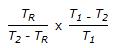
-
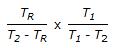
-
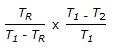
-
none of these
For an isothermal reversible compression of an ideal gas
-
only ΔE = 0 -
only ΔH =0 -
ΔE = ΔH = 0 -
dQ = dE
dW and dq are not the exact differential, because q and W are
-
state functions -
path functions -
intensive properties -
extensive properties
The absolute entropy for all crystalline substances at absolute zero temperature is
-
zero -
negative -
more than zero -
indeterminate
In the equation, PVn = Constant, if the value of n =then it represents a reversible __________ process.
-
isobaric -
isothermal -
isentropic -
isometric
What is the value of maximum COP in case of absorption refrigeration, if refrigeration provided is at temperature, TR(where, T1 and T2 are source & surrounding temperatures respectively.)?
-
-
-
-
none of these
A cyclic engine exchanges heat with two reservoirs maintained atand 300°C respectively. The maximum work (in J) that can be obtained fromJ of heat extracted from the hot reservoir is
-
349 -
651 -
667 -
1000
Work done is a
-
property of the system -
path function -
point function -
state description of a system
The heat capacities for the ideal gas state depend upon the
-
pressure -
temperature -
both (a) & (b) -
neither (a) nor (b)
In an isothermal process on an ideal gas, the pressure increases by 0.5 percent. The volume decreases by about __________ percent.
-
0.25 -
0.5 -
0.75 -
1
Near their critical temperatures, all gases occupy volumes __________ that of the ideal gas.
-
less than -
same as -
more than -
half
Translational kinetic energy of molecules of an ideal gas is proportional to (where, T = absolute temperature of the gas )
-
T -
T -
T2 -
1/T
In an adiabatic process, the
-
heat transfer is zero. -
temperature change is zero. -
work done is a path function. -
enthalpy remains constant.
For a single component two phase mixture, the number of independent variable properties are
-
two -
one -
zero -
three
Entropy of the system decreases, when
-
snow melts into water. -
a gas expands spontaneously from high pressure to low pressure. -
water is converted into ice. -
both (b) & (c).
Which of the following will increase the volume of a real gas by four times ?
-
Doubling the absolute temperature as well as pressure of the gas. -
Reducing pressure to one fourth at constant temperature. -
Reducing temperature to one fourth at constant pressure. -
Reducing the temperature to half and doubling the pressure.
Which of the following is not a unit of the equilibrium constant Kp? (where, Δx = number of moles of products number of moles of reactants)
-
(atm)Δx, when Δx is negative -
(atm)Δx, when Δx is positive -
Dimensionless, when Δx = 0 -
(atm)Δx2, when Δx > 0
The free energy change for a chemical reaction is given by (where, K = equilibrium constant)
-
RT lnK -
-RT lnK -
-R lnK -
T lnK
Equation which relates pressure, volume and temperature of a gas is called the
-
equation of state -
Gibbs Duhem equation -
ideal gas equation -
none of these
A nozzle is a device, which
-
increases kinetic energy and decreases pressure. -
reduces kinetic energy and increases pressure. -
reduces both kinetic energy and pressure. -
increases both kinetic energy and pressure.
__________ law of thermodynamics ascertains the direction of a particular spontaneous process.
-
Zeroth -
First -
Second -
Third
Extensive properties of a thermodynamic system depend upon the __________ of the system.
-
specific volume -
temperature -
mass -
pressure
Pick out the wrong statement.
-
A refriferation cycle violates the second law of thermadynamics. -
Refrigeration cycle is normally represented by a temperature vs. entropy plot. -
In a refrigerator, work required decreases as the temperature of the refrigerator and the temperature at which heat is rejected increases. -
One ton of refrigeration is equivalent to the rate of heat absorption equal to 3.53 kW.
Pick out the correct statement.
-
The available energy in an isolated system for all irreversible (real) processes decreases. -
The efficiency of a Carnot engine increases, if the sink temperature is decreased. -
The reversible work for compression in non-flow process under isothermal condition is the change in Helmholtz free energy. -
all (a), (b) and (c)
Free energy, fugacity and activity co-efficient are all affected by change in the temperature. The fugacity co-efficient of a gas at constant pressure ____with the increase of reduced temperature.
-
decreases -
increases -
remains constant -
decreases logarithmically
Claussius-Clayperon equation gives accurate result, when the
-
vapour pressure is relatively low and the temperature does not vary over wide limits. -
vapour obeys the ideal gas law and the latent heat of vaporisation is constant. -
volume in the liquid state is negligible compared with that in the vapour state. -
all (a), (b) and (c).
The temperature at which a real gas obeys the ideal gas laws over a wide range of pressure is called __________ temperature.
-
Boyle -
inversion -
critical -
reduced
Duringthe phase transition, __________ changes.
-
pressure -
volume -
temperature -
all (a), (b) and (c)
At normal boiling point, molar entropy of vaporisation is __________ Joule/K°.mole.
-
72 -
92 -
142 -
192
The equation Tds = dE - PdV applies to
-
single phase fluid of varying composition. -
single phase fluid of constant composition. -
open as well as closed systems. -
both (b) and (c)
The equation, PV = nRT, is best obeyed by gases at
-
low pressure & high temperature. -
high pressure & low temperature. -
low pressure & low temperature. -
none of these.
Partial molal quantities are important in the study of
-
ideal gases -
ideal solutions -
non-ideal mixtures -
a pure component
What is the number of degrees of freedom for liquid water in equilibrium with a mixture of nitrogen and water vapor ?
-
2 -
0 -
3 -
1
The expression for entropy change, ΔS = n Cp . ln (T2/T1), is valid for the __________ of a substance.
-
simultaneous pressure & temperature change -
heating -
cooling -
both (b) and (c)
The work done in an adiabatic change in a particular gas depends upon changes in the __________ only.
-
temperature -
specific heat -
volume -
pressure
For an ideal solution, the value of activity co-efficient is
-
0 -
1 -
< 1 -
> 1