MCQGeeks
CBSE
JEE
NTSE
NEET
English
UK Quiz
Quiz
Driving Test
Practice
Games
Driving Test
Alaska
Alaska Motorcycle Driving Permit Test-10
Answers
Q.1.
If you must brake and swerve to avoid a hazard, you should:
Do one, then the other.
Do both at the same time.
Always apply the brakes first, then swerve.
Try instead to use only the brakes.
Q.2.
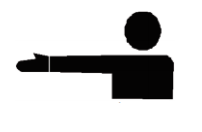
What does this hand signal mean?
Slow or stop
Left turn
Right turn
Backing up
Q.3.
Motorcycle riders should not rely on their mirrors to see what’s going on around them because:
Motorcycle mirrors are smaller than the mirrors on other vehicles, so you can't see as much.
Motorcycles, like cars, have blind spots.
Mirrors are never accurate.
Mirrors take your eyes off the road in front of you and they should not be used.
Q.4.
When riding near stopped or slow-moving cars, a motorcyclist should:
Pull over and wait until traffic begins to move.
Ride on the shoulder to get through the area as quickly as possible.
Weave between the cars to get through the area as quickly as possible.
Not weave between the cars.
Q.5.
When packing a load on a motorcycle:
The heavier items should go toward the front.
The heavier items should go toward the rear.
Mounting loads behind the rear axle is recommended.
Lighter items should be stored in front of you.
Q.6.
When passing another vehicle:
You must complete the pass without exceeding the speed limit.
You may complete the pass in a no passing zone if the pass was started before the no passing zone began.
You may exceed the speed limit.
You should pass on the shoulder.
Q.7.
When braking, you should use:
The front brake only.
The rear brake only.
Both front and rear brakes.
Either the front or rear brake, but not both.
Q.8.
If you think stopping your motorcycle will take longer than usual, you should:
Lengthen your following distance.
Shorten your following distance.
Leave the road.
Speed up.
Q.9.
When you are stopped, you:
Should remain in first gear.
Should remain in neutral.
Should remain in fifth gear.
Can remain in any gear.
Q.10.
Fatigue can be increased by:
Stopping frequently.
Riding in cool weather.
Being comfortable during your ride.
Starting a ride late in the day.
Q.11.
Impairment from alcohol:
Begins with the first drink.
Begins at about half of the legal limit.
Occurs at the legal limit.
Occurs only if you have had multiple drinks.
Q.12.
To carry a passenger, your motorcycle must have all of the following, except:
A seat large enough for two people.
A set of foot pegs for a passenger.
Properly adjusted lights, mirrors, and tires.
A small sign on the back stating that a passenger is riding.
Q.13.
In hot weather, wearing a riding jacket:
Can help protect against heat exhaustion and dehydration.
Is discouraged because it can cause heat-related problems.
Should only be done if the jacket is a light color.
Is not important.
Q.14.
Mirror checks:
Are unimportant.
Should only be done on long trips.
Should be part of your normal scanning routine.
Are not helpful since you can’t do anything about what is behind you.
Q.15.
When choosing clothes for riding, which of the following is not a good choice?
A jacket and pants that cover your arms and legs completely
Boots or shoes that cover your ankles
Gloves made of leather
A baseball cap to cover your hair
Q.16.
You should use a larger cushion of space:
When roads are slippery.
When it is sunny outside.
When it is colder than usual.
When you are following other motorcycles.
Q.17.
When conducting a pre-ride check, be sure that:
The brakes make a loud squeaking noise.
The brakes cause some friction with the steering.
Each brake can hold the motorcycle.
Only the rear brake can hold the motorcycle.
Q.18.
When selecting a helmet, make sure it is all of the following, except:
Designed to meet U.S. Department of Transportation standards.
Snug.
Defect-free.
Attractive.
Q.19.
To adjust for added weight when riding with a passenger, you should:
Operate at a slower speed than usual.
Maintain a shorter following distance that you would if riding without a passenger.
Operate at a faster speed than usual.
Brake a little later than you would if riding without a passenger.
Q.20.
When riding with a passenger, the operator should:
Maintain a longer following distance.
Increase their speed.
Deflate the tires to accommodate the extra weight.
Not warn passengers of impending hazards.
Q.21.
Wearing which of the following colors can help you be seen by other drivers?
Black
Brown
Blue
Orange
Q.22.
Engine braking:
Is illegal.
Is slowing down by turning the engine off.
Is slowing down by downshifting.
Is not encouraged because of the damage it does to the engine.
Q.23.
When riding at night, how should your following distance compare to your following distance during the day?
You should allow a longer following distance when following another vehicle at night.
You should allow a shorter following distance when following another vehicle at night.
You should always maintain the same following distance regardless of the time of day.
Following distance really doesn’t matter.
Q.24.
When entering a curve, a group should:
Ride in a single-file formation.
Ride in a staggered formation.
Ride in pairs.
Ride on the shoulder.
Q.25.
When riding in a group, the best riding formation is generally:
Pairs.
A staggered formation.
A single-file line.
A pyramid formation.
Support mcqgeeks.com by disabling your adblocker.
×
Please disable the adBlock and continue.
Thank you.
Reload page