MCQGeeks
CBSE
JEE
NTSE
NEET
English
UK Quiz
Quiz
Driving Test
Practice
Games
Driving Test
Arizona
Arizona Car Driving Permit Test-3
Answers
Q.1.
You should signal continuously while turning because it:
Is illegal to turn off your signal before completing a turn.
Lets other drivers know what your intentions are.
Is always unsafe to turn off a signal before completing a turn.
Q.2.
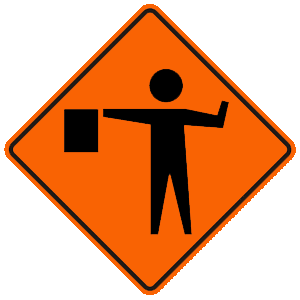
This sign tells a driver that:
A construction flagger is ahead.
A police officer is ahead.
A parking attendant is ahead.
Q.3.
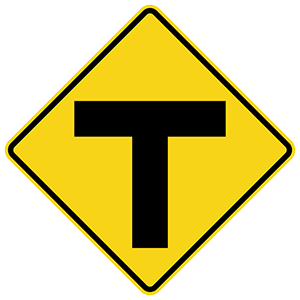
This sign shows one type of:
Right turn.
Intersection.
Lane change.
Q.4.
If you come upon a severe dust storm, you should:
Slow and pull off the road.
Turn on your high beams.
Maintain your speed and stay in your lane.
Q.5.
Which of the following statements about blind spots is true?
Blind spots are eliminated if you have one outside mirror.
Large trucks have bigger blind spots than most passenger vehicles.
Blind spots can be checked by looking in your rearview mirror.
Q.6.
A driver entering freeway traffic from an entrance or acceleration ramp:
Has the right-of-way.
Should yield to drivers already on the interstate.
May force their way into traffic.
Q.7.
If pedestrians are illegally crossing in the middle of the street instead of in a crosswalk, you:
Must stop for them.
Do not have to stop for them.
Should honk your horn at them.
Q.8.
When entering a roadway from an alley:
Stop at the sidewalk.
Honk your horn.
The speed limit is 15 mph.
Q.9.
If you want to enter the freeway but you don't see a gap in traffic, you should:
Maintain your speed and force the other drivers to create a gap.
Slow down on the ramp to wait for a gap.
Stop at the end of the ramp to wait for a gap.
Q.10.
You should not use your horn:
When visibility ahead is limited.
If you might hit another vehicle.
Near blind pedestrians.
Q.11.
You are driving behind a motorcycle and want to pass. You must:
Stay in the right lane as much as possible because the motorcycle is small and doesn't use all of the lane.
Blow your horn to make the motorcycle move onto the shoulder so that you can pass.
Have your vehicle entirely in the left lane before and during the pass.
Q.12.
You have allowed the wheels of your vehicle to run off the edge of the pavement. What should you do first?
Turn the front wheels slightly to the left to edge the car back onto the pavement.
Hold the steering wheel firmly, release the gas pedal, and gently apply the brakes.
Apply the brakes and turn the front wheels sharply to the left.
Q.13.
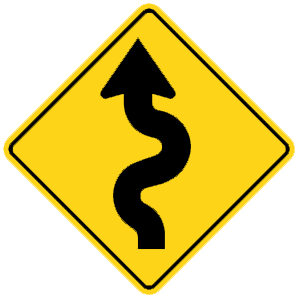
This sign indicates that the road ahead:
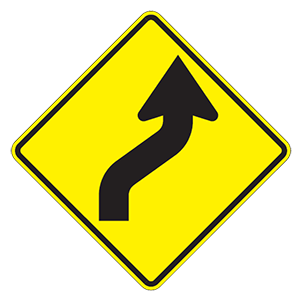
Turns sharply right, then left.
Curves right, then left.
Curves right.
Q.14.
If your car becomes disabled while on the highway, you should:
Stop in the right lane.
Park with all four wheels off the traveled highway, if possible.
Stop where you are.
Q.15.
Which of the following road surfaces freezes first?
A tunnel
An intersection
A bridge
Q.16.
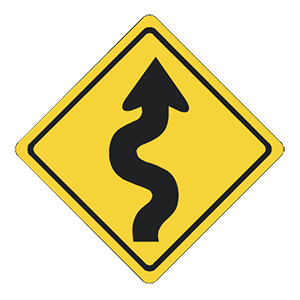
This sign tells you that:
No turns are allowed on the road.
The road narrows ahead.
There is a series of curves ahead.
Q.17.
This sign means:
Winding road ahead.
Do not enter.
Pedestrian crossing.
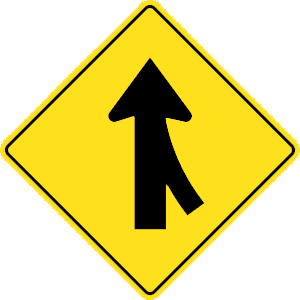
Q.18.
This yellow sign means:
One lane ahead.
Merging traffic ahead.
Lane ends ahead.
Q.19.
When entering a main roadway from a private road, drivers:
Have the right-of-way.
Should yield to traffic already on the road.
Should honk at other drivers to get them to move more quickly.
Q.20.
When merging onto the freeway, you should be driving:
At or near the speed of the freeway traffic.
At the legal speed limit.
More slowly than the freeway traffic.
Q.21.
If your vehicle begins to skid, you should:
Ease up on the gas pedal.
Brake as hard as possible.
Turn off the ignition.
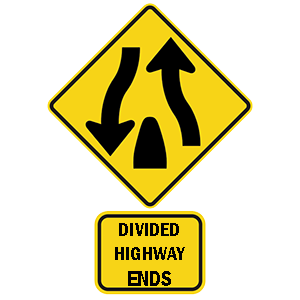
Q.22.
This sign means:
Curves ahead.
Divided highway starts.
Divided highway ends.
Q.23.
The maximum posted speed limit should be driven only:
During the night.
During the day.
Under ideal conditions.
Q.24.
A broken yellow line down the center of a road indicates that:
A construction zone is ahead.
Passing is not permitted from either direction.
Passing is permitted from either direction.
Q.25.
You are driving on the freeway. The vehicle in front of you is a large truck. You should drive:
Closely behind the truck in bad weather because the driver can see farther ahead than you can.
Farther behind the truck than you would when following a passenger vehicle.
No more than one car length behind the truck so the driver can see you.
Q.26.
When should drivers adjust their mirrors, seats, and steering wheels?
Before turning on their vehicles.
While backing out of their driveways.
Before reaching speeds of 55 mph or above.
Q.27.
Drivers turning left must yield to:
Overtaking cars.
Oncoming cars.
No one.
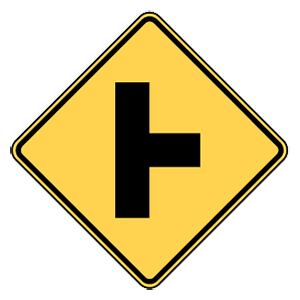
Q.28.
This road sign means:
All traffic must turn right.
All traffic must go straight.
A side road intersects ahead.
Q.29.
If you are driving and you see animals standing near the roadway:
Speed up to scare them away.
Slow down and proceed with caution.
Quickly swerve into the next lane.
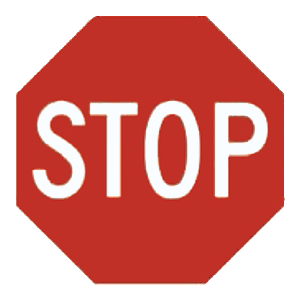
Q.30.
This road sign means:
Drive with caution and be ready to stop.
You must come to a complete stop.
Stop, if necessary.
Support mcqgeeks.com by disabling your adblocker.
×
Please disable the adBlock and continue.
Thank you.
Reload page