MCQGeeks
CBSE
JEE
NTSE
NEET
English
UK Quiz
Quiz
Driving Test
Practice
Games
Driving Test
Arizona
Arizona Car Driving Permit Test-5
Answers
Q.1.
If you see a pedestrian using a guide dog or carrying a white cane:
The pedestrian must yield the right-of-way.
You must yield the right-of-way.
Honk your horn to let them know you are there.
Q.2.
When taking any medicine, you should:
Consult your doctor about the effects before driving.
Have someone follow you home.
Keep your window open and drive more slowly.
Q.3.
If you parallel park facing downward on a hill:
Turn your wheels sharply toward the side of the road.
Turn your wheels away from the side of the road.
Keep your wheels straight.
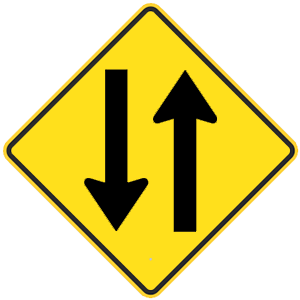
Q.4.
This sign means:
Four-lane traffic ahead.
Divided highway ahead.
Two-way traffic ahead.
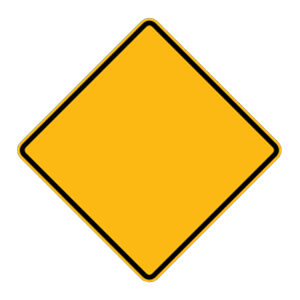
Q.5.
A sign with this shape means:
Railroad crossing.
Warning.
Signal ahead.
Q.6.
Various traffic control devices in construction and maintenance work areas are the color:
Red.
Orange.
Yellow.
Q.7.
You may be able to identify an aggressive driver by:
Their erratic and improper lane changes.
The number of passengers in their car.
Their tendency to drive slowly.
Q.8.
You must notify MVD of an address change within:
10 days.
30 days.
45 days.
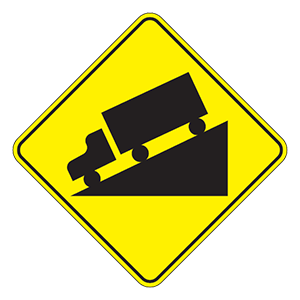
Q.9.
This sign means:
Trucks entering.
Truck exit only.
Steep downgrade ahead.
Q.10.
If a child is riding a bicycle near your vehicle:
Beep your horn.
Expect the child to be in total control of the bicycle.
Expect the unexpected.
Q.11.
When you see an emergency vehicle approaching while using its flashing lights, you must:
Maintain your speed and stay in your lane until the vehicle has passed.
Move into the right lane and drive slowly until the vehicle has passed.
Pull over to the curb or edge of the road and stop until the vehicle has passed.
Q.12.
If you drive more slowly than the flow of traffic, you will most likely:
Interfere with traffic and receive a ticket.
Improve traffic flow.
Demonstrate defensive driving techniques.
Q.13.
This road sign means:
Steep grade ahead.
The road ahead winds with a series of turns or curves.
Slippery when wet.
Q.14.
As the percentage of alcohol (BAC) in your blood increases, you become:
More intoxicated.
More sober.
More coordinated.
Q.15.
The driver ahead of you stops at a crosswalk. What should you do?
Cautiously pass the vehicle at 10 mph or slower.
Stop, proceeding only when all the pedestrians have crossed.
Change lanes, look carefully, and pass the stopped vehicle.
Q.16.
To help others see you when daylight begins to fade, you should use your:
Parking lights.
Low beam headlights.
Emergency flashers.
Q.17.
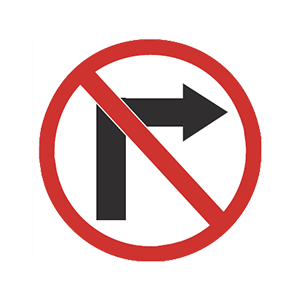
This sign means:
No right turn.
Stop sign ahead.
Divided highway.
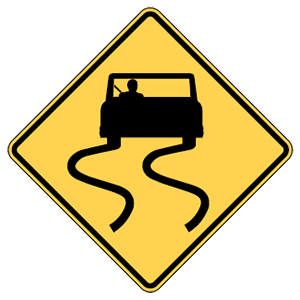
Q.18.
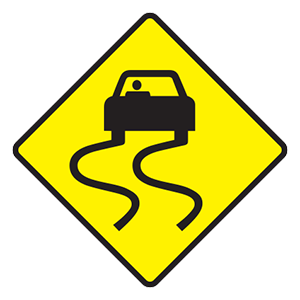
This sign means:
Slow down; curving road ahead.
Slow down and do not use your brakes.
Slow down; slippery when wet.
Q.19.
Tailgating other drivers (driving too closely to their rear bumper):
Can frustrate other drivers and make them angry.
Cannot result in a traffic citation.
Reduces collisions by preventing being "cut off."
Q.20.
Regulatory signs are:
Green.
Yellow.
White.
Q.21.
What is the only medically proven method of removing alcohol or other drug combinations from your system?
Breathe in some fresh air.
Give your body time.
Drink coffee.
Q.22.
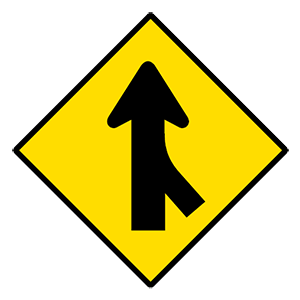
This sign means:
One-way traffic.
Intersection ahead.
Merging traffic from the right.
Q.23.
You should yield to a pedestrian:
Only if they are in a crosswalk.
At all times, even if the pedestrian is not obeying traffic laws.
Only if the traffic lights are in the pedestrian's favor.
Q.24.
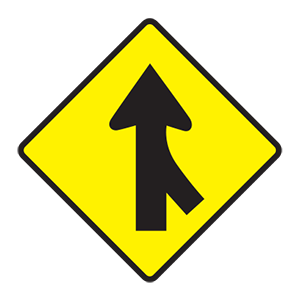
This sign means:
You should stop for other traffic.
Traffic is entering from another road and you should allow additional space for drivers to merge safely into the flow of traffic.
Traffic is entering from another road and you should keep right.
Q.25.
Which of the following substances can affect the ability to drive?
Tranquilizers, marijuana, and sedatives.
Cough syrups and cold tablets containing codeine or antihistamines.
All of the above.
Q.26.
Alcohol in any concentration is:
A stimulant.
A depressant.
Neither of the above.
Q.27.
In inclement weather, you should:
Steer off the road.
Drive in a low gear.
Steer and brake smoothly.
Q.28.
If you must park your vehicle in an area not usually used for parking:
Park with your reverse lights on.
Make sure your vehicle is visible to drivers approaching from any direction.
Park five feet from the curb.
Q.29.
At intersections, crosswalks, and railroad crossings, you should always:
Stop, listen, and proceed cautiously.
Look to the sides of your vehicle to see what is coming.
Slowly pass vehicles that seem to be stopped for no reason.
Q.30.
If bad weather makes it difficult for you to see clearly, you should:
Speed up to get off the road quickly.
Drive in the lane closest to oncoming traffic.
Increase your following distance.
Support mcqgeeks.com by disabling your adblocker.
×
Please disable the adBlock and continue.
Thank you.
Reload page