MCQGeeks
CBSE
JEE
NTSE
NEET
English
UK Quiz
Quiz
Driving Test
Practice
Games
Driving Test
Arkansas
Arkansas Car Driving Permit Test-10
Answers
Q.1.
Drivers may pass another vehicle by using the shoulder of a road:
When the shoulder is paved.
When the other vehicle is waiting to turn left.
Under no circumstances.
Q.2.
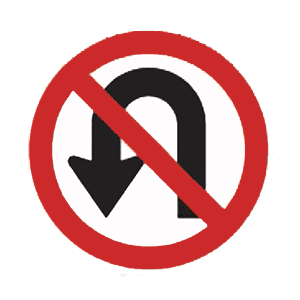
This sign means:
No turns.
No outlet.
No U-turns.
Q.3.
When double solid yellow lines separate lanes of traffic:
Passing is permitted from the left.
Passing is permitted from the right.
Passing is not permitted from either direction.
Q.4.
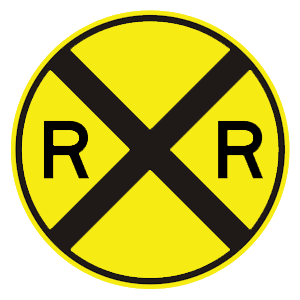
This sign indicates a:
Railroad crossing.
Pedestrian crossing.
No passing zone.
Q.5.
Which of these statements is true about drinking alcohol and driving?
If you can walk in a straight line after drinking, it is safe to drive.
If you are under the legal blood alcohol concentration limit, your driving isn't impaired.
Alcohol affects judgement, which is needed to drive safely.
Q.6.
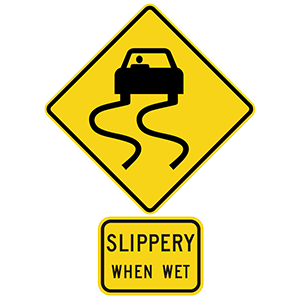
What does this road sign mean?
Winding road
Loose gravel
Slippery when wet
Q.7.
To improve visibility lowered by rain or fog, drivers should use their:
Low beam headlights.
High beam headlights.
Parking lights.
Q.8.
After you have passed a vehicle moving in the same direction, it is safe to move back into the right lane:
After about three seconds.
When you can no longer see the passed vehicle over your right shoulder.
When you can see the entire front of the passed vehicle in your rearview mirror.
Q.9.
Prior to entering a curve:
Activate your turn signal.
Reduce your speed.
Brake hard.
Q.10.
If you refuse to submit to an alcohol test, you:
May lose your license.
Are exercising your right as a motorist.
Will face no negative consequences.
Q.11.
If you are continually being passed on the right and the left while driving in the center lane of an expressway, you should:
Stay in the center lane.
Move to the lane on your right.
Move to the lane on your left.
Q.12.
Reaction time is slower after:
Drinking alcohol.
Sleeping.
Working hard.
Q.13.
What is a crosswalk?
Another name for a four-way intersection.
An area designated for road construction workers.
The area where pedestrians may cross the roadway.
Q.14.
Curbs painted yellow or red indicate:
Free parking areas.
Paid parking areas.
No parking zones.
Q.15.
It is unlawful to:
Pass another vehicle in any marked no passing zone.
Pass another vehicle over a railroad crossing.
Both of the above.
Q.16.
If weather or light conditions require you to have your lights on while driving:
Use your parking lights.
Use your high beams.
Use your low beams.
Q.17.
When should you yield your legal right-of-way?
Often, even at controlled intersections.
Whenever it helps prevent collisions.
Never. It confuses other drivers.
Q.18.
When passing another car, you have enough space to return to the driving lane:
If the other driver signals for you to re-enter the lane.
If you look over your shoulder and see the passed car behind you.
If you can see both of the passed vehicle's headlights in your rearview mirror.
Q.19.
Roads with double solid yellow line markings down the center indicate that passing is:
Allowed from both directions.
Allowed only from your direction of travel.
Not allowed from either direction.
Q.20.
You are approaching a green traffic light and traffic is blocking the intersection. What is the best thing to do?
Partially enter the intersection to establish your right-of-way.
Don't enter the intersection until you can get completely across.
Continue into the intersection and wait for traffic to clear.
Q.21.
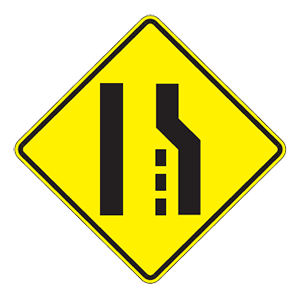
This sign means:
Merge right.
Divided highway begins.
Lane ends.
Q.22.
You are driving on a one-way street. You may only turn left onto another one-way street if:
You increase your speed before the turn.
Traffic on the street moves to the right.
Traffic on the street moves to the left.
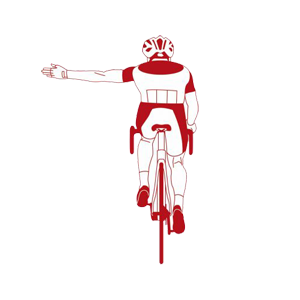
Q.23.
This bicyclist is signaling:
A left turn.
An upcoming stop.
A right turn.
Q.24.
An orange-colored sign like this means:
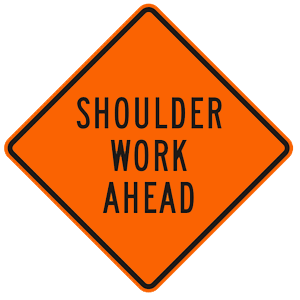
There is roadwork ahead.
You must change lanes ahead.
There is a detour ahead.
Q.25.
Using a cell phone while operating a motor vehicle is considered a distraction because:
It causes the driver to be concerned about the cost of the call.
It occupies the driver's hands, eyes, and mind.
It is an activity that draws the attention of other drivers.
Support mcqgeeks.com by disabling your adblocker.
×
Please disable the adBlock and continue.
Thank you.
Reload page