MCQGeeks
CBSE
JEE
NTSE
NEET
English
UK Quiz
Quiz
Driving Test
Practice
Games
Driving Test
Arkansas
Arkansas Motorcycle Driving Permit Test-10
Answers
Q.1.
When riding in a group, riders should:
All maintain safe following distances.
Follow each other as closely as possible.
Not worry about distances between members.
Q.2.
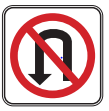
What does this sign mean?
No right turn
No left turn
No U-turn
Q.3.
When riding on a slippery surface, you should:
Not make sudden movements, if possible.
Handle your motorcycle roughly.
Use only your front brake.
Q.4.
When consumed together, the effects of alcohol and drugs:
Are less dangerous than when either is consumed alone.
Often balance out.
Can be more pronounced than when either is consumed alone.
Q.5.
A solid white line on the side of the road indicates:
No parking is permitted.
The right edge of a traffic lane.
Traffic must merge.
Q.6.
The human body removes alcohol at a rate of:
About one drink per hour.
About two drinks per hour.
About three drinks per hour.
Q.7.
The center portion of a lane contains an oily strip. This strip:
Should be avoided at all times.
Usually provides adequate traction for riding, unless it is raining.
Should only be traveled upon if you are sharing the lane with another vehicle.
Q.8.
Which of the following is not a benefit of maintaining a cushion of space between your motorcycle and other vehicles?
You have more time to react to the movements of other drivers.
You have space to maneuver.
You have limited escape route options.
Q.9.
The risk of a head or neck injury is reduced:
By wearing a helmet.
By riding more slowly.
By reading the owner’s manual.
Q.10.
When approaching an intersection, a motorcyclist should not:
Choose a lane position that increases their visibility.
Speed up to cross the intersection quickly.
Cover the clutch and brakes to reduce their reaction time.
Q.11.
When preparing to pass a vehicle on the left, you should ride in which portion of the lane?
The left portion
The center portion
The right portion
Q.12.
Reflective, brightly-colored helmets and clothing:
Should only be worn when riding at night.
Can help motorcycle riders be more visible.
Do not increase a motorcycle rider's safety.
Q.13.
The best clothing for a motorcyclist:
Feels uncomfortable.
Provides protection in a crash.
Should not stand out to other motorists.
Q.14.
When carrying a passenger, a motorcycle responds to directional changes:
More slowly than usual.
More quickly than usual.
Normally.
Q.15.
When riding a motorcycle, you should:
Wear half-fingered gloves.
Wear full-fingered gloves.
Not wear gloves.
Q.16.
When riding ________, you are facing the greatest potential for conflict between you and other vehicles.
On the expressway
Near an intersection
In a group
Q.17.
To avoid confusing other drivers, you should:
Increase your following distance.
Turn off your turn signal after you complete a turn or lane change.
Use your horn only in emergency situations.
Q.18.
Taking over-the-counter medication before riding:
Is usually fine since over-the-counter medications are never very strong.
Is acceptable all the time.
May affect your riding abilities and should be done with caution.
Q.19.
If vehicles are present on both sides of you motorcycle, which lane position is usually the best option?
Left
Right
Center
Q.20.
Of the following, which is not a reason to keep a cushion of space between your motorcycle and the vehicle in front of you?
It allows you more time to respond to hazards.
It prevents you from finding an escape route.
It provides space to maneuver your motorcycle.
Q.21.
Your motorcycle should fit you, meaning:
Your fingertips should barely reach the handlebars when you are seated on the motorcycle.
The seat should be one foot higher than your waist when you are standing next to the motorcycle.
Your feet should comfortably reach the ground when you are seated on the motorcycle.
Q.22.
Passengers should:
Look over their shoulder when taking a turn or curve.
Never hold onto the rider.
Sit as far back as possible.
Q.23.
A pre-ride inspection should include all of the following, except:
A tire check.
A test of the turn signals.
A paint inspection.
Q.24.
The formation you should take when riding in a group:
Is always single-file.
Depends on the situation.
Is always staggered.
Q.25.
To lessen your chances of being involved in a crash, you should do all of the following, except:
Scan your path ahead.
Be ready to act to avoid a hazard.
Turn your headlight off during the day.
Support mcqgeeks.com by disabling your adblocker.
×
Please disable the adBlock and continue.
Thank you.
Reload page