Q.1.
When riding a motorcycle, you should:
Q.2.
When stopping, you should:
Q.3.
Where is the greatest potential for conflict between you and other vehicles?
Q.4.
Usually a good way to handle tailgaters is to:
Q.5.
Noise created by wind:
Q.6.
Which of the following is not a factor in determining a person's blood alcohol content (BAC)?
Q.7.
Increase your following distance if:
Q.8.
When wearing a jacket for protection, the jacket should:
Q.9.
Making eye contact with another driver:
Q.10.
Smaller vehicles appear to be ________ and slower than they really are.
Q.11.
A motorcycle’s horn is ________ a passenger vehicle's horn.
Q.12.
If you must stop quickly, you should:
Q.13.
When entering a curve, you should position your motorcycle:
Q.14.
If bright sunlight makes it difficult for drivers to see a motorcycle's mechanical turn signals, the rider should:
Q.15.
In the center of a traffic lane, there is usually an oily strip. Motorcyclists should:
Q.16.
Which of the following is an example of a potentially slippery surface?
Q.17.
If your rear wheel locks up while you are stopping on a straightaway:
Q.18.
Eye protection:
Q.19.
When riding at night, you should:
Q.20.
Footrests:
Q.21.
If your front wheel locks while you are stopping, you should:
Q.22.
Convex mirrors:
Q.23.
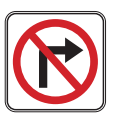
What does this sign mean?
Q.24.
When approaching a blind intersection, you should:
Q.25.
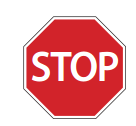
What does this sign mean?