Q.1.
Most motorcycle crashes occur:
Q.2.
To execute a turn safely, a motorcycle rider should always:
Q.3.
Locking your brakes can:
Q.4.
In California, it is illegal for a person under the age of 21 to operate a vehicle with a minimum blood alcohol content (BAC) of:
Q.5.
What does an integrated braking system do?
Q.6.
A plastic, shatter-resistant face shield can protect you from:
Q.7.
Oil drippings and debris often collect in ______ of a lane.
Q.8.
Which brake is more powerful on a motorcycle?
Q.9.
When traveling at night, it is:
Q.10.
When traveling in a group, riders should generally be:
Q.11.
If your rear wheel locks up while you are stopping on a surface with good traction, you should:
Q.12.
If traveling with a load, the load should be:
Q.13.
Helmets are:
Q.14.
When making a non-emergency stop on a motorcycle:
Q.15.
It can be difficult to ride right after it starts raining because:
Q.16.
When riding in a group, mirrors:
Q.17.
After riding over an object on the road, you should:
Q.18.
What can remove alcohol from a person's system?
Q.19.
If you have a passenger aboard your motorcycle, you should do all of the following, except:
Q.20.
Before starting a turn, a motorcyclist should change gears to:
Q.21.
When passing a truck on a two-lane road, you should:
Q.22.
A sign that your rear tire has suddenly gone flat is that:
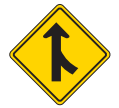
Q.23.
What does this sign mean?
Q.24.
When riding on a slippery surface, you should:
Q.25.
While riding, you should wear:
Q.26.
Having only one alcoholic drink before riding:
Q.27.
When cars are merging from an entrance ramp:
Q.28.
A pre-ride inspection should include all of the following, except:
Q.29.
When looking through a turn, you should:
Q.30.
When choosing a jacket for protection, you should ensure that it: