Q.1.
When wearing a jacket for protection, the jacket should:
Q.2.
To lessen the chances of a crash occurring, you should:
Q.3.
Motorcycles:
Q.4.
When taking a curve while riding in a group, you should be in:
Q.5.
Where is the greatest potential for conflict between you and other vehicles?
Q.6.
How far in advance should a motorcyclist signal a turn?
Q.7.
Long-term exposure to wind noise:
Q.8.
If vehicles or other potential hazards are to your right, you should ride on which side of your lane?
Q.9.
When entering a curve, you should position your motorcycle:
Q.10.
If vehicles are present on both sides of you motorcycle, which lane position is usually the best option?
Q.11.
When riding over grooved pavement in a work zone, you should:
Q.12.
Your lane position should:
Q.13.
As your motorcycle accelerates, you will need to:
Q.14.
You are most likely to get into a collision:
Q.15.
When traveling at night, you should:
Q.16.
If riding during the day, you should wear:
Q.17.
If you are being chased by a dog, you should:
Q.18.
Eye protection:
Q.19.
You should flash your brake light to:
Q.20.
If your front wheel locks while you are stopping, you should:
Q.21.
When parked on the road, a motorcycle should:
Q.22.
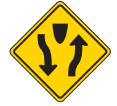
What does this sign mean?
Q.23.
Service signs are:
Q.24.
Unlike other substances, alcohol:
Q.25.
When stopping, you should:
Q.26.
When preparing to pass a vehicle on the left, you should ride in which portion of the lane?
Q.27.
A motorcycle’s horn is ________ a passenger vehicle's horn.
Q.28.
Eye protection is:
Q.29.
A person with a minimum blood alcohol content (BAC) of ____ is considered intoxicated.
Q.30.
Most motorcycle/automobile accidents occur: