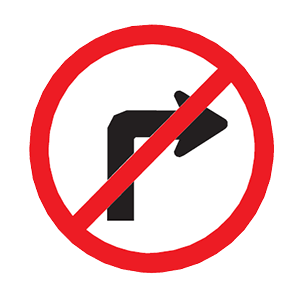
Q.1.
To help avoid skidding on slippery surfaces, you should:
Q.2.
Which of the following are factors commonly contributing to traffic crashes?
Q.3.
Hydroplaning occurs when tires ride on a thin film of water instead of on the road. To prevent hydroplaning in wet weather, you should:
Q.4.
If you are about to be hit from the rear, you should consider each of the following, except for:
Q.5.
If you are driving and the rear end of your car starts skidding to the left, you should:
Q.6.
When passing another vehicle:
Q.7.
Remove all snow, frost, and ice from:
Q.8.
If a tire blows out, you should:
Q.9.
Alcohol is:
Q.10.
Which of the following statements about driving speed is true?
Q.11.
Night driving presents unique problems because:
Q.12.
This road sign means:
Q.13.
If there is no crosswalk and you see a pedestrian crossing your lane, you should:
Q.14.
To pass on a two-lane road, you should:
Q.15.
A solid yellow arrow on a traffic signal means:
Q.16.
If you want to pass a pedestrian who is walking along the roadway and an oncoming vehicle is approaching, you should:
Q.17.
If the driver of an oncoming vehicle fails to dim their headlights:
Q.18.
A broken yellow line between two lanes of traffic means:
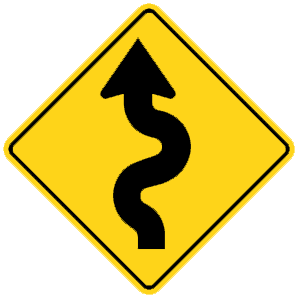
Q.19.
This sign is a warning that you are approaching:
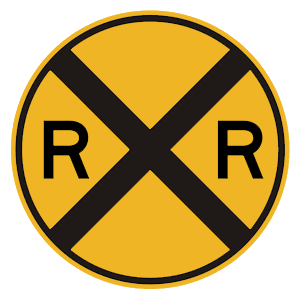
Q.20.
A sign with this shape means:

Q.21.
If you can see that the roadway up ahead is covered by heavy smoke, you should:
Q.22.
What is the only effective way to remove alcohol from the body?
Q.23.
If a motorist sees pedestrians in an upcoming crosswalk, what should the motorist do?
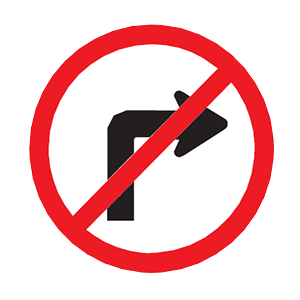
Q.24.
This sign means:
Q.25.
This sign means: