MCQGeeks
CBSE
JEE
NTSE
NEET
English
UK Quiz
Quiz
Driving Test
Practice
Games
Driving Test
Delaware
Delaware Car Driving Permit Test-16
Answers
Q.1.
To be able to turn quickly, your hands must be:
On opposite sides of the steering wheel.
Next to each other on the top of the steering wheel.
On the top and bottom of the steering wheel.
Q.2.
To turn left from a multilane one-way street onto a one-way street, you should start your turn from:
Any lane (as long as it is safe).
The lane closest to the left curb.
The lane in the center of the road.
Q.3.
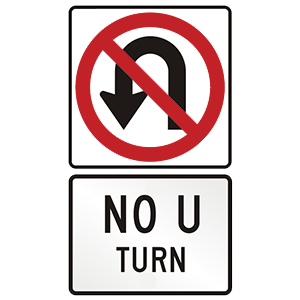
This road sign means:
Do not enter.
No parking.
No U-turn.
Q.4.
When driving under snowy or icy conditions:
It is safe to use your cruise control.
Make speed and directional changes more gradually than you would otherwise.
Drive as you would under normal conditions.
Q.5.
Which of these statements is true about large trucks?
They take longer to stop than passenger vehicles.
They all have air brakes that allow them to stop quickly.
They are more maneuverable than passenger vehicles.
Q.6.
If you parallel park facing downward on a hill:
Turn your wheels sharply toward the side of the road.
Turn your wheels away from the side of the road.
Keep your wheels straight.
Q.7.
Delaware law does not say who has the right-of-way. It says:
Who must yield the right-of-way.
Nothing about the right-of-way.
Right-of-way does not exist.
Q.8.
At an intersection with stop signs on all corners, yield the right-of-way to any driver:
On your left.
Who arrived before you.
Across from your vehicle.
Q.9.
When driving at night, you should:
Always use your high beams.
Look directly at the headlights of an oncoming vehicle.
Increase your following distance.
Q.10.
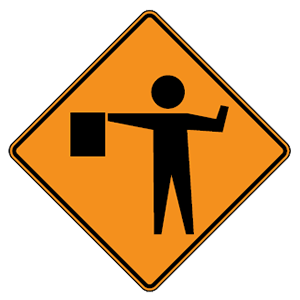
This road sign means:
Flagger ahead.
Turn left at the intersection.
Last turn before a toll road.
Q.11.
You are driving behind a motorcycle and want to pass. You must:
Stay in the right lane as much as possible because the motorcycle is small and doesn't use all of the lane.
Blow your horn to make the motorcycle move onto the shoulder so that you can pass.
Have your vehicle entirely in the left lane before and during the pass.
Q.12.
You reach an intersection with stop signs on all four corners at the same time as the driver on your left. Who has the right-of-way?
The driver on your left has the right-of-way.
You have the right-of-way.
Whoever is signaling to make a turn has the right-of-way.
Q.13.
To know where traffic is behind you:
Frequently check your rearview mirror.
Turn and look out your back window.
Keep other vehicles out of your blind spots.
Q.14.
This sign means:
No left turn can be made here.
A left turn can be made only after stopping.
All traffic must turn right at the next intersection.
Q.15.
If you can see that the roadway up ahead is covered by heavy smoke, you should:
Turn on your four-way flashers and continue.
Reduce your speed, move as far to the right as possible, and stop off the roadway.
Turn on your high beam headlights and continue.
Q.16.
Having a driver license is a:
Right, not a privilege.
Privilege, not a right.
Requirement.
Q.17.
When you approach an octagonal sign, you must:

Slow.
Stop.
Turn.
Q.18.
When driving in a construction zone:
Slightly increase your speed.
Expect the unexpected.
Expect construction workers to yield to motorists.
Q.19.
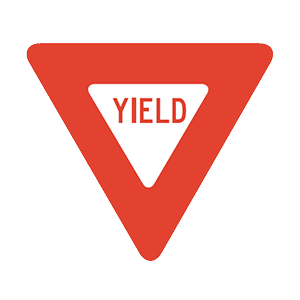
This sign means:
Cars on the right move first.
You have the right-of-way.
Let cross traffic pass before proceeding.
Q.20.
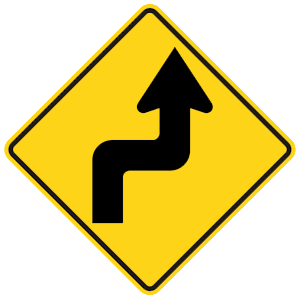
This road sign means:
Sharp right turn ahead.
A road joins from the right.
The road ahead turns sharply right then sharply left.
Q.21.
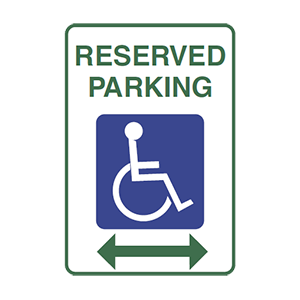
This sign means:
Reserved parking for persons with disabilities.
Slow-moving vehicle.
No U-turn.
Q.22.
Vehicles stopped behind a school bus with its red lights flashing must remain stopped until:
All students are off the bus.
The stop arm is retracted.
The stop arm is retracted and the bus resumes motion.
Q.23.
An orange and red triangular sign on a vehicle always means:
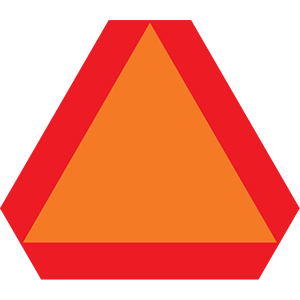
The vehicle has the right-of-way.
Slow-moving vehicle.
Shoulder work ahead.
Q.24.
A driver should:
Assume all drivers automatically obey the right-of-way rules.
Assume most drivers obey the right-of-way rules.
Always be prepared to yield the right-of-way.
Q.25.
If you approach a stopped school bus that has its lights flashing and signal arm extended, you should:
Stop.
Proceed at 15 mph if no children are present.
Proceed at normal speed, but watch for children.
Q.26.
The best thing to do if you become tired while driving is to:
Stop to rest or change drivers.
Drink coffee.
Open a window.
Q.27.
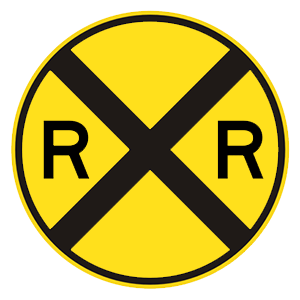
When you see this sign, you:
Are approaching a railroad crossing and should prepare to stop.
Will always stop at the upcoming railroad crossing.
Should stop and wait for a signal before crossing the railroad tracks.
Q.28.
Roads are slippery after it first starts to rain. When the road is slippery, you should:
Avoid making turns and stops while driving at high speeds.
Test your tires' traction while going uphill.
Decrease the distance you look ahead of your vehicle.
Q.29.
A curb painted red means:
Loading zone.
The area is reserved for picking up or dropping off passengers.
No parking, standing, or stopping.
Q.30.
This sign indicates that the road ahead:
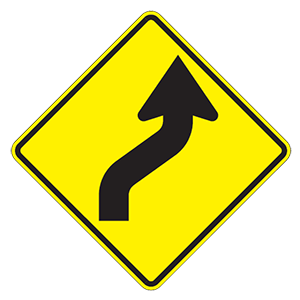
Turns sharply right, then left.
Curves right, then left.
Curves right.
Support mcqgeeks.com by disabling your adblocker.
×
Please disable the adBlock and continue.
Thank you.
Reload page