MCQGeeks
CBSE
JEE
NTSE
NEET
English
UK Quiz
Quiz
Driving Test
Practice
Games
Driving Test
Delaware
Delaware Car Driving Permit Test-19
Answers
Q.1.
This sign means:
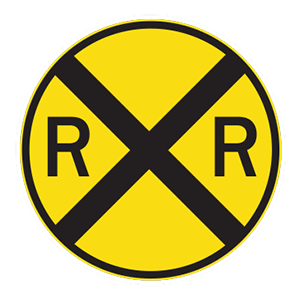
Stop sign ahead.
Railroad crossing ahead.
Construction ahead.
Q.2.
You should allow an extra cushion of space:
When following a station wagon.
When following a driver who cannot see the rear of their vehicle.
When following a small passenger car.
Q.3.
If a motorist sees pedestrians in an upcoming crosswalk, what should the motorist do?
Continue ahead. The motorist has the right-of-way.
Wait for the pedestrians to cross the street.
Pull to the right and go around the pedestrians.
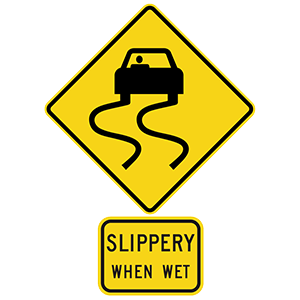
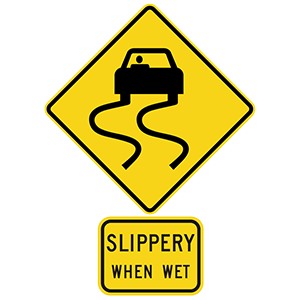
Q.4.
This sign means:
Do not drink and drive.
Slippery when wet.
Road curves ahead.
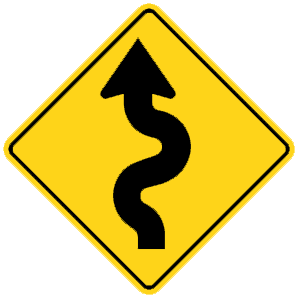
Q.5.
This sign tells you that:
No turns are allowed on the road.
The road narrows ahead.
There is a series of curves ahead.
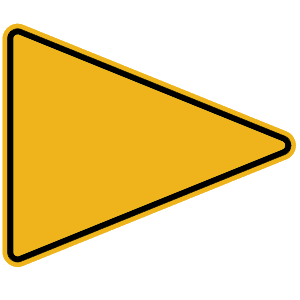
Q.6.
A sign with this shape means:
No passing zone.
Right turn permitted on red.
Yield right-of-way.
Q.7.
If you approach a flashing red traffic light, you:
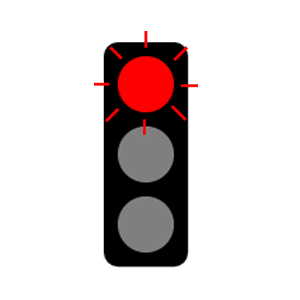
Are traveling in the wrong direction.
Must treat the intersection as if it is controlled by a stop sign.
May not proceed until it changes to green.
Q.8.
In which of the following scenarios should your wheels not be pointed straight ahead?
When waiting to make a left turn at a traffic light.
When parked on a hill or sloping driveway.
When parked on the side of a level roadway where there is no curb.
Q.9.
Use antifreeze washer fluid because:
Cold fluid can scratch your windshield.
Moisture can cause cold wiper blades to crack.
It will keep the washer fluid from freezing.
Q.10.
If your car begins to skid out of control, you should:
Pump the brakes.
Apply the brakes lightly.
Stay off the brakes.
Q.11.
How many alcoholic drinks does it take to affect your driving ability?
Three
Two
One
Q.12.
If you are continually being passed on the right and the left while driving in the center lane of an expressway, you should:
Stay in the center lane.
Move to the lane on your right.
Move to the lane on your left.
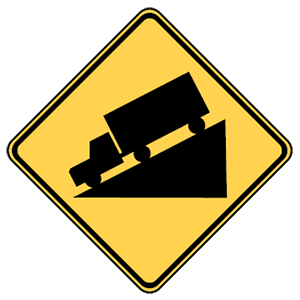
Q.13.
This road sign means:
Intersection ahead.
Merging traffic.
Steep hill ahead.
Q.14.
You want to turn left at an upcoming corner. Yield the right-of-way to:
Oncoming vehicles also turning left.
All approaching vehicles.
Pedestrians on the sidewalk waiting for a "Walk" signal.
Q.15.
To improve visibility lowered by rain or fog, drivers should use their:
Low beam headlights.
High beam headlights.
Parking lights.
Q.16.
This road sign means:
When pavement is wet, reduce your speed.
The road ahead winds in a series of turns or curves.
Traffic increases ahead.
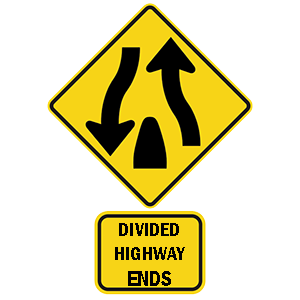
Q.17.
This sign means:
Curves ahead.
Divided highway starts.
Divided highway ends.
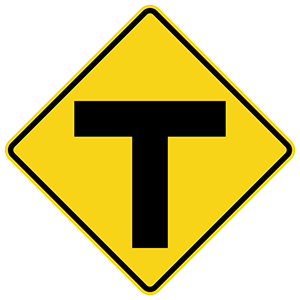
Q.18.
This sign shows one type of:
Right turn.
Intersection.
Lane change.
Q.19.
When approaching a person who is crossing the street while using a white cane or guide dog, you should:
Stop until the person is well away from your path of travel.
Honk your horn as you proceed past them.
Carefully drive around them.
Q.20.
What is the only effective way to remove alcohol from the body?
Drink strong coffee.
Wait.
Take a cold shower.
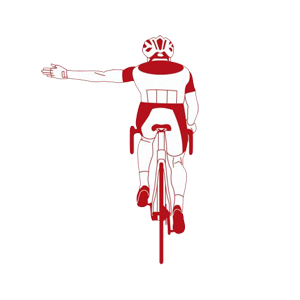
Q.21.
This bicyclist is signaling:
A left turn.
An upcoming stop.
A right turn.
Q.22.
This red and white sign means you should:
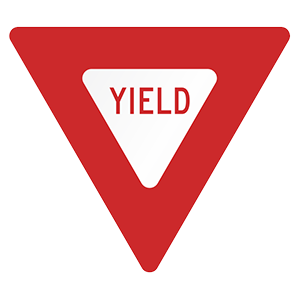
Stop and check for traffic coming from both directions before proceeding.
Give the right-of-way to traffic on the road you wish to enter or cross.
Maintain a steady speed and check for traffic coming from all directions.
Q.23.
Motorcycles, scooters, and mopeds are not easy to see; therefore, you should:
Slow down when driving.
Make constant visual checks.
Share a lane with a motorcycle.
Q.24.
A solid yellow line on your side of the centerline means:
Reduce your speed.
Traffic light ahead.
Do not pass.
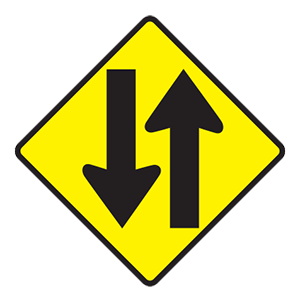
Q.25.
This sign means:
You can travel in either direction in this lane.
There is two-way traffic.
You are approaching a divided highway.
Q.26.
A broken yellow line beside a solid yellow line indicates that:
Passing is permitted from the lane next to the solid yellow line.
Passing is not permitted from either direction.
Passing is permitted from the lane next to the broken yellow line.
Q.27.
If you have a sudden tire blowout:
Use the brakes lightly.
Pump the brakes.
Apply the brakes firmly.
Q.28.
If you are getting tired while driving, you should:
Stop and either get rest or change drivers.
Drink something with caffeine.
Open a window.
Q.29.
You should not use your horn:
When visibility ahead is limited.
If you might hit another vehicle.
Near blind pedestrians.
Q.30.
If a child is about to run into the street, you should:
Start to prepare to slow down.
Flash your headlights.
Sound a sharp blast of your horn.
Support mcqgeeks.com by disabling your adblocker.
×
Please disable the adBlock and continue.
Thank you.
Reload page