MCQGeeks
CBSE
JEE
NTSE
NEET
English
UK Quiz
Quiz
Driving Test
Practice
Games
Driving Test
Delaware
Delaware Car Driving Permit Test-7
Answers
Q.1.
When parking next to a curb, you should use your turn signals:
Only when pulling away from the curb.
When pulling next to, but not away from, the curb.
When pulling next to or away from the curb.
Q.2.
Allow extra space in front of your vehicle when following a:
Station wagon.
Passenger vehicle.
Motorcycle.
Q.3.
When driving at night, you should:
Always use your high beams.
Look directly at the headlights of an oncoming vehicle.
Increase your following distance.
Q.4.
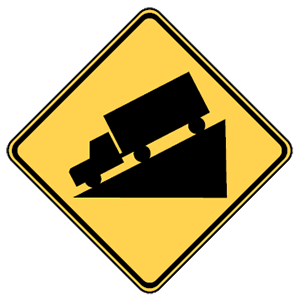
This road sign means:
Intersection ahead.
Merging traffic.
Steep hill ahead.
Q.5.
A U-turn is not permitted:
In a parking lot.
On or near any curve or hill.
On a straight roadway with a clear view for 500 feet in both directions.
Q.6.
Which of the following are factors commonly contributing to traffic crashes?
Exceeding the posted speed limit and driving too fast for conditions or circumstances.
Getting adequate rest and staying alert.
Scanning the environment and staying focused on the driving task.
Q.7.
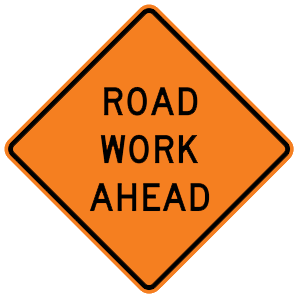
This road sign means:
Watch for people crossing your path.
No passing zone.
Work zone ahead.
Q.8.
You see pedestrians near the road. You should:
Sound your horn and maintain your speed.
Speed up to clear the area quickly.
Slow down and pass with caution.
Q.9.
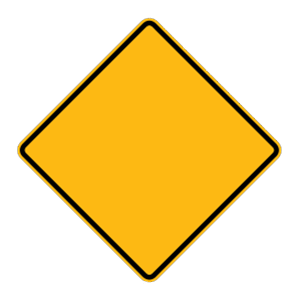
A sign with this shape means:
Railroad crossing.
Warning.
Signal ahead.
Q.10.
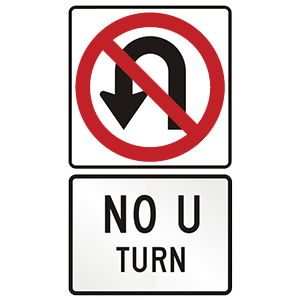
This sign means:
No U-turn.
No turning.
No left turn.
Q.11.
To enter a gap in highway traffic:
Watch only the vehicles behind the gap.
Check behind you, then watch the vehicle ahead.
Speed up and let the other vehicles make way.
Q.12.
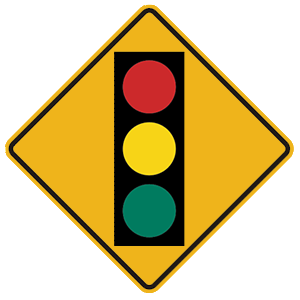
This sign means:
Traffic signal ahead.
Stop.
Yield the right-of-way.
Q.13.
If you have a sudden tire blowout:
Use the brakes lightly.
Pump the brakes.
Apply the brakes firmly.
Q.14.
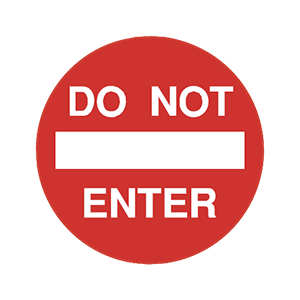
This sign means:
Do not enter.
Yield the right-of-way.
Reserved parking for persons with disabilities.
Q.15.
In inclement weather, you should:
Steer off the road.
Drive in a low gear.
Steer and brake smoothly.
Q.16.
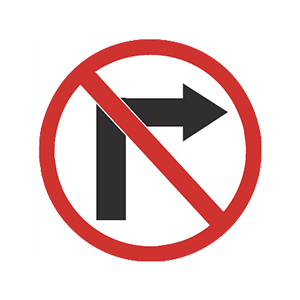
This sign means:
No right turn.
Stop sign ahead.
Divided highway.
Q.17.
Before you enter an intersection, you should look to your:
Left, your right, then your left again.
Right.
Left.
Q.18.
Which of the following road surfaces freezes first?
A tunnel
An intersection
A bridge
Q.19.
If you are driving and the rear end of your car starts skidding to the left, you should:
Steer to the right.
Steer to the left.
Tap your brakes lightly and shift into neutral.
Q.20.
This sign is a warning that you are approaching:
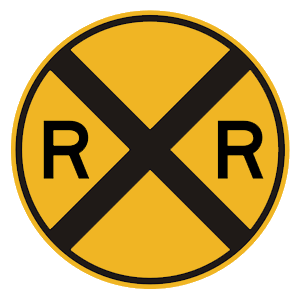
An intersection.
A crosswalk.
A railroad crossing.
Q.21.
Having a driver license is a:
Requirement.
Privilege.
Right.
Q.22.
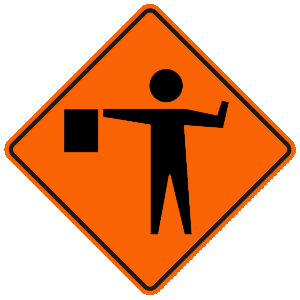
This sign tells a driver that:
A construction flagger is ahead.
A police officer is ahead.
A parking attendant is ahead.
Q.23.
You want to park downhill on a two-way road and there is no curb. Which way do you turn your front wheels?
Straight ahead
Right, toward the side of the road
Left, toward the center of the road
Q.24.
You are driving on the freeway. The vehicle in front of you is a large truck. You should drive:
Closely behind the truck in bad weather because the driver can see farther ahead than you can.
Farther behind the truck than you would when following a passenger vehicle.
No more than one car length behind the truck so the driver can see you.
Q.25.
This road sign means:
You must travel through the intersection at the posted speed limit.
The maximum speed limit under ideal conditions is 55 mph.
You must not travel below the speed indicated.
Q.26.
You have allowed the wheels of your vehicle to run off the edge of the pavement. What should you do first?
Turn the front wheels slightly to the left to edge the car back onto the pavement.
Hold the steering wheel firmly, release the gas pedal, and gently apply the brakes.
Apply the brakes and turn the front wheels sharply to the left.
Q.27.
Where is it safe to pass another vehicle?
Within an intersection where there are no oncoming vehicles
Wherever signs and/or pavement markings permit passing
Within a curve where there are no oncoming vehicles
Q.28.
When you approach an octagonal sign, you must:

Slow.
Stop.
Turn.
Q.29.
When approaching an intersection with a flashing red light, you must:
Come to a complete stop, yield to oncoming traffic and pedestrians, then proceed.
Reduce your speed and proceed with caution.
Come to a complete stop and remain stopped as long as the light is red.
Q.30.
You can help keep the driver behind you a safe distance away from your vehicle by:
Driving 10 mph faster than the car behind you.
Driving 10 mph slower than the car behind you.
Maintaining a steady speed.
Support mcqgeeks.com by disabling your adblocker.
×
Please disable the adBlock and continue.
Thank you.
Reload page