MCQGeeks
CBSE
JEE
NTSE
NEET
English
UK Quiz
Quiz
Driving Test
Practice
Games
Driving Test
Delaware
Delaware Motorcycle Driving Permit Test-2
Answers
Q.1.
To make it easier to be seen by other motorists, you should:
Wear brightly-colored clothing while riding.
Wear darkly-colored clothing while riding.
Wave your arms while riding.
Q.2.
The formation you should take when riding in a group:
Is always single-file.
Depends on the situation.
Is always staggered.
Q.3.
There is the greatest potential for conflict between a motorcycle and other traffic:
On the highway.
At intersections.
On rural roads.
Q.4.
When sitting on a motorcycle, you should:
Use your arms to hold up your body.
Sit at an angle so your arms can support your weight.
Sit so you can use your arms to control the motorcycle.
Q.5.
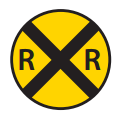
What does this sign mean?
Railroad crossing ahead
Yield
Reduce speed
Q.6.
You should pick a lane position that:
Best increases your visibility and allows for a safe cushion of space.
You like, without regard to others.
Gets you close to other vehicles.
Q.7.
Making eye contact with another driver:
Means that they see you.
Doesn’t mean that they will properly yield to you.
Guarantees that they will properly yield to you.
Q.8.
If a dog is chasing your motorcycle, you should:
Swerve around the dog.
Slow down, let the dog approach, and accelerate away from the animal.
Park and wait for the dog to lose interest.
Q.9.
Which of the following factors may affect the blood alcohol content (BAC) of a person?
The amount of alcohol consumed
The drinker's height
The temperature outside
Q.10.
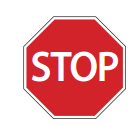
What does this sign mean?
Vehicles will be entering the roadway.
Signal ahead.
Come to a complete stop and proceed when it is safe to do so.
Q.11.
When riding a motorcycle:
The mirrors provide a perfect view.
The mirrors do not show your blind spots.
The mirrors should not be used, except when parking.
Q.12.
What does a solid yellow traffic light mean?

The traffic light is about to change to red.
The traffic light is about to change to green.
Stop and wait for traffic to pass.
Q.13.
As you approach a blind intersection, you should:
Move into the part of the lane that allows other drivers to most easily see you.
Move into the part of the lane closest to the traffic control device.
Move into the outside edge of the lane.
Q.14.
During normal turns:
The motorcycle and rider should lean in the same direction.
The motorcycle and rider should lean in opposite directions.
The motorcycle should not lean.
Q.15.
When choosing a jacket for protection, you should ensure that it:
Fits loosely and flaps in the wind.
Fits snugly enough that it does not flap in the wind.
Is it not made of leather or another sturdy material.
Q.16.
One problem with a motorcyclist riding directly next to another vehicle is that:
The other vehicle may block the motorcyclist's escape route.
The motorcyclist can be easily seen by other drivers.
The motorcyclist may not be able to read signs on the side of the road.
Q.17.
Where should you position your motorcycle when entering a curve?
The outside of the curve
The inside of the curve
Wherever traffic and road conditions require
Q.18.
When carrying a load, it should be:
Secured as high as possible.
Secured as low as possible.
Secured on a sissy bar.
Q.19.
You should flash your brake light to:
Tell other motorists that you are riding near them.
Help other motorists see your motorcycle while traveling in slow traffic.
Tell other motorists that you are going to slow down or stop where they don't expect you to do so.
Q.20.
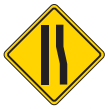
What does this sign mean?
Right lane ends
Left lane ends
Traffic control device ahead
Q.21.
A plastic, shatter-resistant face shield can protect you from:
Noise.
Dust.
Glare.
Q.22.
A person with a minimum blood alcohol content (BAC) of ____ is considered intoxicated.
0.02 percent
0.04 percent
0.08 percent
Q.23.
When stopping, you should:
Use both brakes.
Use the front brake only.
Use the rear brake only.
Q.24.
After riding over an object on the road, you should:
Continue riding because the danger has passed.
Pull to the side of the road and check your tires and rims for damage.
Stop to remove the object from the road.
Q.25.
To swerve correctly, you should:
Shift your weight quickly.
Turn the handlebars quickly.
Press the handgrip in the direction of the turn.
Support mcqgeeks.com by disabling your adblocker.
×
Please disable the adBlock and continue.
Thank you.
Reload page