Q.1.
An engine will seize due to:
Q.2.
When being followed by a tailgater, you should:
Q.3.
How many alcoholic drinks need to be consumed before the drinker's riding ability is affected?
Q.4.
Passengers should:
Q.5.
If you are being passed, you should:
Q.6.
When being passed from behind, which portion of the lane should you ride in?
Q.7.
Which of the following statements is true?
Q.8.
When nearing a blind intersection, you should:
Q.9.
When carrying a passenger, a motorcycle responds to directional changes:
Q.10.
When making a non-emergency stop on a motorcycle:
Q.11.
If using saddlebags to carry a load, you should:
Q.12.
What can remove alcohol from a person's system?
Q.13.
To lessen your chances of being involved in a crash, you should do all of the following, except:
Q.14.
Who is required to wear a helmet on a moving motorcycle?
Q.15.
In general, which position within a lane is the best to ride in?
Q.16.
When entering a curve, you should position your motorcycle:
Q.17.
When traveling at night, you should:
Q.18.
If bright sunlight makes it difficult for drivers to see a motorcycle's mechanical turn signals, the rider should:
Q.19.
Which of the following is not a method used to maintain control of a motorcycle in a turn?
Q.20.
When riding a motorcycle, you should:
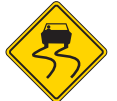
Q.21.
What does this sign mean?
Q.22.
If your rear wheel locks up while you are stopping on a surface with good traction, you should:
Q.23.
Where is the greatest potential for conflict between you and other vehicles?
Q.24.
Under ideal conditions, maintain a following distance of at least:
Q.25.
When other vehicles are slowed or stopped: