Q.1.
When riding a motorcycle, a jacket should be worn:
Q.2.
Making eye contact with other drivers:
Q.3.
When riding with a passenger, you should:
Q.4.
A pre-ride inspection usually takes:
Q.5.
The front brake supplies approximately how much of a motorcycle's potential stopping power?
Q.6.
To lessen your chances of being involved in a crash, you should:
Q.7.
If you must stop quickly in a curve, you should:
Q.8.
Most motorcycles:
Q.9.
The best source of information for your motorcycle is:
Q.10.
When riding behind a car, you should:
Q.11.
How can you regain control if your rear tire locks up?
Q.12.
When approaching an uneven surface, such as a bump or pothole, you should rise slightly off of your seat:
Q.13.
Reflective clothing should:
Q.14.
To adjust for added weight when riding with a passenger, you should:
Q.15.
At a minimum, how often should a motorcycle's hydraulic fluid be checked?
Q.16.
When consumed together, the effects of alcohol and drugs:
Q.17.
If you are riding in the right side of your lane while following a car:
Q.18.
When riding at night, you should do all of the following, except:
Q.19.
When being passed from behind, you should:
Q.20.
If you can’t avoid a dangerously slippery surface, you should:
Q.21.
Use your mirrors when stopped at an intersection:
Q.22.
If you find yourself riding alongside another vehicle, you should:
Q.23.
If your front wheel skids as a result of braking, you should:
Q.24.
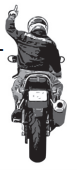
When riding in a group, what does it mean when the lead rider raises their left arm and extends their index finger, as shown in the image?
Q.25.
Which of the following is not considered protective clothing for a motorcyclist?