MCQGeeks
CBSE
JEE
NTSE
NEET
English
UK Quiz
Quiz
Driving Test
Practice
Games
Driving Test
Georgia
Georgia Car Driving Permit Test-11
Answers
Q.1.
You are on the freeway and traffic is merging into your lane. You should:
Make room for the merging traffic, if possible.
Assert your right-of-way by driving faster.
Always maintain your position.
Q.2.
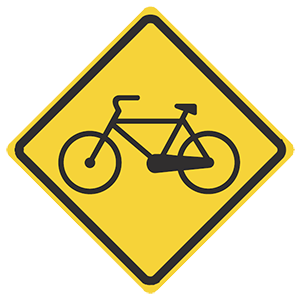
This sign means:
Watch for bicycles.
Bicycles not allowed.
Bicycle repair shop ahead.
Q.3.
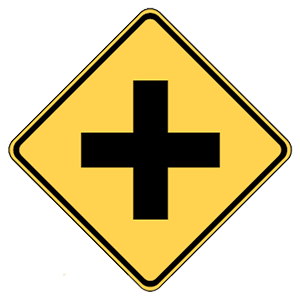
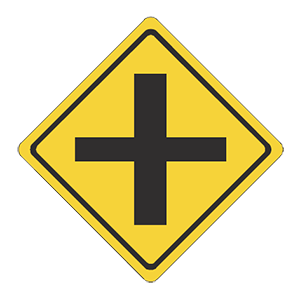
This road sign means:
Hospital.
Upcoming intersection.
Railroad crossing.
Q.4.
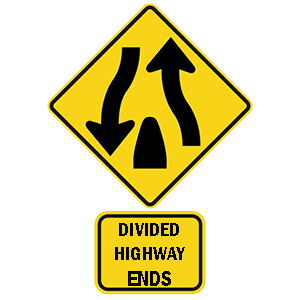
This sign means:
Curves ahead.
Divided highway starts.
Divided highway ends.
Q.5.
Just like alcohol and other drugs, drowsiness can:
Help you to be a better driver.
Make you feel better.
Impair your judgment.
Q.6.
When passing on the left of a vehicle, it is safe to move back into the right lane:
After about three seconds.
When you can no longer see the vehicle over your right shoulder.
When you can see the front of the vehicle in your rearview mirror.
Q.7.
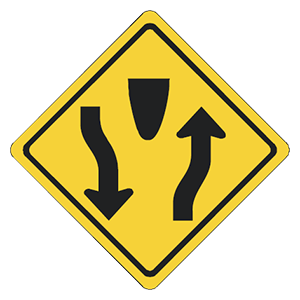
This sign means:
Divided highway.
Railroad warning.
No passing zone.
Q.8.
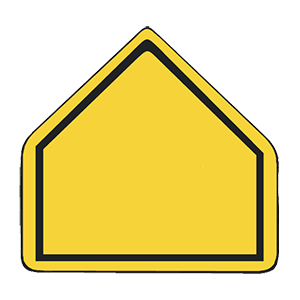
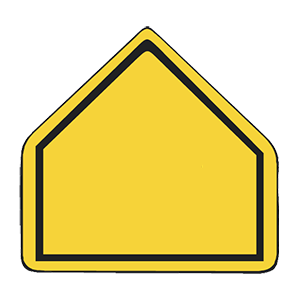
A pentagon-shaped sign is a:
Stop sign.
Regulatory sign.
School zone or school crossing sign.
Q.9.
At intersections, crosswalks, and railroad crossings, you should always:
Stop, listen, and proceed cautiously.
Look to the sides of your vehicle to see what is coming.
Slowly pass vehicles that seem to be stopped for no reason.
Q.10.
When you see this yellow sign, you should:
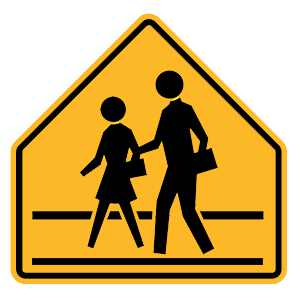
Always stop at the crosswalk.
Stop at the crosswalk until a crossing guards signals for you to go.
Be prepared to stop if children are in the crosswalk.
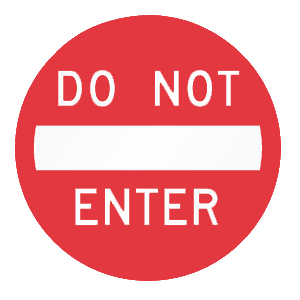
Q.11.
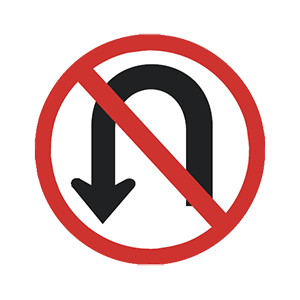
This road sign means:
You are about to enter a one-way street from the wrong direction.
U-turns are prohibited.
You may proceed if the way is clear.
Q.12.
This white sign means you should not pass other vehicles:
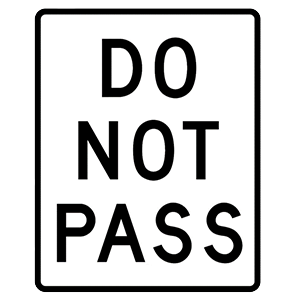
Until after you pass the sign.
Unless it seems safe to do so.
For any reason.
Q.13.
This sign is a:
Service sign.
Regulatory sign.
Warning sign.
Q.14.
If it feels like your tires have lost contact with the surface of the road, you should:
Slow down by shifting into a lower gear.
Ease your foot off the gas pedal.
Slow down by pumping the brakes quickly and firmly.
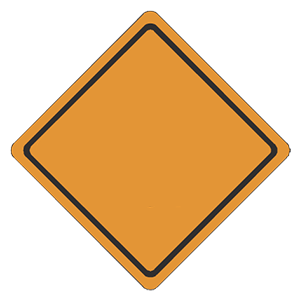
Q.15.
This sign means:
Do not enter.
Stop ahead.
Roadwork or maintenance is present.
Q.16.
Having a driver license is a:
Right, not a privilege.
Privilege, not a right.
Requirement.
Q.17.
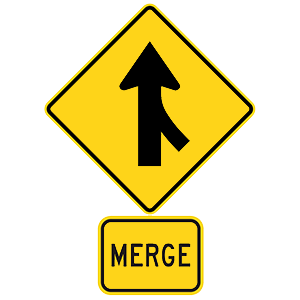
What does this road sign mean?
Be ready to merge with traffic entering your lane.
Always stop.
Divided highway ahead.
Q.18.
This sign means:
School zone or crossing.
Pedestrian crossing.
Railroad ahead.
Q.19.
Broken yellow lines are used on streets and highways to:
Indicate no passing zones.
Separate lanes of traffic moving in the same direction.
Separate lanes of traffic moving in opposite directions.
Q.20.
Tailgating other drivers (driving too closely to their rear bumper):
Can frustrate other drivers and make them angry.
Cannot result in a traffic citation.
Reduces collisions by preventing being "cut off."
Q.21.
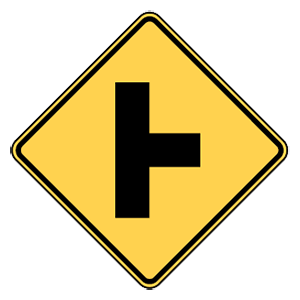
This road sign means:
All traffic must turn right.
All traffic must go straight.
A side road intersects ahead.
Q.22.
To avoid traction loss on wet roads, you should:
Make abrupt turns.
Apply the brakes firmly.
Slow down.
Q.23.
You may pass on the right of another vehicle:
When traveling either on a multilane highway or on a street with an available turning lane.
Only when traveling on a multilane highway with two or more lanes of traffic traveling in the same direction.
Only when the other vehicle is making or is about to make a left turn and a lane is provided for you to pass on the right.
Q.24.
When changing lanes, you should never:
Cross the centerline in an intersection.
Check your blind spots by looking over your left or right shoulder.
Check for other drivers moving into the same lane.
Q.25.
This sign means:
Crossroad ahead.
Merge.
Stop.
Q.26.
Backing your vehicle is:
Always dangerous.
Dangerous if you have a helper.
Only dangerous in large vehicles.
Q.27.
When entering the interstate, check for a gap in traffic in the nearest lane, adjust your speed to match traffic, signal, and:
Expect traffic to allow you to proceed into the lane, since you have the right-of-way.
Merge carefully into the gap.
Wait for the lane to clear before merging.
Q.28.
Yellow lines separate:
Traffic lanes on one-way streets.
Traffic moving in opposite directions on two-way roads.
All carpool lanes from regular traffic lanes.
Q.29.
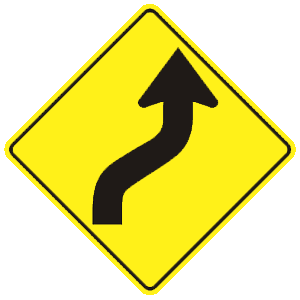
This road sign means:
Road construction ahead.
The road ahead curves left then right.
The road ahead curves right then left.
Q.30.
This sign means:
No U-turn.
Traffic signal ahead.
Railroad ahead.
Q.31.
It is unlawful to:
Pass another vehicle in any marked no passing zone.
Pass another vehicle over a railroad crossing.
Both of the above.
Q.32.
When you are facing a green light and there are pedestrians in the intersection:
You must yield the right-of-way to pedestrians.
You have the right-of-way over pedestrians.
Pedestrians must wait for you to cross.
Q.33.
If the roadway is wet or icy, you should:
Reduce your speed.
Drive at the posted speed.
Speed up.
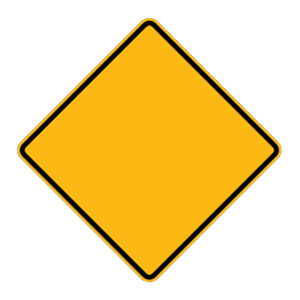
Q.34.
A diamond-shaped sign means:
Yield.
Stop.
Warning.
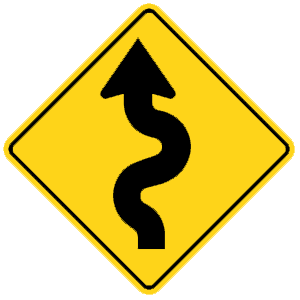
Q.35.
This sign tells you that:
No turns are allowed on the road.
The road narrows ahead.
There is a series of curves ahead.
Q.36.
If there is a deep puddle on the road ahead, you should:
Maintain the posted speed to make it through the water.
Avoid the puddle if possible.
Shift into neutral as you drive through the water.
Q.37.
This sign means:
You should stop for other traffic.
Traffic is entering from another road and you should allow additional space for drivers to merge safely into the flow of traffic.
Traffic is entering from another road and you should keep right.
Q.38.
This road sign means:
School crossing.
Pedestrian crossing.
Jogging trail.
Q.39.
On a freeway, you should look farther ahead than you would on a city street:
In order to see potential hazards early.
Because it takes a quarter of a mile to stop your vehicle completely.
Because it helps you keep up with traffic.
Q.40.
Stopping distances and the severity of collisions:
Decrease as a vehicle's speed increases.
Are not affected by a vehicle's speed.
Increase as a vehicle's speed increases.
Support mcqgeeks.com by disabling your adblocker.
×
Please disable the adBlock and continue.
Thank you.
Reload page