MCQGeeks
CBSE
JEE
NTSE
NEET
English
UK Quiz
Quiz
Driving Test
Practice
Games
Driving Test
Georgia
Georgia Motorcycle Driving Permit Test-6
Answers
Q.1.
When riding a motorcycle, you should:
Wear half-fingered gloves.
Wear full-fingered gloves.
Not wear gloves.
Q.2.
When traveling at night, it is:
Easier to judge distances than it is during the day.
About as easy to judge distances as it is during the day.
More difficult to judge distances than it is during the day.
Q.3.
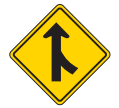
What does this sign mean?
Two-way traffic
Right lane ends
Merge
Q.4.
Whichever style of helmet you choose, you will get the most protection by ensuring that your helmet:
Fits snugly.
Is clean.
Looks cool.
Q.5.
You approach an emergency vehicle that is stopped on the side of the road while using its flashing lights. You should:
Stop on the roadway behind the emergency vehicle.
Stop and wait until the emergency vehicle begins moving again.
Merge into a lane away from the emergency vehicle.
Q.6.
As a rider, you can lessen your chances of being involved in an accident by:
Not looking ahead for hazards.
Refraining from using turn signals, as doing so could distract other drivers.
Being visible to other drivers.
Q.7.
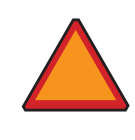
What does this sign mean?
Yield
Slow-moving vehicle
Railroad crossing
Q.8.
When sitting on a motorcycle, your arms should:
Have a large bend at the elbow when reaching for the handle grips.
Be slightly bent when holding the handle grips.
Be fully extended when reaching for the handle grips.
Q.9.
In general, which position within a lane is the best to ride in?
The left position
The right position
There is no single best lane position.
Q.10.
A "wobble," or a sudden shaking of the front wheel and handle bars, can usually be traced to:
Incorrect tire pressure or uneven loading.
Improperly tightening the front wheel to the frame.
Hitting an object with the front tire.
Q.11.
The best way to stay out of trouble while riding a motorcycle is to:
Look well ahead of your motorcycle.
Avoid high-density traffic areas.
Ride at speeds faster than the speed limit.
Q.12.
Most motorcycle crashes occur:
In broad daylight.
At dusk.
At night.
Q.13.
You have an improved chance of surviving a crash if you wear:
A DOT-compliant helmet.
A baseball cap.
Comfortable shoes.
Q.14.
When wearing a jacket for protection, the jacket should:
Be loose-fitting and flap in the wind while riding.
Fit snugly.
Be uncomfortable.
Q.15.
As you consume more alcohol, your ability to safely ride:
Increases.
Stays the same.
Decreases.
Q.16.
While riding, you should wear:
Hearing protection to prevent damage from long-term exposure to engine and wind noise.
A helmet to protect your hearing.
A baseball cap.
Q.17.
The front brake supplies about how much of a motorcycle's potential stopping power?
About one-quarter
About one-half
About three-quarters
Q.18.
When looking through a turn, you should:
Turn your head and shoulders.
Turn just your head.
Turn your head, shoulders, and torso.
Q.19.
If your front wheel locks while you are braking, you should:
Keep the tire locked until your next stop.
Continue squeezing the front brake lever.
Release the front brake and immediately re-apply it.
Q.20.
For motorcycle operators, helmets are:
Required.
Not required, but recommended.
Not recommended.
Support mcqgeeks.com by disabling your adblocker.
×
Please disable the adBlock and continue.
Thank you.
Reload page