MCQGeeks
CBSE
JEE
NTSE
NEET
English
UK Quiz
Quiz
Driving Test
Practice
Games
Driving Test
Hawaii
Hawaii Car Driving Permit Test-10
Answers
Q.1.
This sign means:
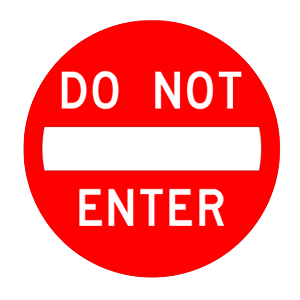
Heavy traffic ahead.
Do not enter.
Railroad crossing.
Yield.
Q.2.
To ensure that your physical condition does not cause you to drive in an unsafe manner, you should:
Keep physically fit and have regular physical examinations.
Know the effect of any medicine on your driving ability.
Drive within your physical limitations.
All of the above.
Q.3.
You are turning onto a two-lane road divided by a broken yellow line. You know immediately that:
You are on a two-way road.
You are on a one-way road.
The road is under repair.
You must stay to the left of the broken yellow lines.
Q.4.
When approaching a railroad crossing warning sign:
Be ready to drive faster than the train.
Be prepared to stop if a train is nearby.
Look for a way around any lowered gates.
Assume no trains are nearby and continue driving normally.
Q.5.
If you change your name, you must notify the county examiner of drivers within:
60 days.
20 days.
10 days.
30 days.
Q.6.
You are coming to a railroad crossing where the crossing signals are flashing. You should:
Stop and look for a train.
Slow down and look for a train.
Look for a train, then speed up.
Do what the vehicle ahead of you does.
Q.7.
When you take a road test for a driver license:
You must provide the vehicle.
The vehicle must be in safe operating condition, free of safety defects.
You must be accompanied to the testing station by a licensed driver.
All of the above.
Q.8.
You may cross solid yellow lines:
To pass traffic moving in the same direction.
During daylight hours only.
At any time.
When making turns.
Q.9.
Signs that are colored orange are:
Work zone signs.
Regulatory signs.
School zone signs.
Guide signs.
Q.10.
This sign means:
Stop.
No U-turn.
Yield.
Do not enter.
Q.11.
Which of the following equipment may you have installed on your private vehicle?
A blue light visible outside of the vehicle
A bell, exhaust whistle, or siren
A muffler cut-out or by-pass
None of the above
Q.12.
When driving in rain, you must:
Use low beam headlights.
Use high beam headlights.
Use parking lights.
Use no lights.
Q.13.
You are borrowing an unfamiliar vehicle from a friend. You should:
Not put too much thought into it because all vehicles are the same.
Hide from your friend that you are unfamiliar with the vehicle.
Disregard any obvious defects to avoid embarrassing your friend.
Take a few minutes before driving to familiarize yourself with the operation and location of all the vehicle’s equipment.
Q.14.
When faced with an oncoming car to the left and a bicyclist to the right, you should:
Pull onto the shoulder.
Split the difference.
Let the car pass and then pass the bike.
Pass the bike quickly.
Q.15.
If you are driving in another driver's blind spot, you should:
Move forward or drop back so the other driver can see you.
Keep a steady pace.
Stay in the driver's blind spot.
Honk to let them know you are there.
Q.16.
When turning or changing lanes, you must:
Always signal your intentions, even when no visible traffic is present.
Signal only if there is visible traffic.
Signal only when driving at night.
Signal only when driving in heavy traffic at night.
Q.17.
A pedestrian starts to cross in front of your vehicle. You should:
Flash your lights.
Slow down.
Speed up and pass in front of the pedestrian.
Stop and let the pedestrian cross.
Q.18.
You must pull over to the edge of the road and allow an emergency vehicle to pass:
Regardless of your direction.
Only if it is following you.
Only if it is approaching you from the opposite direction.
None of the above.
Q.19.
A seat belt should be adjusted so that it:
Is loose.
Is buckled snugly across your hip bones and lower abdomen.
Is hidden beneath the seat.
Keeps the seat belt buzzer or light from operating.
Q.20.
When towing a trailer large enough to obstruct your inside rearview mirror, you are required to:
Have an outside rearview mirror installed on the driver’s side of your vehicle.
Have an outside rearview mirror installed on the side of your vehicle opposite the driver.
Have outside rearview mirrors installed on both sides of your vehicle.
Have a person in the vehicle to clear you for right turns.
Q.21.
To reduce the effects of headlight glare at night, you should look:
Straight ahead.
Over your shoulder.
At the center of the road
To the right edge of the road.
Q.22.
You are approaching a railroad crossing that has no visible gates or flashing lights, but has a standard crossbuck. You should:
Approach all tracks with extreme caution and cross only when you know that there is no train coming.
Turn your radio down to hear if there may be an approaching train.
Only continue once cleared to do so by a flagger, if applicable.
All of the above.
Q.23.
When you see or hear an emergency vehicle coming, you should:
Stop immediately and let the vehicle pass.
Drive as far toward the right side of the road as is safe and stop.
Proceed slowly and permit the vehicle to pass.
Keep moving slowly, staying to the right side of the road.
Q.24.
You are entering a crowded freeway. What should you do to merge into traffic?
Use your side and rearview mirrors and check your blind spots.
Use the acceleration lane to adjust your speed to match the speed of freeway traffic.
Yield to traffic already on the freeway.
All of the above.
Q.25.
You come to an intersection displaying a flashing red light. You should:
Come to a full stop and go when it is safe to do so.
Stop only if other cars are also approaching the intersection.
Stop only if other cars are already within the intersection.
Slow down and be prepared to stop, if necessary.
Q.26.
You are involved in an accident. You should:
Stop immediately.
Help the injured.
Call the police.
All of the above.
Q.27.
When you are being tailgated:
Move over to the right, if there is an open lane to your right.
If there is not an open lane to your right, wait until the way is clear ahead and reduce your speed slowly to encourage the tailgater to drive around you.
Never slow down abruptly.
All of the above.
Q.28.
What color are pavement markings that separate traffic lanes moving in opposite direction?
Yellow
White
Yellow and white
Yellow, white, and black
Q.29.
This sign means:
No right turns.
Right turns are permitted.
Stop before turning right.
Sharp curve ahead.
Q.30.
Which of the following is true regarding seat belts and child restraints in vehicles?
You should never place an infant or small child in the front seat of a vehicle with airbags.
An airbag can be dangerous to an infant or small child, even in a low-speed collision.
You should always make sure all your passengers are using a seat belt or child restraint.
All of the above.
Support mcqgeeks.com by disabling your adblocker.
×
Please disable the adBlock and continue.
Thank you.
Reload page