MCQGeeks
CBSE
JEE
NTSE
NEET
English
UK Quiz
Quiz
Driving Test
Practice
Games
Driving Test
Indiana
Indiana Car Driving Permit Test-10
Answers
Q.1.
This sign means:
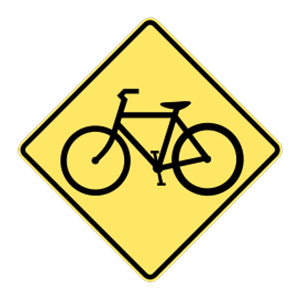
Watch for bicycles.
Bicycles not allowed.
Bicycle repair shop ahead.
Bicycles have the right-of-way.
Q.2.
Activate your turn signal at least ____ before turning.
200 feet
350 feet
120 yards
One mile
Q.3.
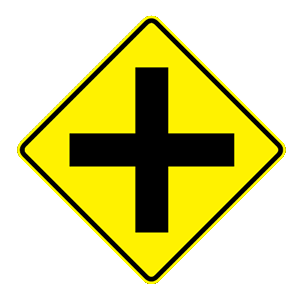
This road sign means:
A steep grade is ahead.
You must turn left ahead.
Do not enter.
A four-way intersection is ahead.
Q.4.
While backing, you should:
Rely only on your mirrors.
Flash your lights.
Open your door to see if it is safe to proceed.
Turn your head and look through the rear window.
Q.5.
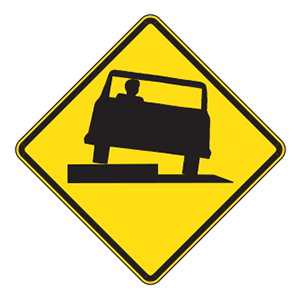
This sign means:
Low shoulder.
Stop ahead.
Tow-away zone.
Buggy warning.
Q.6.
Downward-facing triangular signs:
Indicate school zones.
Tell drivers to yield.
Indicate construction zones.
Indicate railroad crossings.
Q.7.
Lanes of traffic moving in opposite directions are divided by ____ lines.
White
Red
Black
Yellow
Q.8.
If your car breaks down on a highway, you should:
Sit in your car and wait for help.
Use your four-way flashers to warn other drivers.
Sound your horn at passing motorists.
Flash your headlights at oncoming traffic.
Q.9.
Roads become very slippery:
When it has been raining for an hour or more.
The day after it rains.
For the first 10 to 15 minutes of a rainstorm.
Right after the rain has stopped.
Q.10.
Texting while driving is:
Always legal, but not recommended.
Illegal.
A safe activity.
Legal, but only for non-probationary license holders.
Q.11.
This sign is a warning that you are approaching:
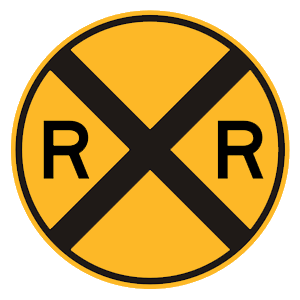
An intersection.
A crosswalk.
A railroad crossing.
A blasting zone.
Q.12.
What color are pavement markings that separate traffic lanes moving in opposite direction?
Yellow
White
Yellow and white
Yellow, white, and black
Q.13.
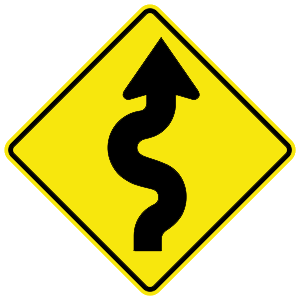
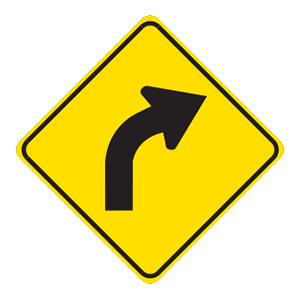
This road sign means:
Sharp turn to the right.
Double curve.
Winding road.
Pavement ends.
Q.14.
When preparing to turn left, drivers should:
Slow down gradually while checking their rearview mirror.
Move into the left lane.
Watch for oncoming vehicles and pedestrians.
All of the above.
Q.15.
If you are driving in another driver's blind spot, you should:
Move forward or drop back so the other driver can see you.
Keep a steady pace.
Stay in the driver's blind spot.
Honk to let them know you are there.
Q.16.
You may avoid the risks of alcohol-related crashes by:
Deciding before you start drinking that you are not going to drive.
Simply saying, "No thanks, I'm driving," if someone offers you a drink.
Calling a taxi.
Doing any of the above.
Q.17.
As you near an intersection, the traffic light changes from green to yellow. Your best action is to:
Speed up to beat the red light.
Apply the brakes sharply to stop.
Be prepared to stop in the center of the intersection.
Be prepared to stop before the intersection.
Q.18.
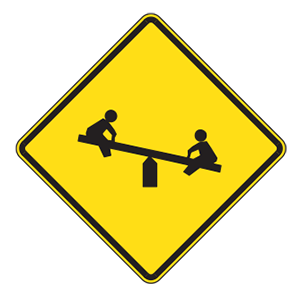
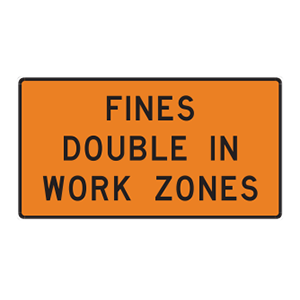
This sign means:
Playground nearby.
Low shoulder.
One-way.
Fines double in work zone.
Q.19.
Anything that requires you to ____ could cause you to crash.
Take your eyes off the road
Take your hands off the wheel
Take your attention away from the task of driving
All of the above
Q.20.
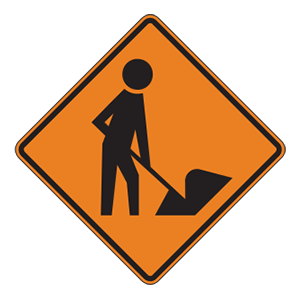
This sign means:
Work crew ahead.
Deer crossing.
Low clearance.
One-way traffic.
Q.21.
When turning or changing lanes, you must:
Always signal your intentions, even when no visible traffic is present.
Signal only if there is visible traffic.
Signal only when driving at night.
Signal only when driving in heavy traffic at night.
Q.22.
You have the right-of-way when turning left on which of the following traffic signals?
A solid green light
A flashing yellow light
A green arrow pointing left
A flashing red light
Q.23.
If a transit vehicle is signaling to re-enter the main roadway following a stop, you must:
Honk to let them know you’re there.
Move to the left lane.
Yield.
Speed up to pass.
Q.24.
Distracted driving is:
Very uncommon.
Extremely risky behavior.
Nothing to be concerned about.
No less safe than driving under any other conditions.
Q.25.
If involved in an accident, a driver should:
Stop their vehicle at or near the scene.
Not stand or walk in traffic lanes.
Turn off the ignitions of wrecked vehicles.
All of the above.
Q.26.
This sign means:
Fines double in work zone.
Flagger ahead.
Bicycle crossing.
Side road.
Q.27.
Smoking and preparing to smoke while driving:
Do not affect driving abilities.
Help maintain driver alertness.
Are distracting activities.
Are not distracting activities.
Q.28.
The driver's left arm and hand are extended downward. This hand signal means that the driver plans to:
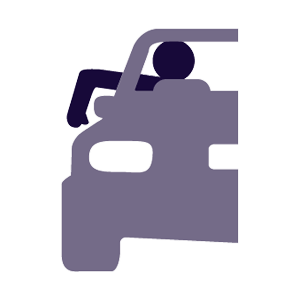
Turn left.
Turn right.
Stop.
Start up.
Q.29.
When driving on an interstate:
Stop on the shoulder of the road if you are tired.
You should always use cruise control.
Signal, check mirrors, and check blind spots before changing lanes.
You should change lanes often.
Q.30.
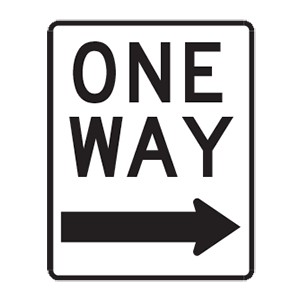
This sign means:
One-way traffic.
Keep right.
Low shoulder.
Yield.
Q.31.
What should you do when you see this sign?
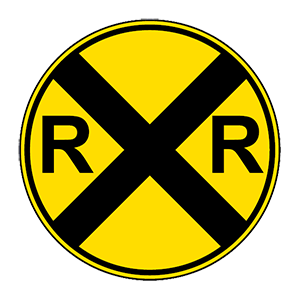
Look for a train station ahead.
Signal before going any further.
Slow down and yield for trains.
Stop.
Q.32.
A fully loaded tractor-trailer traveling atmph could take up to ____ to come to a complete stop.
50 feet
125 feet
400 feet
750 feet
Q.33.
It is important to slow down:
On narrow or winding roads.
At intersections or railroad crossings.
When the road is wet or slippery.
All of the above.
Q.34.
You approach an emergency vehicle that is stopped with its lights flashing. You must:
Slow down. If possible, change lanes so you will not drive next to the stopped emergency vehicle.
Drive to the right side of the road and stop.
Stay in your lane and continue to drive at the same speed.
Accelerate to quickly pass the stopped vehicle.
Q.35.
You are coming to an intersection and have a green light. Pedestrians are crossing against the red. You should:
Honk your horn.
Speed up and pass in front of the pedestrians.
Stop to let the pedestrians cross safely.
Drive close to the pedestrians and frighten them so they’ll think twice before crossing against a red light.
Q.36.
At a school crossing sign, you should:
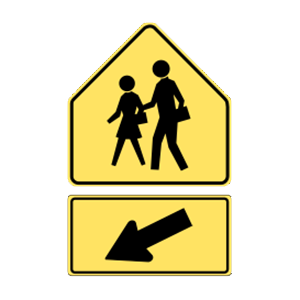
Always stop, whether there’s a stop sign or not.
Watch for children and be ready to stop.
Always sound your horn when you see children.
Be ready to help children crossing the street.
Q.37.
A regulatory sign containing a red circle with a slash through the middle indicates:
That drivers should come to a complete stop.
That an action is forbidden.
That some drivers should yield to other drivers.
That drivers should drive under the speed limit.
Q.38.
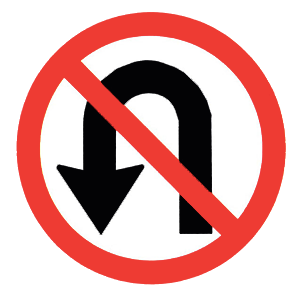
This sign means:
No left turn.
No stopping.
No U-turn.
Detour ahead.
Q.39.
On a two-lane street, your vehicle is being followed by a fire engine that is not using its emergency signals. You should:
Continue to drive in a normal manner.
Stop as quickly as you can.
Speed up to get out of its way.
Slow down, move as far to the right as possible, and stop.
Q.40.
Your vehicle's stopping distance increases when stopping:
On a wet or icy road.
On paved highways.
When driving at night.
All of the above.
Q.41.
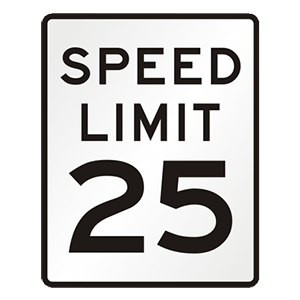
The posted speed limit shows:
Only a recommended driving speed.
The exact speed at which you must travel to avoid a ticket.
The maximum safe driving speed under ideal road and weather conditions.
The maximum safe driving speed under all road conditions.
Q.42.
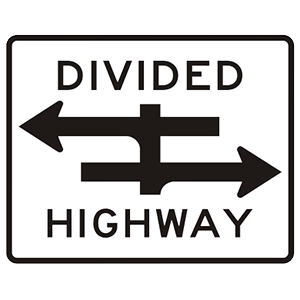
This sign means:
You must turn left or right.
You are approaching a T intersection.
The road that you are on intersects with a divided highway.
You are on an overpass above a divided highway.
Q.43.
This sign means:
Curve ahead.
Roadwork ahead.
Merging traffic.
No left turn.
Q.44.
Safely passing another vehicle requires a driver to:
Confirm that the passing lane is clear of traffic.
Roughly apply the brake.
Cross over a solid lane marking.
Flash their high beam headlights.
Q.45.
This sign is used to warn drivers:
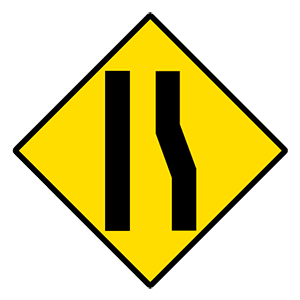
That the right lane ends and traffic should merge left.
That the road curves ahead.
About upcoming intersections.
About road construction.
Q.46.
A solid white line down the center of a two-lane road indicates:
Lanes are moving in opposite directions and drivers are not permitted to pass.
Lanes are moving in opposite directions and drivers are permitted to pass when it is safe to do so.
Lanes are moving in the same direction and drivers are not permitted to pass.
Lanes are moving in the same direction and drivers are permitted to pass when it is safe to do so.
Q.47.
When passing on a multilane highway:
Be sure the passing lane is clear.
Pass only on the right.
Watch for oncoming traffic.
There is no need to signal.
Q.48.
Passing is prohibited:
On hills and curves.
At intersections.
At railroad crossings.
All of the above.
Q.49.
You come to an intersection displaying a flashing red light. You should:
Come to a full stop and go when it is safe to do so.
Stop only if other cars are also approaching the intersection.
Stop only if other cars are already within the intersection.
Slow down and be prepared to stop, if necessary.
Q.50.
How can you help prevent rear-end collisions?
Avoid sudden stops.
Before stopping, check your mirrors and blind spots for traffic.
Release the gas pedal and let your vehicle slow before applying the brakes.
All of the above.
Support mcqgeeks.com by disabling your adblocker.
×
Please disable the adBlock and continue.
Thank you.
Reload page