MCQGeeks
CBSE
JEE
NTSE
NEET
English
UK Quiz
Quiz
Driving Test
Practice
Games
Driving Test
Indiana
Indiana Car Driving Permit Test-20
Answers
Q.1.
You must yield for emergency vehicles:
Under no circumstances.
When you see a flashing red or blue light or hear a siren.
Only when other vehicles yield.
None of the above.
Q.2.
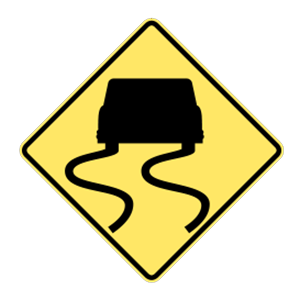
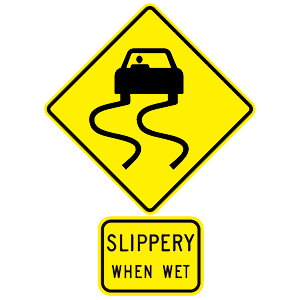
This sign means:
Watch for drunk drivers.
Curves ahead.
Slippery when wet.
Apply your brakes quickly.
Q.3.
Before entering a roundabout, you must slow down and yield to:
Vehicles in the roundabout.
Bicyclists in the roundabout.
Pedestrians in the roundabout.
All of the above.
Q.4.
Your vehicle's stopping distance increases when stopping:
On a wet or icy road.
On paved highways.
When driving at night.
All of the above.
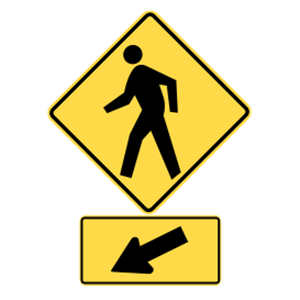
Q.5.
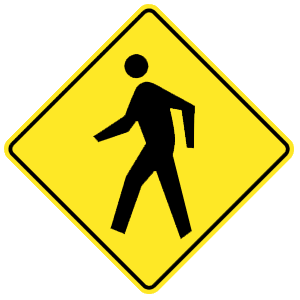
This road sign means:
School crossing.
Pedestrian crossing.
Jogging trail.
Busy sidewalk.
Q.6.
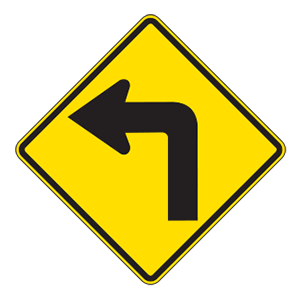
This sign means:
Sharp turn ahead, slow down.
Work crew ahead.
Side road.
Playground ahead.
Q.7.
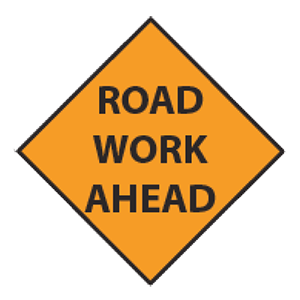
This sign means:
There is a detour ahead.
You must stop for flaggers.
The road ahead is closed to traffic.
The highway ahead is undergoing maintenance.
Q.8.
Highway markings:
Are usually not important.
Are only found in construction zones.
Provide information for drivers.
Are usually red and blue in color.
Q.9.
You notice that the driver in the vehicle ahead of you is driving with one hand and talking to a passenger. You should:
Give the vehicle extra space.
Know that the driver in the vehicle ahead is reducing their safety margin by being an inattentive driver.
Avoid following the driver's example.
All of the above.
Q.10.
You may drive around the gates at a railroad crossing:
When the train has passed.
Under no circumstances.
When the lights have stopped flashing.
When other drivers drive around the gates.
Q.11.
This sign means:
Pedestrians walking along the road ahead.
Pedestrian crossing ahead.
Pedestrians must not cross here.
Be alert for construction workers on the road.
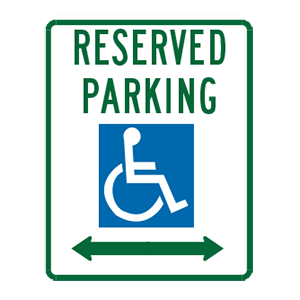
Q.12.
This sign means:
Reserved parking.
Low shoulder.
Slippery when wet.
Winding road.
Q.13.
When approaching an uncontrolled intersection, a driver should:
Maintain their speed and proceed.
Stop at the intersection, check in all directions, and proceed.
Yield to all other drivers.
Be prepared to yield.
Q.14.
Safely passing another vehicle requires a driver to:
Confirm that the passing lane is clear of traffic.
Roughly apply the brake.
Cross over a solid lane marking.
Flash their high beam headlights.
Q.15.
When driving under icy or snowy conditions, which driving technique will help drivers avoid crashes?
Add extra weight to their vehicles to improve traction.
Get off the highways as quickly as possible.
Engage the four-wheel drive on their vehicles.
Reduce their speed and increase their following distance.
Q.16.
You notice a vehicle defect which may affect the safe operation of your vehicle. You should:
Correct the defect as soon as possible.
Correct the defect when you can afford it.
Drive the vehicle at slower speeds.
Drive normally.
Q.17.
Two solid white lines painted across a traffic lane show the boundaries of a crosswalk. As a driver, you should know that:
Motor vehicles have the right-of-way over pedestrians in crosswalks.
When pedestrians are in crosswalks, they should be given the right-of-way.
No one has the right-of-way in a crosswalk.
Pedestrians are responsible to stay out of the way of all traffic.
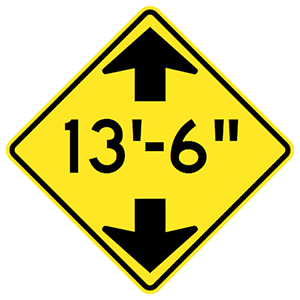
Q.18.
This road sign means:
Divided highway begins.
A steep grade is ahead.
The overpass ahead has a low clearance.
Two lanes of traffic moving in opposite directions are about to merge.
Q.19.
If one of your tires blows out as you are driving, you should:
Brake hard immediately.
Try to steer straight while gradually slowing by removing your foot from the gas pedal.
Maintain your current speed and steer straight.
Swerve back and forth to alert traffic behind you.
Q.20.
If two drivers arrive at the same time to an open intersection:
The driver on the right has the right-of-way.
The driver on the left has the right-of-way.
One driver may continue driving without stopping.
One driver should honk to indicate that they are giving up the right-of-way.
Q.21.
To check your blind spot before changing lanes:
Look into the left side mirror.
Look into the right side mirror.
Look into the rearview mirror.
Look over your shoulder in the direction you plan to move.
Q.22.
On slippery roads, you should:
Slow down.
Drive more quickly.
Drive the speed limit, with caution.
Not drive more quickly than 20 mph.
Q.23.
Which statement about speed is true?
Driving too slowly on certain highways can be dangerous.
Speeding can kill.
Speeding is not dangerous if you are a skilled driver.
Both "Driving too slowly on certain highways can be dangerous" and "Speeding can kill."
Q.24.
A flashing red traffic signal at an intersection has the same requirements as:
A slow sign.
A yield sign.
A stop sign.
An intersection sign.
Q.25.
What are the colors of warning signs indicating upcoming hazards?
Black letters or symbols on a white background
Black letters or symbols on a yellow background
White letters or symbols on a blue background
White letters or symbols on a green background
Q.26.
Drivers who have consumed alcohol before getting behind the wheel:
Are always aware of the risks they are taking.
Do not have sufficient control over their bodies and minds or the vehicles being driven.
Are better drivers because they are more careful than sober drivers.
Have quicker reaction times.
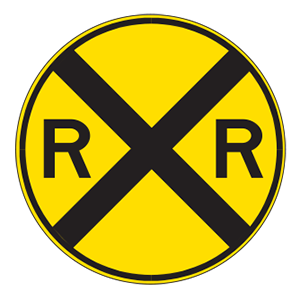
Q.27.
This sign is a warning that you are approaching:
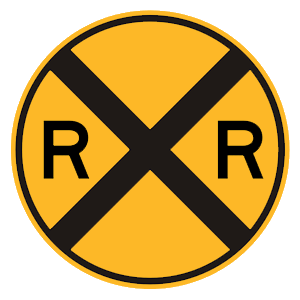
An intersection.
A crosswalk.
A railroad crossing.
A blasting zone.
Q.28.
If you reach an intersection where you wish to turn but you are not in the proper lane, you should:
Quickly cut across traffic to make your turn.
Turn on your blinker and make the turn from your current lane.
Drive to the next intersection and make your turn then.
Safely change lanes then put your vehicle in reverse to go back to the intersection.
Q.29.
When parallel parking between two cars, you should first:
Turn your wheels to the left.
Turn your wheels to the right.
Pull up even with the car in front of your desired parking space.
Back slowly.
Q.30.
What should you do when an emergency vehicle is approaching while displaying flashing red or blue lights?
See if you can reach your destination before the emergency vehicle catches up to you.
Continue driving but try to stay out of its way.
Pull over to the side of the road and come to a complete stop.
Stop in the middle of an intersection.
Q.31.
The most common color of warning signs is:
Red.
Yellow.
Green.
Blue.
Q.32.
This sign means:
Railroad crossing.
One-way traffic.
Limited parking.
Playground ahead.
Q.33.
Downward-facing triangular signs:
Indicate school zones.
Tell drivers to yield.
Indicate construction zones.
Indicate railroad crossings.
Q.34.
Drivers who eat and drink while driving:
Make no driving errors.
Have trouble driving slowly.
Are better drivers because they are not hungry.
Have trouble controlling their vehicles.
Q.35.
Distracted driving is:
Very uncommon.
Extremely risky behavior.
Nothing to be concerned about.
No less safe than driving under any other conditions.
Q.36.
A red flashing traffic light has the same meaning as a:
Solid red light.
Stop sign.
Yield sign.
Caution sign.
Q.37.
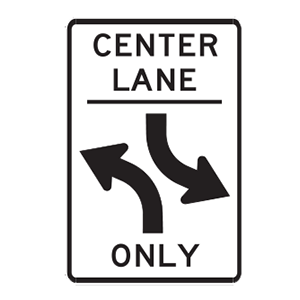
This sign means:
Two-way left turn.
Lane shifting.
Added lane.
T intersection.
Q.38.
A leaky exhaust system in your vehicle is dangerous because it can cause:
A loss of hearing.
Pollution.
Carbon monoxide poisoning.
Poor engine performance.
Q.39.
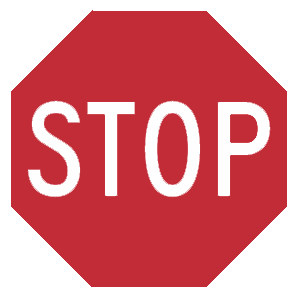
This road sign means:
Slow down or stop.
Stop, if necessary.
You must come to a complete stop.
Drive with caution and be ready to stop.
Q.40.
Before turning left, it is important to:
Sound your horn.
Yield to oncoming vehicles.
Swing to the right side of your lane.
Wait until oncoming traffic has a red light.
Q.41.
Always signal when:
Changing lanes.
Pulling into or out of a parking space.
Pulling into traffic from a parking area or alley.
All of the above.
Q.42.
This sign means:
Slippery when wet.
Watch for drunk drivers.
Dangerous curve ahead.
Bump in the road ahead.
Q.43.
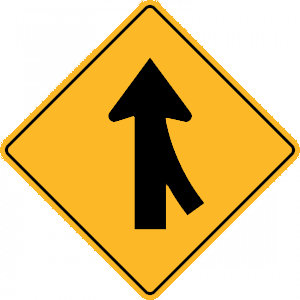
This sign means:
One-way traffic.
Intersection ahead.
Merging traffic from the right.
Highway curves ahead.
Q.44.
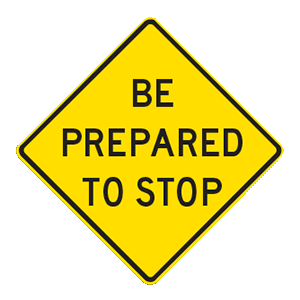
This sign means:
Prepare to stop.
Tow-away zone.
Curve ahead.
Reserved parking.
Q.45.
Stop lines are solid white lines painted across traffic lanes:
In curves and on hills.
Next to churches and schools.
At intersections and pedestrian crosswalks.
On freeway on-ramps.
Q.46.
If a crossing guard is directing traffic in a school zone, you must:
Follow the directions given by the crossing guard.
Copy what surrounding traffic is doing, despite the crossing guard's instructions.
Assume the guard is not supposed to be directing traffic.
Follow rules that would be in place if no children were present.
Q.47.
Distracted drivers are at a greater risk of a crash when they are using which of the following?
CD player
Radio
Cell phone
All of the above
Q.48.
You may continue carefully through an intersection with a yellow light if:
There is an emergency vehicle crossing your lane.
There are pedestrians crossing.
You are turning right.
You are already within the intersection when the light changes to yellow.
Q.49.
For the firstdays after obtaining their probationary license, a driver:
May drive after midnight.
May not transport immediate family members.
Should only drive under posted speed limits.
May only drive between 5:00 am and 10:00 pm.
Q.50.
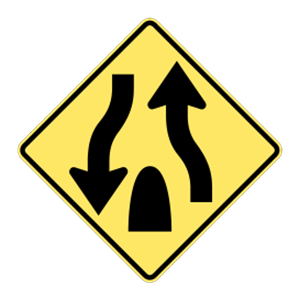
This sign means:
Curves ahead.
Divided highway starts.
Divided highway ends.
Bumps in the road.
Support mcqgeeks.com by disabling your adblocker.
×
Please disable the adBlock and continue.
Thank you.
Reload page