MCQGeeks
CBSE
JEE
NTSE
NEET
English
UK Quiz
Quiz
Driving Test
Practice
Games
Driving Test
Iowa
Iowa Car Driving Permit Test-14
Answers
Q.1.
When passing another vehicle:
Pass the vehicle as slowly as possible.
Drive at the same speed as the vehicle you are passing.
Pass the vehicle as safely and as quickly as possible.
Q.2.
A red and white triangular sign at an intersection means:
Slow down if an emergency vehicle is approaching.
Look both ways as you cross the intersection.
Always come to a full stop at the intersection.
Slow down and be prepared to stop if necessary.
Q.3.
You may drive across a dashed white line:
At any time.
Only during daylight hours.
When it is safe to change lanes.
Only when passing a motorcycle.
Q.4.
Your tire blows out while you are driving. You should:
Slam on your brakes.
Hold your steering wheel tightly and slow to a stop.
Keep driving normally.
Turn on your emergency flashers and continue driving.
Q.5.
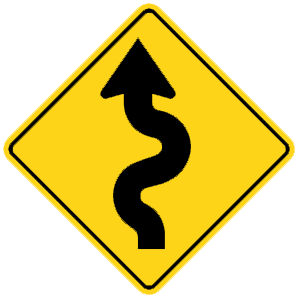
This sign tells you that:
No turns are allowed on the road.
The road narrows ahead.
There is a series of curves ahead.
Q.6.
A diamond-shaped sign means:
Yield.
Stop.
Warning.
Q.7.
Only ____ can lower blood alcohol concentration (BAC) and reduce alcohol's effects on a body.
Drinking caffeine
Eating foods high in fat
Time
Q.8.
You are driving on a one-way street. You may only turn left onto another one-way street if:
You increase your speed before the turn.
Traffic on the street moves to the right.
Traffic on the street moves to the left.
Q.9.
You may park or stop along the shoulder of the freeway:
As long as you turn on your four-way (emergency) flashers.
If no part of your vehicle is on the road.
If you need to look at a map for directions.
Only if you have an emergency.
Q.10.
A red arrow displayed on a traffic light means that:
A driver must proceed slowly through the intersection.
A driver must stop and then proceed when the way is clear.
A driver must stop and then proceed when the signal changes to a green light or green arrow.
A driver may turn in the direction that the red arrow is pointing.
Q.11.
On an undivided highway, if an emergency vehicle approaches while using its siren and flashing lights, you should:
Drive slowly until it has passed.
Speed up to clear traffic.
Pull to the right and stop.
Q.12.
From top to bottom, the following is the proper order for traffic lights:
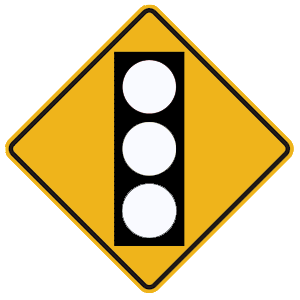
Red, yellow, green.
Red, green, yellow.
Green, red, yellow.
Green, yellow, red.
Q.13.
Orange is the color of signs used to communicate with drivers in construction work zones.
True
False
Q.14.
You are borrowing an unfamiliar vehicle from a friend. You should:
Not put too much thought into it because all vehicles are the same.
Hide from your friend that you are unfamiliar with the vehicle.
Disregard any obvious defects to avoid embarrassing your friend.
Take a few minutes before driving to familiarize yourself with the operation and location of all the vehicle’s equipment.
Q.15.
When you want to make a right turn, your car must be:
Near the center of the street.
Close to the left side of the street.
Close to the right side of the street.
Past the center of the intersection when you begin to turn.
Q.16.
When entering the interstate on a short entrance ramp where there is no acceleration lane, you should:
Immediately enter the far-right traffic lane on the interstate and speed up to match the flow of traffic.
Use the shoulder of the main road to get up to the speed of traffic.
Speed up and enter the interstate only after you have identified a gap in traffic.
Q.17.
Anything that requires you to ____ could cause you to crash.
Take your eyes off the road
Take your hands off the wheel
Take your attention away from the task of driving
All of the above
Q.18.
You do not have to stop for a school bus that is stopped with its red lights flashing if it is on a private road.
True
False
Q.19.
When approaching a stop sign that is not marked by a crosswalk, drivers should stop their vehicles before entering the intersection.
True
False
Q.20.
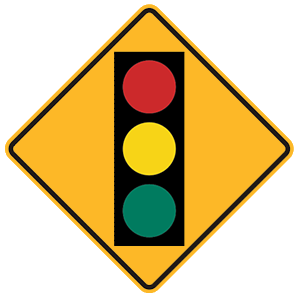
This sign means:
Continue at your current speed.
You must stop ahead.
Speeding is not allowed.
There is a traffic signal ahead.
Q.21.
It is necessary to use your low beams any time you are:
On a lighted street.
On a freeway.
In fog.
Q.22.
If your car begins to skid out of control, you should:
Pump the brakes.
Apply the brakes lightly.
Stay off the brakes.
Q.23.
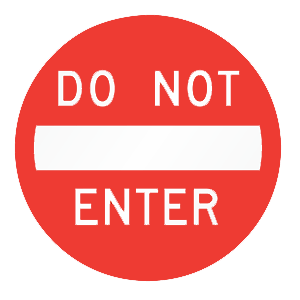
This sign is used to prevent:
Entrance to full parking lots.
Entrance to road construction areas.
Entrance to dead-end streets.
Entrances from the wrong direction on one-way streets and expressway ramps.
Q.24.
When driving on roads that may be slippery:
Always drive at the maximum speed limit.
Use cruise control to maintain a steady speed.
Reduce your following distance.
Do not make any sudden changes in speed or direction.
Q.25.
To be safe when crossing a railroad, you should:
Look both ways, but only when the red light is flashing.
Listen, look both ways, and then proceed if it is safe to do so.
Cross especially quickly when a train is approaching.
Quickly pass under any lowering gates.
Q.26.
When driving to an unfamiliar area, you:
Should depend on road signs to find your way.
Should plan your trip in advance.
Only have to know generally where your destination is.
Should always choose the most direct route.
Q.27.
Reaction time is slower after:
Drinking alcohol.
Sleeping.
Working hard.
Q.28.
What does this road sign indicate?
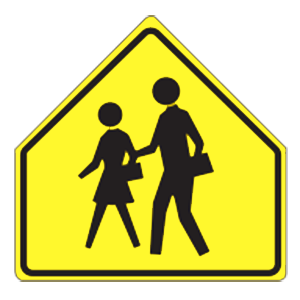
Directions for children
School zone ahead
Playground area ahead
Q.29.
Which of the following lights indicates that you should slow down and proceed with caution at an intersection?
A flashing yellow light
A flashing red light
A solid yellow light
A solid red light
Q.30.
This road sign means:
Hospital.
Upcoming intersection.
Railroad crossing.
Q.31.
You are on the freeway and traffic is merging into your lane. You should:
Make room for the merging traffic, if possible.
Assert your right-of-way by driving faster.
Always maintain your position.
Q.32.
This sign means:
You should stop for other traffic.
Traffic is entering from another road and you should allow additional space for drivers to merge safely into the flow of traffic.
Traffic is entering from another road and you should keep right.
Q.33.
Don’t follow other cars too closely because:
You may not see the road between the cars.
You may not have time to stop if the vehicle in front of you slows or stops suddenly.
You may not see the vehicle's turn signals.
You may not see the other vehicle’s brake lights.
Q.34.
You are coming to an intersection and have a green light. Pedestrians are crossing against the red. You should:
Honk your horn.
Speed up and pass in front of the pedestrians.
Stop to let the pedestrians cross safely.
Drive close to the pedestrians and frighten them so they’ll think twice before crossing against a red light.
Q.35.
To improve visibility lowered by rain or fog, drivers should use their:
Low beam headlights.
High beam headlights.
Parking lights.
Support mcqgeeks.com by disabling your adblocker.
×
Please disable the adBlock and continue.
Thank you.
Reload page