Q.1.
When conducting a pre-ride check, be sure that:
Q.2.
When riding, you should:
Q.3.
Increase your following distance:
Q.4.
If you are preparing to pass another operator on the left, you should:
Q.5.
Where is the gearshift lever located?
Q.6.
Head and neck injuries can be reduced by:
Q.7.
Signals on a motorcycle:
Q.8.
Where is the throttle usually located?
Q.9.
A plastic, shatter-resistant face shield protects the wearer from:
Q.10.
Which of the following is not an example of a slippery surface?
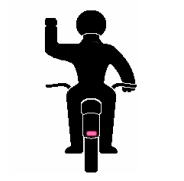
Q.11.
When an operator's left arm is bent at the elbow and pointing upward, it means the operator:
Q.12.
Which of the following is not a good safety tip?
Q.13.
When checking tires before a ride, you should look at all of the following except:
Q.14.
A DOT-approved helmet:
Q.15.
Most crashes occur in broad daylight. To be more visible, you should:
Q.16.
When passing a vehicle:
Q.17.
If operating a three-wheeled motorcycle or riding with a sidecar, do not ride too far to the right of your lane because:
Q.18.
When riding, the best protection for an operator is:
Q.19.
Which of the following surfaces provides the best traction for a motorcycle?
Q.20.
For routine braking:
Q.21.
A flat front tire is especially hazardous because:
Q.22.
When riding on a slippery surface, you should not:
Q.23.
You can increase your visibility by:
Q.24.
When you are being passed by another vehicle, which part of the lane should you ride in?
Q.25.
When making normal stops, you should: