Q.1.
Maximum front-line braking is accomplished by:
Q.2.
Where is the greatest potential for conflict between motorcycle operators and other drivers?
Q.3.
When riding through a curve, a group of motorcyclists should:
Q.4.
If a tire goes flat while you are riding and you must stop, it is usually best to:
Q.5.
Gloves can:
Q.6.
The center portion of a lane often contains an oily strip. This strip:
Q.7.
When turning left, you should:
Q.8.
If a tire goes flat and you must brake, you should:
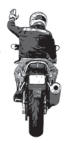
Q.9.
What does this signal mean?
Q.10.
You should increase your following distance if:
Q.11.
If your motorcycle begins to weave while you are riding over rain grooves or bridge gratings, you should:
Q.12.
If you are unable to avoid hitting an object in the roadway, you should:
Q.13.
The best way to stop quickly is to:
Q.14.
Reflective material on your helmet:
Q.15.
When riding a motorcycle, a jacket should be worn:
Q.16.
When riding with a passenger, you should:
Q.17.
When approaching an intersection, you should:
Q.18.
How do headache, cold, and hay fever medications usually affect your body?
Q.19.
It is difficult for other motorists to see motorcycles at night. To make up for that, a motorcycle rider should:
Q.20.
You will ______ hear a tire going flat.
Q.21.
Usually, a good way to handle tailgaters is to:
Q.22.
If you wait an hour per alcoholic drink before you ride your motorcycle:
Q.23.
A rectangular sign may be a:
Q.24.
Reflective clothing should:
Q.25.
To lean the motorcycle for a turn, you should: