Q.1.
What is the only effective way to remove alcohol from the body?
Q.2.
When driving in work zones, you should:
Q.3.
What message will be found on a red octagon-shaped sign?

Q.4.
To avoid traction loss on wet roads, you should:
Q.5.
Using a cell phone while operating a motor vehicle is considered a distraction because:
Q.6.
To turn left from a multilane one-way street onto a one-way street, you should start your turn from:
Q.7.
A steady yellow traffic signal light is a warning that the light is about to change to red. If you are already within the intersection when a green light changes to yellow, you should:
Q.8.
When driving in fog, it is best to drive with:
Q.9.
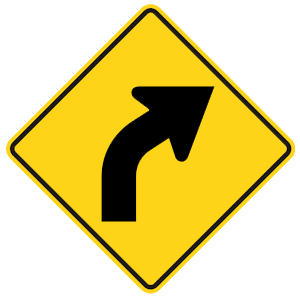
This sign is used to warn drivers about:
Q.10.
In which of the following scenarios should your wheels not be pointed straight ahead?
Q.11.
If you are driving at night and a vehicle is approaching with its high beam headlights activated:
Q.12.
You want to park uphill on a two-way road and there is no curb. Which direction do you turn your front wheels?
Q.13.
You may cross double yellow lines to pass another vehicle if the:
Q.14.
When passing on the left of a vehicle, it is safe to move back into the right lane:
Q.15.
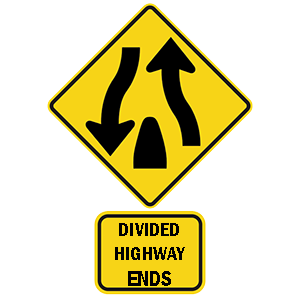
This sign means:
Q.16.
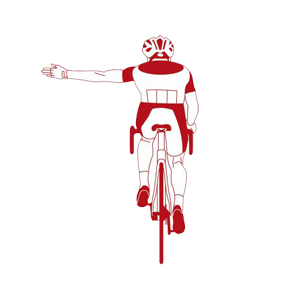
This bicyclist is signaling:
Q.17.
Your license will:
Q.18.
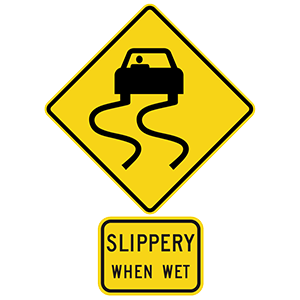
What does this road sign mean?
Q.19.
Where should your hands be placed on the steering wheel when using hand-to-hand steering?
Q.20.
Changing from one lane to another is best done:
Q.21.
Distracted driving is:
Q.22.
This sign means:
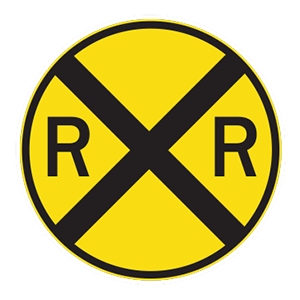
Q.23.
If you approach a traffic light with a red signal and a police officer directs you to go through the intersection without stopping, you should:
Q.24.
While driving at night, a vehicle coming toward you has its high beams on, making it hard for you to see the road ahead. You should:
Q.25.
If you are being passed in a no passing zone, you should: