MCQGeeks
CBSE
JEE
NTSE
NEET
English
UK Quiz
Quiz
Driving Test
Practice
Games
Driving Test
Kansas
Kansas Car Driving Permit Test-24
Answers
Q.1.
At dawn or dusk and in rain or snow, it can be hard to see and be seen. A good way to let other drivers know you are there is to turn:
Up the instrumental panel lights.
On your parking lights.
On your headlights.
Q.2.
If you park facing uphill where there is no curb, set the parking brake and:
Turn your wheels toward the edge of the road.
Turn your wheels away from the edge of the road.
Keep your wheels facing straight.
Q.3.
You want to turn left at an upcoming corner. Yield the right-of-way to:
Oncoming vehicles also turning left.
All approaching vehicles.
Pedestrians on the sidewalk waiting for a "Walk" signal.
Q.4.
If you find that the roadway ahead of you is flooded, you should:
Slam on the brakes.
Not drive through the flooded area. Turn around and find another route.
Drive only in the center of the roadway.
Q.5.
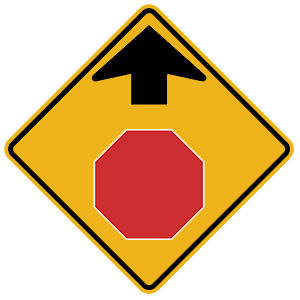
This sign means:
Stop Sign Ahead.
Side Road.
Railroad Warning.
Q.6.
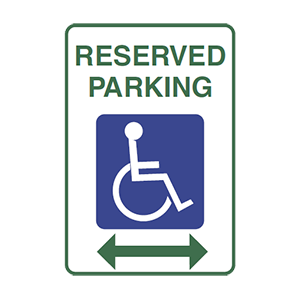
This sign means:
Reserved parking for persons with disabilities.
Slow-moving vehicle.
No U-turn.
Q.7.
When driving under low-visibility conditions due to fog, you should:
Turn on your high beam headlights.
Slow down and use your low beam headlights.
Increase your speed so you do not cause an accident.
Q.8.
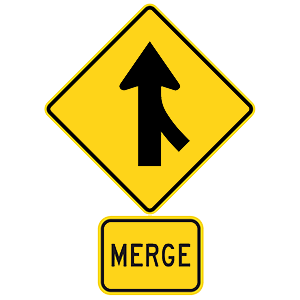
What does this road sign mean?
Be ready to merge with traffic entering your lane.
Always stop.
Divided highway ahead.
Q.9.
You are on the freeway and traffic is merging into your lane. You should:
Make room for the merging traffic, if possible.
Assert your right-of-way by driving faster.
Always maintain your position.
Q.10.
You should increase the distance between your vehicle and the vehicle ahead when you:
Are following a small passenger vehicle.
Are being tailgated by another driver.
Are driving more slowly than the posted speed limit.
Q.11.
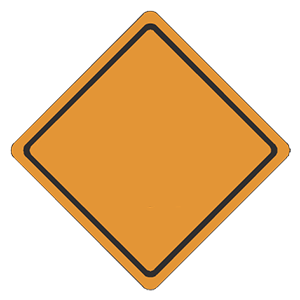
This sign means:
Do not enter.
Stop ahead.
Roadwork or maintenance is present.
Q.12.
Use your headlights on rainy, snowy, or foggy days:
To keep your engine warm.
So others can see your vehicle.
To warn others of bad weather conditions.
Q.13.
What does a traffic signal with a yellow left arrow indicate?
Drivers should prepare to yield to oncoming traffic.
The protected left turn is about to end.
Both of the above.
Q.14.
Regulatory signs are:
Green.
Yellow.
White.
Q.15.
You must obey instructions from school crossing guards:
At all times.
Only during school hours.
Unless you do not see any children present.
Q.16.
The first thing that alcohol effects is:
Vision.
Judgment.
Balance.
Q.17.
The golden rule of driving is to:
Ignore other drivers on the roadway.
Drive aggressively.
Treat others the way you want to be treated.
Q.18.
If bad weather makes it difficult for you to see clearly, you should:
Speed up to get off the road quickly.
Drive in the lane closest to oncoming traffic.
Increase your following distance.
Q.19.
If pedestrians are illegally crossing in the middle of the street instead of in a crosswalk, you:
Must stop for them.
Do not have to stop for them.
Should honk your horn at them.
Q.20.
You want to park downhill on a two-way road and there is no curb. Which way do you turn your front wheels?
Straight ahead
Right, toward the side of the road
Left, toward the center of the road
Q.21.
You are driving on the freeway. The vehicle in front of you is a large truck. You should drive:
Closely behind the truck in bad weather because the driver can see farther ahead than you can.
Farther behind the truck than you would when following a passenger vehicle.
No more than one car length behind the truck so the driver can see you.
Q.22.
To know where traffic is behind you:
Frequently check your rearview mirror.
Turn and look out your back window.
Keep other vehicles out of your blind spots.
Q.23.
If you want to pass a pedestrian who is walking along the roadway and an oncoming vehicle is approaching, you should:
Slow down and let the oncoming vehicle pass before you pass the pedestrian.
Keep driving at a steady speed. The oncoming vehicle must stop for you.
Honk your horn to get the pedestrian to move over.
Q.24.
When changing lanes, identify a:
Two- to three-second gap in traffic.
Three- to four-second gap in traffic.
Four- to five-second gap in traffic.
Q.25.
When you see this sign, you should stop and:
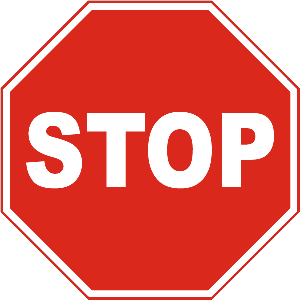
Check for vehicles only in the direction that you plan on going, then proceed.
Let all vehicles that arrive before or after you go first.
Check for traffic in all directions before proceeding.
Support mcqgeeks.com by disabling your adblocker.
×
Please disable the adBlock and continue.
Thank you.
Reload page