Q.1.
To improve your chances of being seen, you should:
Q.2.
When attempting to pass another vehicle, you should:
Q.3.
A pre-ride inspection should include all of the following, except:
Q.4.
Mirrors on motorcycles:
Q.5.
When riding near a truck:
Q.6.
When positioning your body on the motorcycle:
Q.7.
When carrying a load, it should be:
Q.8.
If your motorcycle begins to weave while you are riding over rain grooves or bridge gratings, you should:
Q.9.
To lessen your chances of being involved in a crash, you should do all of the following, except:
Q.10.
As you consume more alcohol, your ability to safely ride:
Q.11.
You will get the most protection from a helmet if it is all of the following, except:
Q.12.
Helmets are:
Q.13.
When wearing a helmet at the time of a crash, a rider is:
Q.14.
When passing a row of parked vehicles, a motorcycle rider has an advantage over an automobile driver because:
Q.15.
For motorcycle operators, helmets are:
Q.16.
Reflective, brightly-colored helmets and clothing:
Q.17.
You have an improved chance of surviving a crash if you wear:
Q.18.
If you will be carrying a passenger on your motorcycle, you will likely have to:
Q.19.
How do convex mirrors differ from regular mirrors?
Q.20.
A benefit of keeping a cushion of space between you and surrounding vehicles is that:
Q.21.
When passing a row of parked cars, you should:
Q.22.
When riding at night, you should:
Q.23.
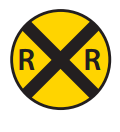
What does this sign mean?
Q.24.
What should be your first consideration when buying a motorcycle helmet?
Q.25.
Under normal conditions, a motorcyclist should maintain a following distance of at least: