MCQGeeks
CBSE
JEE
NTSE
NEET
English
UK Quiz
Quiz
Driving Test
Practice
Games
Driving Test
Kentucky
Kentucky Car Driving Permit Test-2
Answers
Q.1.
If it feels like your tires have lost contact with the surface of the road, you should:
Slow down by shifting into a lower gear.
Ease your foot off the gas pedal.
Slow down by pumping the brakes quickly and firmly.
Q.2.
When driving in work zones, you should:
Follow the driver in front of you closely.
Pass the driver in front of you as soon as you can.
Avoid tailgating and keep a safe following distance.
Q.3.
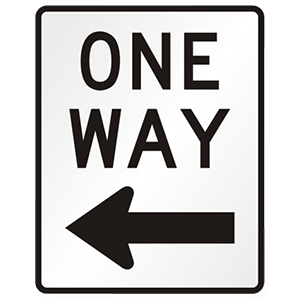
This road sign means:
No right turn.
Drive only in the direction of the arrow.
Curve ahead.
Q.4.
When crossing a sidewalk to enter traffic from an alley or driveway, drivers should:
Stop only if pedestrians are on the sidewalk.
Stop before driving onto the sidewalk or sidewalk area.
Expect pedestrians on the sidewalk to yield the right-of-way.
Q.5.
It is dangerous to follow a motorcycle too closely because:
They do not follow the same rules as motor vehicles.
A motorcycle can stop much faster than a standard vehicle.
They brake more slowly than motor vehicles.
Q.6.
This sign is used to warn drivers that:
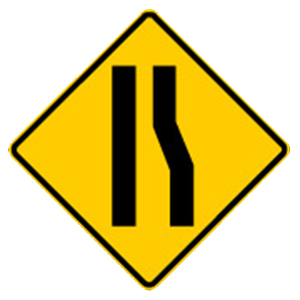
The right lane is ending and traffic should merge left.
The road curves ahead.
There are upcoming intersections.
Q.7.
When changing lanes, you should never:
Cross the centerline in an intersection.
Check your blind spots by looking over your left or right shoulder.
Check for other drivers moving into the same lane.
Q.8.
You enter a designated turn lane to make a left turn at an upcoming intersection. There is oncoming traffic. You should:
Move to the left of the center lane.
Signal before you arrive at the intersection.
Turn your front wheels to the left to be prepared to turn.
Q.9.
A flashing yellow light at an intersection means you should:
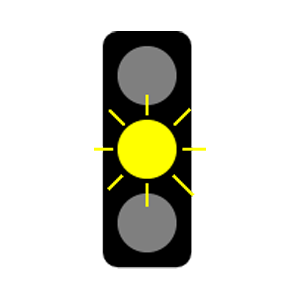
Slow down and proceed with caution.
Come to a complete stop as quickly as possible.
Stop and proceed only when the intersection is clear.
Q.10.
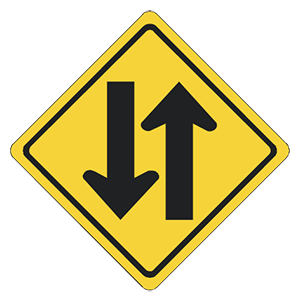
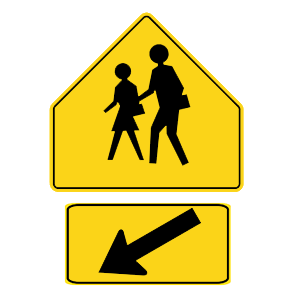
This sign means:
Two-way traffic.
Change in direction ahead.
School zone and crossing.
Q.11.
What should you do when you see this sign?
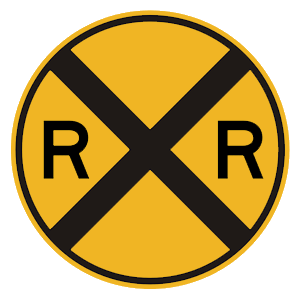
Look for a train station ahead.
Signal before going any further.
Slow down and yield to trains.
Q.12.
Which of these statements is true about roadwork zones?
Fines are the same for violations committed in work zones as they are under normal traffic conditions.
You must "Slow for the Cone Zone."
Slow down only if you think workers are present.
Q.13.
If your car begins to skid out of control, you should:
Pump the brakes.
Apply the brakes lightly.
Stay off the brakes.
Q.14.
As you approach the top of a hill, you should:
Speed up slightly.
Prepare to stop, if needed.
Maintain a steady speed.
Q.15.
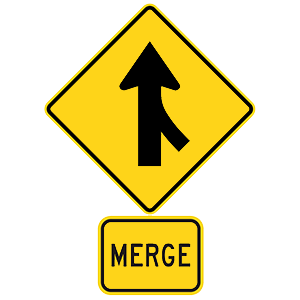
What does this road sign mean?
Be ready to merge with traffic entering your lane.
Always stop.
Divided highway ahead.
Q.16.
If you come to an intersection controlled by a flashing yellow light, you must:
Wait for the green light before proceeding.
Slow down and cross the intersection carefully.
Stop before crossing the intersection.
Q.17.
If your car's suspension is bad, it can cause:
Vehicle control problems.
Squealing brakes.
Slack in the steering.
Q.18.
A broken yellow line beside a solid yellow line indicates that:
Passing is permitted from the lane next to the solid yellow line.
Passing is not permitted from either direction.
Passing is permitted from the lane next to the broken yellow line.
Q.19.
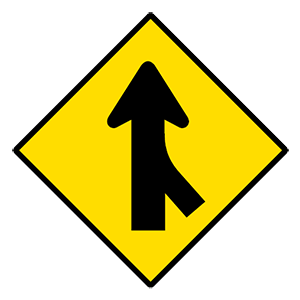
This sign means:
One-way traffic.
Intersection ahead.
Merging traffic from the right.
Q.20.
You should allow an extra cushion of space:
When following a station wagon.
When following a driver who cannot see the rear of their vehicle.
When following a small passenger car.
Q.21.
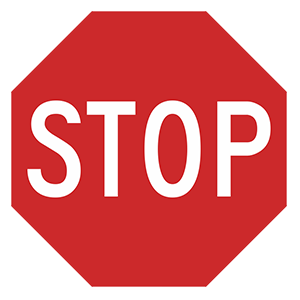
This road sign means:
Slow down or stop.
Stop if necessary.
You must come to a complete stop.
Q.22.
Which of these statements is true about changing lanes?
You only need to turn and look over your right shoulder for lane changes to the right or left.
Look over your right shoulder for a right lane change and your left shoulder for a left lane change.
Vehicles with two outside mirrors do not have blind spots.
Q.23.
If you are facing a green traffic light but the intersection ahead is blocked by traffic, you should:
Turn left and find another route.
Stay out of the intersection until traffic clears.
Follow the other vehicles and enter the intersection.
Q.24.
When turning left at an intersection:
You should always yield to oncoming traffic and pedestrians.
Oncoming traffic and pedestrians should yield to you.
You should never yield to oncoming traffic and pedestrians.
Q.25.
If you approach a traffic light with a red signal and a police officer directs you to go through the intersection without stopping, you should:
Stop until the light turns green.
Go through the intersection without stopping.
Come to a complete stop before proceeding.
Q.26.
When driving at night, you should:
Always use your high beams.
Look directly at the headlights of an oncoming vehicle.
Increase your following distance.
Q.27.
Which of the following is not a safe driving practice when driving on the interstate?
Slower traffic must keep to the right.
Change lanes without signaling.
If you miss your exit, you must go to the next exit.
Q.28.
If you become drowsy while driving, you should:
Try to fight it.
Take a break.
Take some caffeine pills.
Q.29.
If the driver of an oncoming vehicle fails to dim their headlights:
Look toward the center of the roadway.
Look toward the right side of the road.
Look straight ahead.
Q.30.
Night driving presents unique problems because:
The speed limit is increased at night.
There are fewer cars on the roads at night.
Distance and vehicle speed are difficult to judge in the dark.
Q.31.
Having a driver license is a:
Requirement.
Privilege.
Right.
Q.32.
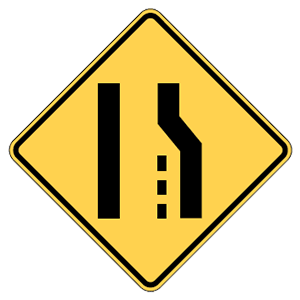
This road sign means:
Highway entrance ramp.
Road widens.
Right lane ends.
Q.33.
At a school crossing sign, you should:
Always stop, whether there is a stop sign or not.
Watch for children and be ready to stop.
Always sound your horn when you see children.
Q.34.
If your vehicle starts to lose traction because of water on the road, you should:
Drive at a constant speed to gain better traction.
Apply the brakes firmly to prevent your vehicle from sliding.
Slow down gradually and not apply the brakes.
Q.35.
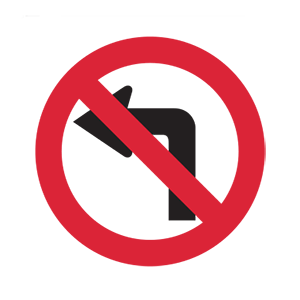
This sign means:
No left turn can be made here.
A left turn can be made only after stopping.
All traffic must turn right at the next intersection.
Q.36.
After passing a vehicle, it is safe to return to your driving lane when:
The driver you passed signals for you to return to your lane.
You signal your intention for three seconds.
You see the headlights of the passed vehicle in your rearview mirror.
Q.37.
To avoid traction loss on wet roads, you should:
Make abrupt turns.
Apply the brakes firmly.
Slow down.
Q.38.
Which of the following is a dangerous habit when driving in work zones?
Tailgating another vehicle
Failing to carefully watch for workers and moving equipment
Both of the above
Q.39.
If there is no crosswalk and you see a pedestrian crossing your lane, you should:
Make sure the pedestrian can see you before proceeding.
Cautiously drive around the pedestrian.
Stop and let the pedestrian finish crossing.
Q.40.
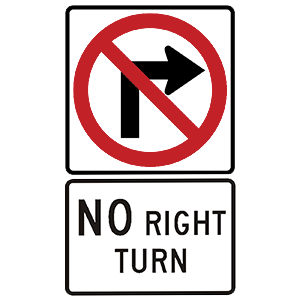
What does this road sign mean?
You must turn right.
No right turns permitted.
Right turns permitted on a red light.
Support mcqgeeks.com by disabling your adblocker.
×
Please disable the adBlock and continue.
Thank you.
Reload page