MCQGeeks
CBSE
JEE
NTSE
NEET
English
UK Quiz
Quiz
Driving Test
Practice
Games
Driving Test
Kentucky
Kentucky Car Driving Permit Test-21
Answers
Q.1.
When driving in fog, you should:
Use your high beam headlights.
Use your parking lights.
Use your low beam headlights.
Q.2.
Highway pavement will be particularly treacherous and most slippery:
If it has been raining several hours.
If it has just begun to rain.
If it has been raining for one to two hours.
Q.3.
The amount of alcohol in the blood is referred to as:
Implied consent (IC).
Blood alcohol concentration (BAC).
Rate of alcohol consumption (RAC).
Q.4.
You are required to stop your vehicle:
At any intersection where a police officer orders you to stop.
Where there is a red traffic light.
Both of the above.
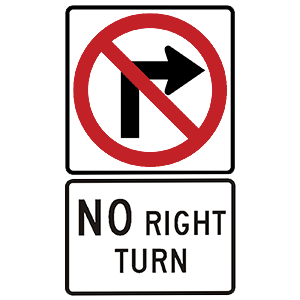
Q.5.
What does this road sign mean?
You must turn right.
No right turns permitted.
Right turns permitted on a red light.
Q.6.
If you are getting tired while driving, you should:
Stop and either get rest or change drivers.
Drink something with caffeine.
Open a window.
Q.7.
You must yield to a pedestrian using a white cane or guide dog:
Only when the guide dog is leading the person across the street.
At all times.
Only if a crossing guard is present.
Q.8.
If it is necessary to make an emergency stop while driving on an interstate, you should:
Sound your horn at passing cars to get their attention.
Get out of your vehicle and flag down the first vehicle that passes.
Pull off the road, turn on your emergency flashers, and stay in your vehicle, if you can.
Q.9.
Using a cell phone while operating a motor vehicle is considered a distraction because:
It causes the driver to be concerned about the cost of the call.
It occupies the driver's hands, eyes, and mind.
It is an activity that draws the attention of other drivers.
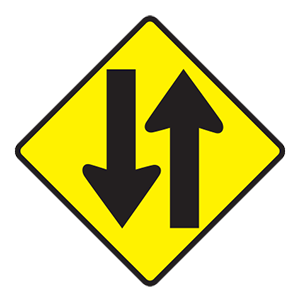
Q.10.
This sign means:
You can travel in either direction in this lane.
There is two-way traffic.
You are approaching a divided highway.
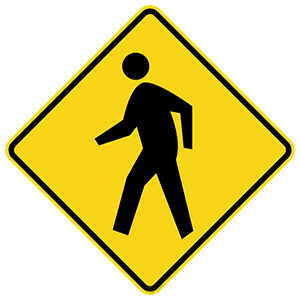
Q.11.
This road sign means:
School crossing.
Pedestrian crossing.
Jogging trail.
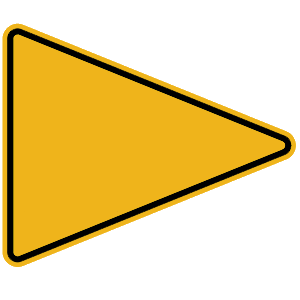
Q.12.
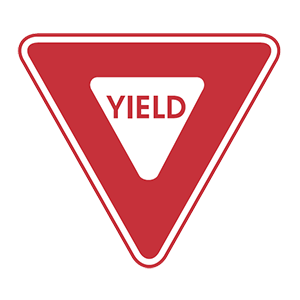
A sign with this shape means:
No passing zone.
Right turn permitted on red.
Yield right-of-way.
Q.13.
Stopping distances and the severity of collisions:
Decrease as a vehicle's speed increases.
Are not affected by a vehicle's speed.
Increase as a vehicle's speed increases.
Q.14.
You are driving on the freeway. The vehicle in front of you is a large truck. You should drive:
Closely behind the truck in bad weather because the driver can see farther ahead than you can.
Farther behind the truck than you would when following a passenger vehicle.
No more than one car length behind the truck so the driver can see you.
Q.15.
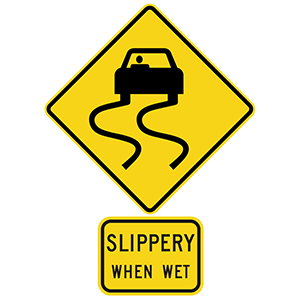
What does this road sign mean?
Winding road
Loose gravel
Slippery when wet
Q.16.
If you are following a motorcycle, you should:
Increase your following distance.
Decrease your following distance.
Pass them immediately.
Q.17.
An orange-colored sign like this means:
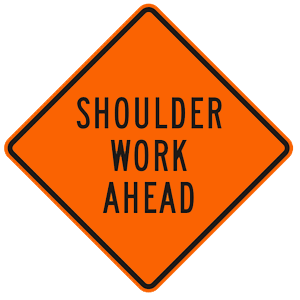
There is roadwork ahead.
You must change lanes ahead.
There is a detour ahead.
Q.18.
Motorcycles, scooters, and mopeds are not easy to see; therefore, you should:
Slow down when driving.
Make constant visual checks.
Share a lane with a motorcycle.
Q.19.
Collisions are more likely to happen when:
All vehicles are traveling at about the same speed.
One lane of traffic is traveling faster than the other lanes.
One vehicle is traveling faster or slower than the flow of traffic.
Q.20.
It is unlawful to:
Pass another vehicle in any marked no passing zone.
Pass another vehicle over a railroad crossing.
Both of the above.
Q.21.
Drivers turning left must yield to:
Overtaking cars.
Oncoming cars.
No one.
Q.22.
A solid yellow line next to a broken yellow line means that vehicles:
Driving in both directions may pass.
Next to the broken line may pass.
Next to the solid line may pass.
Q.23.
This sign is used to warn drivers about:
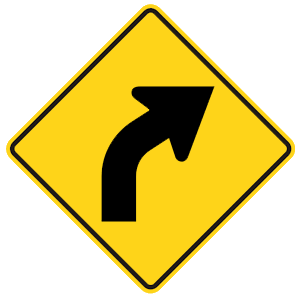
Upcoming intersections.
Road construction.
Road curves ahead.
Q.24.
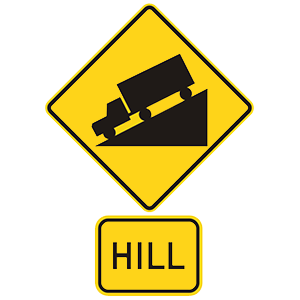
This sign indicates that:
There is a steep hill ahead.
No trucks are allowed on the upcoming hill.
A logging road is ahead.
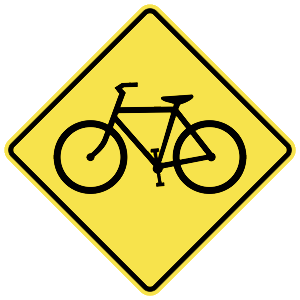
Q.25.
This road sign means:
Bicycle crossing.
Stop only if other cars are approaching.
Yield the right-of-way to pedestrians.
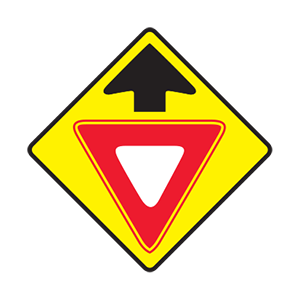
Q.26.
This sign means:
Yield sign ahead.
Side road entering from left.
Stop sign ahead.
Q.27.
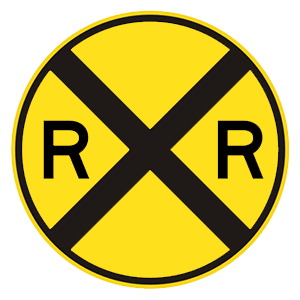
When you see this sign, you:
Are approaching a railroad crossing and should prepare to stop.
Will always stop at the upcoming railroad crossing.
Should stop and wait for a signal before crossing the railroad tracks.
Q.28.
Vehicles stopped behind a school bus with its red lights flashing must remain stopped until:
All students are off the bus.
The stop arm is retracted.
The stop arm is retracted and the bus resumes motion.
Q.29.
This sign is a:
Yield sign.
School crossing sign.
Stop sign.
Q.30.
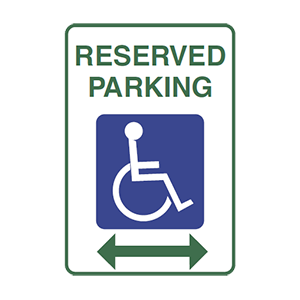
This sign means:
Reserved parking for persons with disabilities.
Slow-moving vehicle.
No U-turn.
Q.31.
When passing another vehicle, it is safe to return to your lane if you:
Cannot see the vehicle directly to your right.
See the vehicle’s headlights in your rearview mirror.
Have passed the other vehicle’s front bumper.
Q.32.
If you are being followed too closely on a multilane highway, you should:
Speed up to match the speed of the car behind you.
Move into the lane to your right and let the car pass.
Slow down to antagonize the driver.
Q.33.
Before switching on the ignition, you should:
Buckle your safety belt.
Be sure all passengers have buckled their safety belts.
Both of the above.
Q.34.
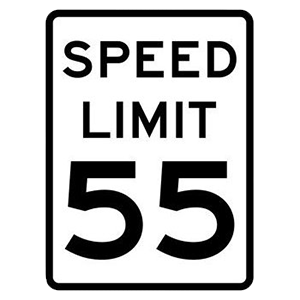
This road sign means:
You must travel through the intersection at the posted speed limit.
The maximum speed limit under ideal conditions is 55 mph.
You must not travel below the speed indicated.
Q.35.
If the roadway is wet or icy, you should:
Reduce your speed.
Drive at the posted speed.
Speed up.
Q.36.
Roads with double solid yellow line markings down the center indicate that passing is:
Allowed from both directions.
Allowed only from your direction of travel.
Not allowed from either direction.
Q.37.
When parking your vehicle on any hill:
One of your rear wheels should touch the curb.
Use your parking brake and leave the vehicle in "park."
Your front wheels should be parallel to the road, if there is no curb.
Q.38.
When a driver behind you wants to pass your vehicle, you should:
Increase your speed.
Ease up on your accelerator to help them pass.
Press hard on your brakes.
Q.39.
Night driving presents unique problems because:
The speed limit is increased at night.
There are fewer cars on the roads at night.
Distance and vehicle speed are difficult to judge in the dark.
Q.40.
Having a driver license is a:
Right, not a privilege.
Privilege, not a right.
Requirement.
Support mcqgeeks.com by disabling your adblocker.
×
Please disable the adBlock and continue.
Thank you.
Reload page