MCQGeeks
CBSE
JEE
NTSE
NEET
English
UK Quiz
Quiz
Driving Test
Practice
Games
Driving Test
Maine
Maine Car Driving Permit Test-1
Answers
Q.1.
If pedestrians are illegally crossing in the middle of the street instead of in a crosswalk, you:
Must stop for them.
Do not have to stop for them.
Should honk your horn at them.
Q.2.
What may help drivers conserve gasoline?
Sitting in their driveways with their cars running.
Accelerating quickly.
Slowing down gradually.
Braking abruptly.
Q.3.
While driving at night, a vehicle coming toward you has its high beams on, making it hard for you to see the road ahead. You should:
Look ahead toward the left edge of your lane.
Look ahead toward the right edge of your lane.
Look straight ahead in your lane.
Q.4.
When you see this road sign, you should:
Keep right.
Keep left.
Pass with caution.
Q.5.
If you are getting tired while driving, you should:
Stop and either get rest or change drivers.
Drink something with caffeine.
Open a window.
Q.6.
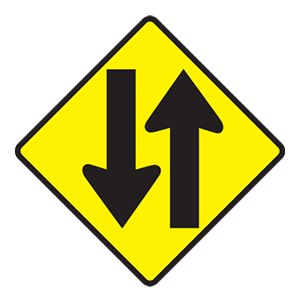
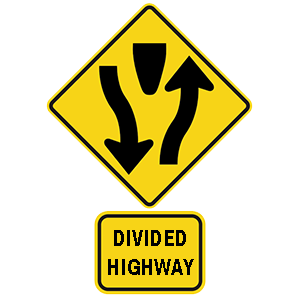
This sign means:
You can travel in either direction in this lane.
There is two-way traffic.
You are approaching a divided highway.
Q.7.
Under normal weather and traffic conditions, keep a minimum following distance of:
One second.
Two seconds.
Three seconds.
Four seconds.
Q.8.
When driving down a long or steep hill, you should:
Check your mirrors for speeding traffic behind you.
Assume all traffic is maintaining a consistent speed.
Watch over your shoulder for traffic behind you.
Hold down your brakes to control the speed of traffic.
Q.9.
It is very foggy. You should slow down and:
Turn on your emergency flashers.
Turn your lights to their high beam setting.
Turn your lights to their low beam setting.
Q.10.
You may honk your horn when you:
Have to stop quickly.
Are passing another car.
Have lost control of your car.
Are passing a bicyclist.
Q.11.
Fines for moving traffic violations in school zones are:
Lessened.
Unchanged.
Doubled.
Non-existent.
Q.12.
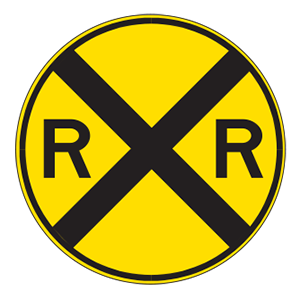
The sign with this shape and color is a ____ sign.
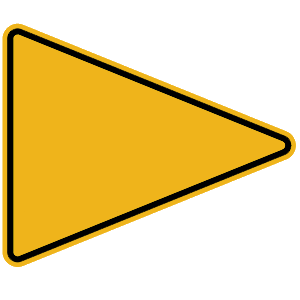
No passing zone
Wrong way
Railroad crossing
Stop
Q.13.
Crossbuck signs indicate:
Railroad crossings.
School zones.
No passing zones.
Hospitals.
Q.14.
When making a turn, you must ____ your speed.
Increase
Maintain
Vary
Reduce
Q.15.
When driving in traffic, it is safest to:
Fluctuate your speed to keep alert.
Drive faster than the flow of traffic.
Drive slower than the flow of traffic.
Drive with the flow of traffic.
Q.16.
In which of the following ways can alcoholic beverages affect you?
It slows your reaction time.
It gives you a feeling of false confidence.
It impairs your thinking ability.
All of the above.
Q.17.
While backing, you should:
Rely only on your mirrors.
Flash your lights.
Open your door to see if it is safe to proceed.
Turn your head and look through the rear window.
Q.18.
This sign means:
Railroad crossing.
One-way traffic.
Limited parking.
Playground ahead.
Q.19.
When used on roadways, bicycles are considered:
Hazards.
Vehicles.
Dangerous.
Q.20.
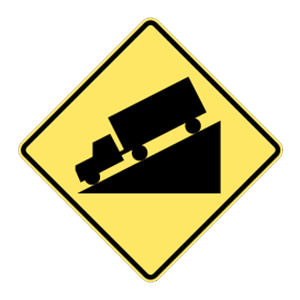
This sign means:
Watch for trucks.
Do not pass trucks.
Truck parking area ahead.
Steep downgrade ahead.
Q.21.
If you begin to feel tired while driving, the best thing to do is to:
Get some coffee.
Open your window.
Stop driving.
Turn on the radio.
Q.22.
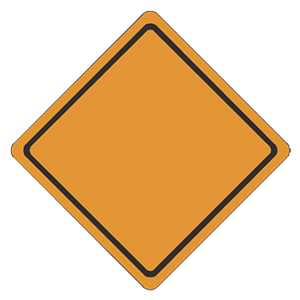
This sign means:
Road construction/maintenance area.
Side road.
Railroad ahead.
Q.23.
When you see an emergency vehicle approaching while using its flashing lights, you must:
Maintain your speed and stay in your lane until the vehicle has passed.
Move into the right lane and drive slowly until the vehicle has passed.
Pull over to the curb or edge of the road and stop until the vehicle has passed.
Q.24.
A U-turn is not permitted:
In a parking lot.
On or near any curve or hill.
On a straight roadway with a clear view for 500 feet in both directions.
Q.25.
When you see a flashing yellow light at an intersection, you should:
Yield to all traffic before crossing the intersection.
Stop, then enter the intersection when it is safe to do so.
Slow down and cross the intersection carefully.
Q.26.
Allow extra space in front of your vehicle when following a:
Station wagon.
Passenger vehicle.
Motorcycle.
Q.27.
When parallel parking, you should park within ____ of the curb.
Six inches
10 inches
14 inches
18 inches
Q.28.
When approaching a flashing yellow light, drivers should:
Increase their speed.
Come to a complete stop.
Turn on their headlights.
Slow down and proceed with caution.
Q.29.
You are driving on a busy street and your vehicle’s accelerator sticks open. You should:
Blow your horn.
Slam on your brakes.
Turn on your four-way flashers.
Turn off your ignition, taking care not to engage the steering wheel locking mechanism.
Q.30.
When changing lanes, you should look for a gap of ____ seconds.
One to two
Three
Four
10 to 15
Q.31.
A motorist making a left turn at an intersection must yield the right-of-way to a bicyclist entering the intersection from the opposite direction.
True
False
Q.32.
Do not pass:
On a hill or curve.
When school bus lights are flashing.
When approaching an intersection.
All of the above.
Q.33.
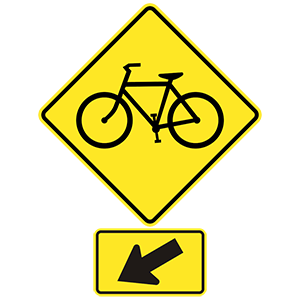
This road sign means:
Bicycle crossing.
Stop only if other cars are approaching.
Bicycle store.
Soft shoulders.
Q.34.
Double solid yellow lines painted down the middle of the road mean:
Railroad crossing ahead.
Pedestrian crossing ahead.
Passing is not permitted from either direction.
Passing is permitted from either direction.
Q.35.
Your ability to stop is affected by:
Signal lights.
Other cars on the road.
The time of day.
The condition of the road.
Q.36.
When crossing a sidewalk to enter traffic from an alley or driveway, drivers should:
Stop only if pedestrians are on the sidewalk.
Stop before driving onto the sidewalk or sidewalk area.
Expect pedestrians on the sidewalk to yield the right-of-way.
Q.37.
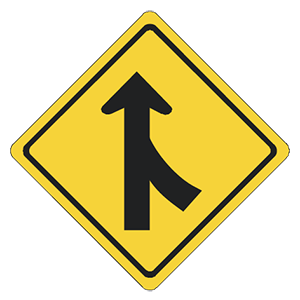
This sign means:
Merge.
Winding road ahead.
Reserved parking for persons with disabilities.
Q.38.
When you are driving on the interstate and see that a vehicle will be entering your lane from an entrance ramp, you should generally:
Speed up to pass them.
Honk your horn so they know you are there.
Ignore them because you have the right-of-way.
Change lanes to allow them room to safely merge, if possible.
Q.39.
Alcohol causes:
Loss of concentration.
Poor coordination.
Slower judgment.
All of the above.
Q.40.
If you drive faster than other vehicles on a road with one lane moving in each direction and continually pass the other cars, you will:
Get you to your destination much more quickly and safely.
Increase your chances of an collision.
Help prevent traffic congestion.
Q.41.
When parking your vehicle downhill on a two-way street:
Turn your wheels to the right.
Turn your wheels to the left.
Keep your wheels pointed straight ahead.
Leave your transmission in neutral.
Q.42.
When you become too drowsy to focus on driving, your safest option is to:
Drink a large energy drink.
Exit the road and rest.
Open all the windows and turn on the air conditioning.
Talk to a friend on the phone.
Q.43.
When driving on slick roads, you should:
Take turns more slowly than usual.
Change lanes quickly.
Accelerate quickly.
Brake hard.
Q.44.
When driving in fog:
Use your parking lights.
Use your low beams.
Use your high beams.
It makes no difference which lights you use.
Q.45.
If you are stopped by a police officer, you should:
Unbuckle your seat belt and lower your window.
Get your paperwork ready before the officer reaches your car.
Stay in your vehicle with your hands on the steering wheel and wait for the officer to approach you.
Get out of your car and walk toward the patrol car.
Q.46.
When parallel parking, leave at least ____ between your car and the vehicles in front and in back of you.
One foot
Two feet
Six inches
Five feet
Q.47.
The effect that lack of sleep has on your safe driving ability is the same as:
The effect that alcohol has.
The effect that amphetamines have.
The effect that anger has.
The effect that driving with teenagers has.
Q.48.
When driving in fog, you should:
Slow down and use your low beam headlights.
Slow down and use your high beam headlights.
Turn your lights on and off to warn other drivers.
Q.49.
You are driving behind a motorcycle and want to pass. You must:
Stay in the right lane as much as possible because the motorcycle is small and doesn't use all of the lane.
Blow your horn to make the motorcycle move onto the shoulder so that you can pass.
Have your vehicle entirely in the left lane before and during the pass.
Q.50.
When you drive through a construction zone, you should:
Stop to watch the workers.
Decrease your following distance.
Pass the construction zone carefully and not “rubberneck."
Q.51.
The amount of space you need to cross traffic depends on the:
Road conditions, weather conditions, and oncoming traffic.
Presence of a stop sign.
Use of your turn signals.
Cars behind you.
Q.52.
A driver can legally pass on the right side of another vehicle:
If the vehicle is waiting to turn left and there is an available passing lane.
Even if it means driving off the pavement.
On a narrow bridge.
At any time.
Q.53.
If involved in an accident, a driver should:
Stop their vehicle at or near the scene.
Not stand or walk in traffic lanes.
Turn off the ignitions of wrecked vehicles.
All of the above.
Q.54.
Which of the following about winter driving is not true?
Winter is the most difficult driving season.
Checking your vehicle's antifreeze and windshield washer fluid levels is especially important during the winter.
Using cruise control in winter weather is a safe thing to do.
It is best to use snow tires on your vehicle.
Q.55.
What is the first thing you should adjust, if needed, when you get into a car to drive?
Your seat belt
The steering wheel
Your rearview mirror
Your seat
Q.56.
What message will be found on this yellow pennant-shaped sign?
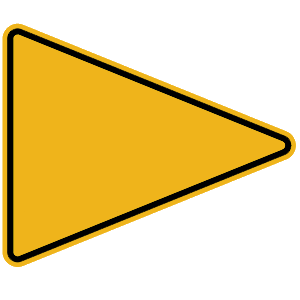
Right turns only.
Right turns permitted.
No passing zone.
Q.57.
You must obey instructions from school crossing guards:
At all times.
Only during school hours.
Unless you do not see any children present.
Q.58.
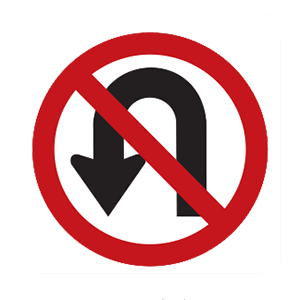
This sign means:
No U-turn.
Two-way left turn.
Minimum speed limit.
No parking.
Q.59.
At an intersection with stop signs on all corners, yield the right-of-way to any driver:
On your left.
Who arrived before you.
Across from your vehicle.
Q.60.
Pennant-shaped signs indicate:
School zones.
No passing zones.
Speed limits.
Railroad crossings.
Support mcqgeeks.com by disabling your adblocker.
×
Please disable the adBlock and continue.
Thank you.
Reload page