MCQGeeks
CBSE
JEE
NTSE
NEET
English
UK Quiz
Quiz
Driving Test
Practice
Games
Driving Test
Michigan
Michigan Car Driving Permit Test-14
Answers
Q.1.
If someone has consumed alcoholic drinks, what will help the person overcome the influence of those drinks?
Tomato juice and lime
Hot coffee
Fresh air
Only time
Q.2.
Drivers who eat and drink while driving:
Make no driving errors.
Have trouble driving slowly.
Are better drivers because they are not hungry.
Have trouble controlling their vehicles.
Q.3.
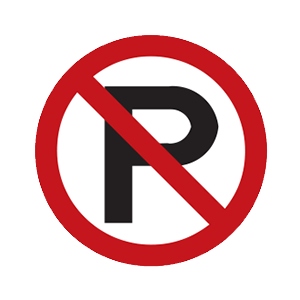
This sign means:
No parking.
Divided highway ahead.
Left turn signal.
Yield.
Q.4.
From top to bottom, the following is the proper order for traffic lights:
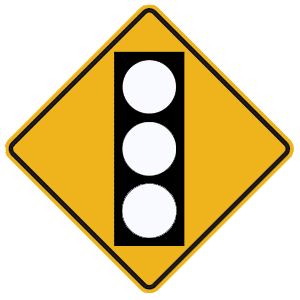
Red, yellow, green.
Red, green, yellow.
Green, red, yellow.
Green, yellow, red.
Q.5.
What does a single dashed white line separating traffic mean?
Drivers may pass, even if it could be dangerous.
Lanes move in opposite directions.
Drivers may not pass.
Drivers may pass if it is safe to do so.
Q.6.
When approaching a school bus stopped with its stop arm extended, drivers should:
Come to a complete stop and wait to proceed.
Honk their horn before passing the bus on its left.
Continue driving when they think most kids are probably done exiting the bus.
Pass the bus before its door opens.
Q.7.
Always signal when:
Changing lanes.
Pulling into or out of a parking space.
Pulling into traffic from a parking area or alley.
All of the above.
Q.8.
When you need to change lanes, it is important to:
Signal your intentions ahead of the lane change.
Check your blind spot.
Make sure the lane is clear before entering.
All of the above.
Q.9.
When approaching a roundabout, you should always:
Increase your speed.
Maintain your speed.
Come to a complete stop.
Decrease your speed.
Q.10.
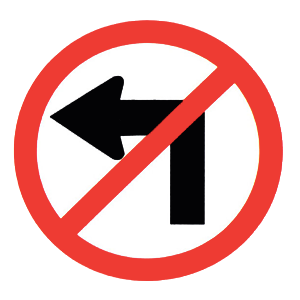
This sign means:
All traffic must turn left.
No left turn.
No U-turn.
Truck route to the left.
Q.11.
When parallel parking between two cars, you should first:
Turn your wheels to the left.
Turn your wheels to the right.
Pull up even with the car in front of your desired parking space.
Back slowly.
Q.12.
Traffic signals sometimes display arrows to control turns from specific lanes. A solid yellow arrow:
Is never used as a traffic signal.
Has the same meaning as a circular yellow traffic light.
Means that drivers may turn in the direction indicated by the arrow.
Tells drivers that a green arrow is about to be shown.
Q.13.
If you stop along the road at night:
Turn off all your lights.
Use your parking lights only.
Use your headlights only.
Turn on your emergency flashers and leave your low beams turned on.
Q.14.
You come to an intersection displaying a flashing red light. You should:
Come to a full stop and go when it is safe to do so.
Stop only if other cars are also approaching the intersection.
Stop only if other cars are already within the intersection.
Slow down and be prepared to stop, if necessary.
Q.15.
When approaching an uncontrolled intersection, a driver should:
Maintain their speed and proceed.
Stop at the intersection, check in all directions, and proceed.
Yield to all other drivers.
Be prepared to yield.
Q.16.
When passing another vehicle on a road with two lanes traveling in opposite directions, you should:
Return to the driving lane when there's enough room between you and the vehicle you passed.
Remain in the left lane if you intend to turn left.
Return to the right side of the roadway immediately.
Drive in either lane.
Q.17.
Which of the following does not happen after drinking?
Your reflexes and reaction time slow down.
Your judgement of speed and distance is distorted.
You are less alert.
You calm down and can concentrate better.
Q.18.
The driver's left arm and hand are extended upward. This hand signal means that the driver plans to:
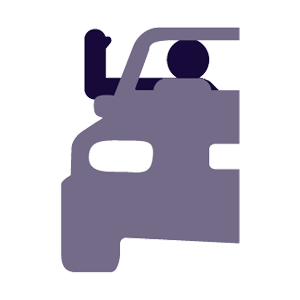
Turn left.
Turn right.
Come to a stop.
Go straight ahead.
Q.19.
To pass a slower-moving vehicle on a two-lane, two-way road, you must:
Not cross the centerline.
Flash your lights at oncoming traffic.
Use the shoulder.
Use the lane that belongs to oncoming traffic.
Q.20.
To help prevent crashes, you should:
Communicate with other road users.
Ignore other drivers on the road.
Drive only on side streets and back roads.
Avoid driving during rush hour.
Q.21.
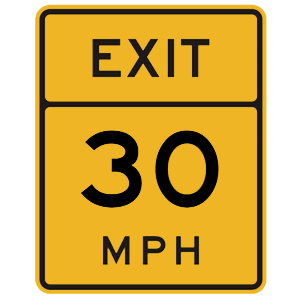
This road sign indicates:
The maximum safe speed for a residential area.
The maximum safe speed for an expressway exit.
The maximum safe speed for an expressway entrance.
The maximum safe speed for a work zone.
Q.22.
You may drive around or under a gate that is being lowered or raised at a railroad crossing:
As long as an approaching train is not too close.
If your vehicle can do so without damaging the gate.
If you first look carefully in both directions.
Under no circumstances.
Q.23.
A “No standing” sign at a certain location means:
You may never stop your vehicle there.
You may park there if the driver remains in the vehicle.
You may stop temporarily only to pickup or discharge passengers.
You may stop to load or unload merchandise.
Q.24.
If traffic signals at an intersection are not functioning due to a power outage:
Park your vehicle as far off the road as possible and wait for power to be restored.
Use hand signals to indicate your intentions to other drivers.
Turn on your hazard lights and proceed through the intersection without stopping.
Treat the intersection as a four-way stop.
Q.25.
Increasing your vehicle’s speed:
Increases your field of vision.
Decreases your field of vision.
Makes it easier to see cross traffic.
Has no effect on your field of vision.
Q.26.
Alcohol:
Slows reflexes and reaction time.
Puts you to sleep.
Wakes you up.
Improves your judgment.
Q.27.
To prevent hydroplaning, you should:
Ensure that your tires have good tread depth.
Ensure that your tires are properly inflated.
Reduce your speed when driving in the rain.
All of the above.
Q.28.
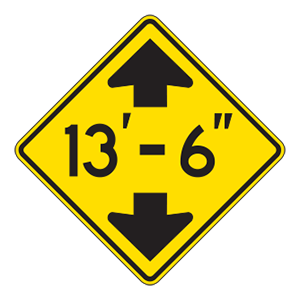
This sign means:
Low clearance.
Fines double in a work zone.
No left turn.
Do not block intersection.
Q.29.
When driving in fog, you should use your:
Low beam headlights.
High beam headlights.
Parking lights.
Hazard flashers.
Q.30.
When driving on slippery roads, you should:
Use alternate routes.
Drive as you would on dry roads.
Increase your following distance.
Avoid crossing bridges or intersections.
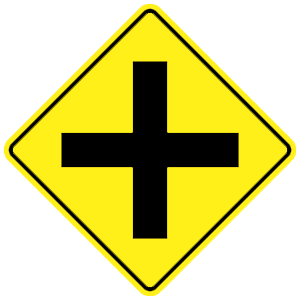
Q.31.
This sign means:
All traffic must turn.
Turn right at the intersection.
Parking area ahead.
Crossroad ahead. Watch for traffic.
Q.32.
Defensive driving is:
Identifying dangerous driving situations and taking action to avoid accidents.
Defending yourself against poor drivers by getting ahead of them in traffic.
Following the vehicle ahead of you at a close distance.
Quickly changing lanes and shifting in and out of traffic congestion.
Q.33.
You have the right-of-way when turning left on which of the following traffic signals?
A solid green light
A flashing yellow light
A green arrow pointing left
A flashing red light
Q.34.
Unless otherwise posted, the maximum speed limit on freeways is:
45 mph.
55 mph.
70 mph.
85 mph.
Q.35.
When changing lanes on a highway, you should:
Signal a lane change.
Check your rearview and outside mirrors.
Check your blind spot by glancing over your shoulder.
All of the above.
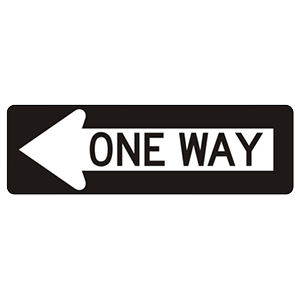
Q.36.
This sign means:
One-way traffic.
Two-way left turn.
Two-way traffic.
Minimum speed limit.
Q.37.
Vehicle stopping distances never depend on:
Your own reaction time.
The time of day.
The condition of your vehicle's brakes.
The condition and type of your vehicle's tires.
Q.38.
If a driver sees an animal on the roadway:
No special action is required.
The driver should honk their horn.
The driver should pass the animal as closely as possible.
The driver should be very cautious.
Q.39.
Smoking and preparing to smoke while driving:
Do not affect driving abilities.
Help maintain driver alertness.
Are distracting activities.
Are not distracting activities.
Q.40.
When changing lanes, you can check your blind spots by:
Using the inside rearview mirror.
Using the outside rearview mirror.
Using both inside and outside rearview mirrors.
Turning your head and looking over your shoulder.
Q.41.
Regulatory signs are usually ____ and should always be obeyed.
White
Blue
Green
Orange
Q.42.
Before entering a roundabout, you must slow down and yield to:
Vehicles in the roundabout.
Bicyclists in the roundabout.
Pedestrians in the roundabout.
All of the above.
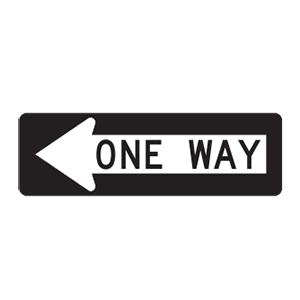
Q.43.
This road sign means:
No right turn.
Curve.
Turn right or left.
Traffic flows only in the direction of the arrow.
Q.44.
You must not drive your vehicle at a speed greater than:
The maximum speed limit.
A speed that is faster than is reasonable and prudent.
A speed that is safe for existing conditions.
All of the above.
Q.45.
Unless otherwise posted, the speed limit in platted subdivisions is:
25 mph.
35 mph.
45 mph.
55 mph.
Q.46.
What is the first thing you should adjust, if needed, when you get into a car to drive?
Your seat belt
The steering wheel
Your rearview mirror
Your seat
Q.47.
Which of the following lights indicates that you should slow down and proceed with caution at an intersection?
A flashing yellow light
A flashing red light
A solid yellow light
A solid red light
Q.48.
Your vehicle strikes an unattended parked vehicle and you cannot locate the vehicle’s owner. You:
Have done as much as you can.
Must stay until the police arrive.
Must leave a written notice containing your name, your address, and the circumstances of the accident.
May go on your way.
Q.49.
If a transit vehicle is signaling to re-enter the main roadway following a stop, you must:
Honk to let them know you’re there.
Move to the left lane.
Yield.
Speed up to pass.
Q.50.
Emergency vehicles:
Have the right-of-way when using sirens, horns, and/or flashing lights.
May use a loudspeaker to give instructions.
May follow each other.
All of the above.
Support mcqgeeks.com by disabling your adblocker.
×
Please disable the adBlock and continue.
Thank you.
Reload page