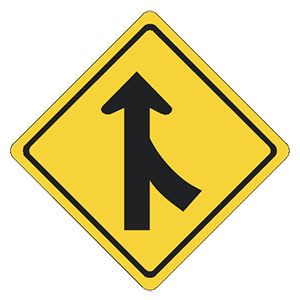
Q.1.
This sign means:
Q.2.
If it feels like your tires have lost contact with the surface of the road, you should:
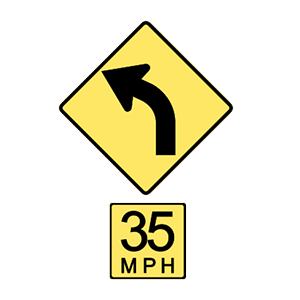
Q.3.
This sign means:
Q.4.
The best thing to do if you become tired while driving is to:
Q.5.
Streets and highways are most slippery:
Q.6.
A red arrow pointing to the right on a traffic light means you may:
Q.7.
If you approach a traffic light with a red signal and a police officer directs you to go through the intersection without stopping, you should:
Q.8.
Allow extra space in front of your vehicle when following a:
Q.9.
Which of the following driving skills are affected by the use of alcohol and/or drugs?
Q.10.
You are driving on the freeway behind a large truck. You should drive:
Q.11.
Your following distance should be ____ for every ten miles per hour of your driving speed.
Q.12.
If you see a pedestrian using a guide dog or carrying a white cane:
Q.13.
Slowing down just to look at collisions or anything else out-of-the-ordinary:
Q.14.
You can help keep the driver behind you a safe distance away from your vehicle by:
Q.15.
If you have a sudden tire blowout:
Q.16.
When driving on an interstate, to avoid traffic merging from on-ramps to your right, the best thing to do is to:
Q.17.
This sign means:
Q.18.
You exit the freeway on a ramp that curves downhill. You should:
Q.19.
When driving in fog, it is best to drive with:
Q.20.
Just like alcohol and other drugs, drowsiness can:
Q.21.
When turning left from a two-way street onto a one-way street, you should:
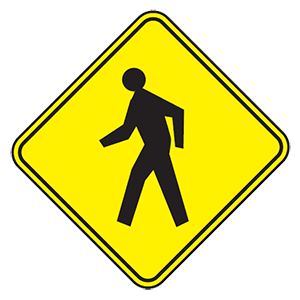
Q.22.
This sign means:
Q.23.
Having a driver license is a:
Q.24.
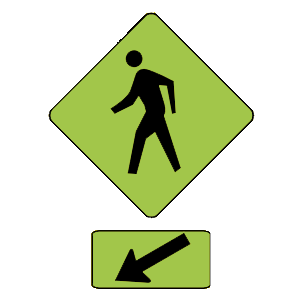
This sign means:
Q.25.
A broken yellow line beside a solid yellow line indicates that passing is:
Q.26.
"No zones" are areas around trucks where cars:
Q.27.
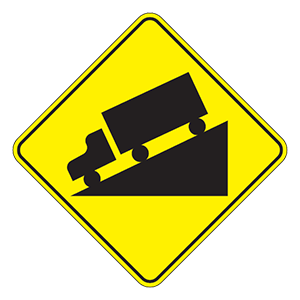
This sign means:
Q.28.
When driving on a slippery surface, such as snow or ice:
Q.29.
When driving in work zones, you should:
Q.30.
If you must park your vehicle in an area not usually used for parking: