MCQGeeks
CBSE
JEE
NTSE
NEET
English
UK Quiz
Quiz
Driving Test
Practice
Games
Driving Test
Mississippi
Mississippi Car Driving Permit Test-24
Answers
Q.1.
A double solid yellow line down the center of a two-lane road indicates:
Lanes are moving in opposite directions and drivers are not permitted to pass.
Lanes are moving in opposite directions and drivers are permitted to pass.
Lanes are moving in the same direction and drivers are not permitted to pass.
Q.2.
When changing lanes, you should never:
Look over your shoulder to check your blind spot.
Change lanes abruptly or spontaneously.
Check for other vehicles moving into the same lane.
Q.3.
When driving in fog, it is best to drive with:
High beam headlights.
Low beam headlights.
Four-way flashers.
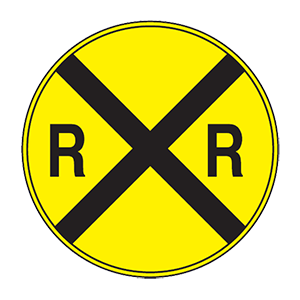
Q.4.
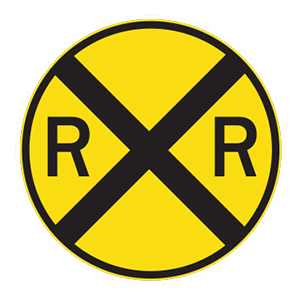
This sign means:
Stop sign ahead.
Railroad crossing ahead.
Construction ahead.
Q.5.
This sign means you are approaching a railroad crossing that does not have a signal. You should:
Come to a complete stop.
Proceed at a consistent speed while looking and listening for approaching trains.
Slow down, look both ways, listen for any trains, and be prepared to stop if any trains are nearby.
Q.6.
It is very foggy. You should slow down and:
Turn on your emergency flashers.
Turn your lights to their high beam setting.
Turn your lights to their low beam setting.
Q.7.
When entering an interstate highway, you should:
Stop, check for cars, and enter when safe.
Check for cars and reduce your speed to 25 mph before entering the traffic lane.
Check for cars, increase your speed to match the flow of traffic, and merge when the way is clear.
Q.8.
Work zone barriers, drums, cones, and signs are used to:
Make drivers angry about slow traffic.
Inconvenience drivers.
Keep traffic out of hazardous work zones.
Q.9.
You are driving on a city street and see an emergency vehicle with flashing lights behind you. What should you do?
Drive to the right edge of the road and slow down.
Drive to the right edge of the road and stop.
Stay in your lane, slow down, and let it pass.
Q.10.
On a multilane road, a dashed yellow line next to a solid yellow line means:
Passing is prohibited from both directions.
Passing is permitted from both directions.
Passing is permitted only from the direction next to the dashed line.
Q.11.
What is the only effective way to remove alcohol from the body?
Drink strong coffee.
Wait.
Take a cold shower.
Q.12.
Only ____ can reduce blood alcohol content (BAC) and alcohol's effects on the body.
Drinking caffeine
Eating foods high in fat
Time
Q.13.
Which of the following is a dangerous habit when driving in work zones?
Tailgating another vehicle
Failing to carefully watch for workers and moving equipment
Both of the above
Q.14.
Yellow lines separate:
Traffic lanes on one-way streets.
Traffic moving in opposite directions on two-way roads.
All carpool lanes from regular traffic lanes.
Q.15.
If you are driving near a large commercial vehicle, you should:
Follow the large vehicle closely to reduce wind drag on your vehicle.
Avoid driving beside it for long stretches of time.
Drive on its right side when on curves and hills.
Q.16.
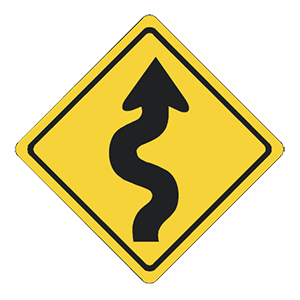
This sign means:
Winding road ahead.
Do not enter.
Pedestrian crossing.
Q.17.
This red and white sign means you should:
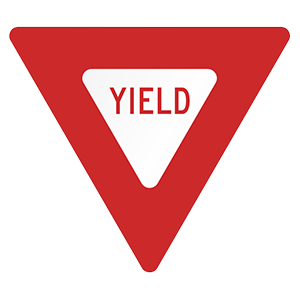
Stop and check for traffic coming from both directions before proceeding.
Give the right-of-way to traffic on the road you wish to enter or cross.
Maintain a steady speed and check for traffic coming from all directions.
Q.18.
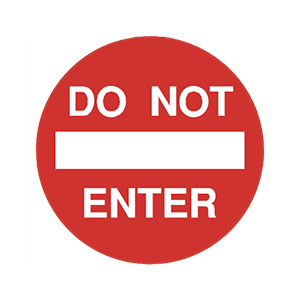
This sign means:
Do not enter.
Yield the right-of-way.
Reserved parking for persons with disabilities.
Q.19.
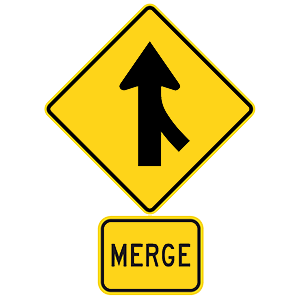
This road sign means:
Cars in the right lane must slow down.
No left turn.
Merge.
Q.20.
When taking any medicine, you should:
Consult your doctor about the effects before driving.
Have someone follow you home.
Keep your window open and drive more slowly.
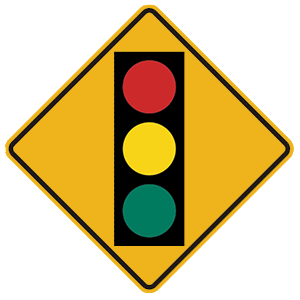
Q.21.
This sign means:
Traffic signal ahead.
Stop.
Yield the right-of-way.
Q.22.
Fatigue increases the risk of:
Missing an exit.
Being late for an appointment.
Falling asleep behind the wheel and crashing.
Q.23.
You should not make sudden stops in front of large trucks and buses because:
Small vehicle drivers cannot adequately see large trucks and buses in their rearview mirrors.
Large trucks and buses, due to their size and weight, require longer distances to stop than smaller passenger vehicles.
Large trucks and buses travel at a higher speeds than small vehicles.
Q.24.
The driver ahead of you stops at a crosswalk. What should you do?
Cautiously pass the vehicle at 10 mph or slower.
Stop, proceeding only when all the pedestrians have crossed.
Change lanes, look carefully, and pass the stopped vehicle.
Q.25.
If you are driving and you see animals standing near the roadway:
Speed up to scare them away.
Slow down and proceed with caution.
Quickly swerve into the next lane.
Q.26.
If your car begins to skid out of control, you should:
Pump the brakes.
Apply the brakes lightly.
Stay off the brakes.
Q.27.
Distracted driving is:
Anything that causes evasive action while driving.
Anything that takes your attention away from driving.
Anything that causes you to pay more attention to driving.
Q.28.
If your vehicle starts to lose traction because of water on the road, you should:
Drive at a constant speed to gain better traction.
Apply the brakes firmly to prevent your vehicle from sliding.
Slow down gradually and not apply the brakes.
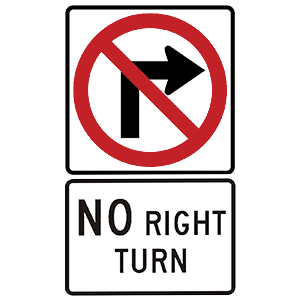
Q.29.
What does this road sign mean?
You must turn right.
No right turns permitted.
Right turns permitted on a red light.
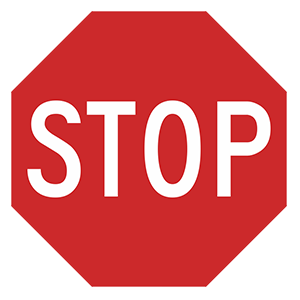
Q.30.
This road sign means:
Slow down or stop.
Stop if necessary.
You must come to a complete stop.
Support mcqgeeks.com by disabling your adblocker.
×
Please disable the adBlock and continue.
Thank you.
Reload page