Q.1.
As a motorcycle operator, you can help others see you by:
Q.2.
When slowing or stopping, you should use both brakes:
Q.3.
The front brake:
Q.4.
A way to lower the risk of being involved in a crash is to:
Q.5.
A pre-ride inspection usually takes:
Q.6.
When you ride, the best gear to wear is:
Q.7.
When riding in curves, turning, or entering a highway, the best group formation is:
Q.8.
Your primary source for information about your motorcycle should be:
Q.9.
If a driver is following you too closely, you should:
Q.10.
How can you regain control if your rear tire locks up?
Q.11.
A three-wheeled motorcycle:
Q.12.
A motorcycle operator can slow down by:
Q.13.
When riding in a group, the best way to keep ranks close while maintaining an adequate safety cushion is to ride:
Q.14.
To reduce your reaction time, you should:
Q.15.
When it is raining, it is usually best to:
Q.16.
When being passed, do not move into the portion of the lane farthest from the passing vehicle because:
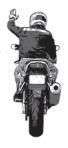
Q.17.
What does this signal mean?
Q.18.
When it comes to motorcycle safety, you should:
Q.19.
If the front wheel locks, you should:
Q.20.
Engine braking:
Q.21.
To control a motorcycle properly, you should:
Q.22.
A proper lane position should do all of the following, except:
Q.23.
If you find yourself riding alongside another vehicle, you should:
Q.24.
A motorcycle needs:
Q.25.
The middle portion of the lane usually contains an oily strip. You should: