MCQGeeks
CBSE
JEE
NTSE
NEET
English
UK Quiz
Quiz
Driving Test
Practice
Games
Driving Test
Montana
Montana Car Driving Permit Test-7
Answers
Q.1.
Which is not a factor in determining the distance that it takes to stop your vehicle?
Steering ability
Braking distance
Reaction distance
Perception time
Q.2.
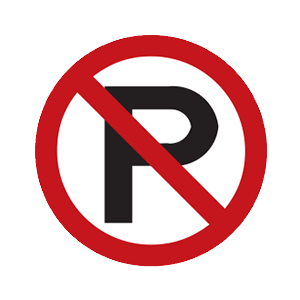
This sign means:
No parking.
Divided highway ahead.
Left turn signal.
Yield.
Q.3.
A single broken white line down the center of a two-lane road indicates:
Lanes are moving in opposite directions and drivers are not permitted to pass.
Lanes are moving in opposite directions and drivers are permitted to pass when it is safe to do so.
Lanes are moving in the same direction and drivers are not permitted to pass.
Lanes are moving in the same direction and drivers are permitted to pass when it is safe to do so.
Q.4.
When dealing with pedestrians, a driver must:
Make sure the pedestrian is aware of their vehicle.
Always yield the right-of-way, even if the pedestrian is in the wrong.
Yield the right-of-way only when the pedestrian is legally entitled to it.
Slow down and sound their horn near a crosswalk.
Q.5.
A speed restriction sign:
May be ignored in rainy, snowy, or icy conditions.
Has a triangular shape.
Is blue with black lettering.
Shows a recommended speed for a curve or turn.
Q.6.
On slippery roads, you should:
Slow down.
Drive more quickly.
Drive the speed limit, with caution.
Not drive more quickly than 20 mph.
Q.7.
Hydroplaning is usually caused by:
Excessive stops.
Sudden stops.
Sudden turns.
Excessive speed.
Q.8.
In which of the following ways can alcoholic beverages affect you?
It slows your reaction time.
It gives you a feeling of false confidence.
It impairs your thinking ability.
All of the above.
Q.9.
When parking uphill next to a curb, set the parking brake and:
Keep the rear tires against the curb.
Keep the front tires straight ahead.
Turn your steering wheel away from the curb.
Turn your steering wheel toward the curb.
Q.10.
When riding in a vehicle, small children:
May be safely held by a strong adult.
Will be safe if they are standing on the floor in the back of the vehicle.
Will not be hurt in an accident because they are small.
Must never be allowed to ride while standing in the vehicle.
Q.11.
When driving in fog:
Use your parking lights.
Use your low beams.
Use your high beams.
It makes no difference which lights you use.
Q.12.
You may cross double solid yellow lines:
To pass a slow-moving truck.
To turn into a driveway.
To pass another car.
Under no conditions.
Q.13.
You may avoid the risks of alcohol-related crashes by:
Deciding before you start drinking that you are not going to drive.
Simply saying, "No thanks, I'm driving," if someone offers you a drink.
Calling a taxi.
Doing any of the above.
Q.14.
What is the number one killer on Montana’s roads?
Poor or unkempt roads
Inclement weather/driving conditions
Drunk drivers
Excessive speed
Q.15.
Which of the following influence(s) the effects of alcohol?
The amount of food in the stomach
The body weight of an individual
How much time passes between drinks
All three choices
Q.16.
When approaching an uncontrolled intersection, a driver should:
Maintain their speed and proceed.
Stop at the intersection, check in all directions, and proceed.
Yield to all other drivers.
Be prepared to yield.
Q.17.
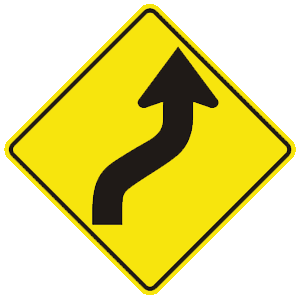
This road sign means:
Road construction ahead.
The road ahead curves left, then right.
The road ahead curves right, then left.
Steep grade ahead.
Q.18.
You may not cross a single broken white or yellow line:
When doing so would interfere with traffic.
When turning left into a driveway.
When the car in front of you is disabled.
When passing to the right on a one-way street.
Q.19.
If you miss your exit on an interstate expressway:
Stop and make a U-turn.
Get off at the next exit and come back to the exit you missed.
Roll down your window and ask the driver next to you for help.
Back up on the highway.
Q.20.
A slow-moving vehicle emblem is:
A rectangular red sign.
A circular green sign.
A diamond-shaped yellow sign.
A triangular orange sign.
Q.21.
What does an orange-colored sign indicate?
The start of a no passing zone.
A railroad crossing is ahead.
A school zone is ahead.
The presence of construction work.
Q.22.
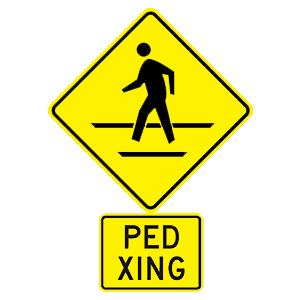
This sign means:
School ahead.
School crossing.
Pedestrian crossing.
Construction workers on or near the roadway.
Q.23.
When the driver behind you wants to pass, you should:
Speed up.
Go the same speed.
Slow down to allow room in front of your vehicle for the other driver to complete the pass easily.
Change lanes.
Q.24.
Before switching on the ignition, you should:
Be sure only backseat passengers have buckled their seat belts.
Be sure only adult passengers have buckled their seat belts.
Be sure only child passengers have buckled their seat belts.
Be sure all of the vehicle's occupants have buckled their seat belts.
Q.25.
You come to an intersection that is blocked by other traffic. You should:
Go slowly until the traffic ahead moves.
Get as close as possible to the car in front of you.
Stay out of the intersection until you can pass through.
Sound your horn to make the cars move up.
Q.26.
When turning or changing lanes, you must:
Always signal your intentions, even when no visible traffic is present.
Signal only if there is visible traffic.
Signal only when driving at night.
Signal only when driving in heavy traffic at night.
Q.27.
Upon hearing an emergency vehicle siren, a driver must:
Stop immediately where they are.
Stop and wait for a green traffic light.
Stop on the right side of the street or roadway.
Increase their speed and stay out of the path of the emergency vehicle.
Q.28.
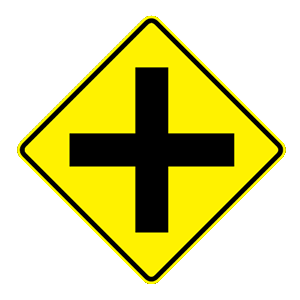
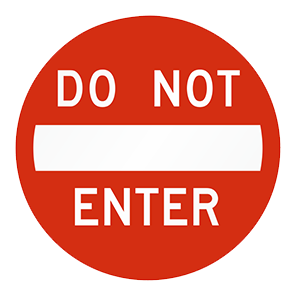
This road sign means:
A steep grade is ahead.
You must turn left ahead.
Do not enter.
A four-way intersection is ahead.
Q.29.
What should you do if your vehicle’s right wheels leave the pavement?
Stop quickly.
Immediately pull all the way off of the road and get back on when it is safe.
Accelerate and steer back on the road quickly.
Take your foot off the accelerator, slow down, then ease back onto the road when it is safe to do so.
Q.30.
This road sign means:
You are about to enter a one-way street from the wrong direction.
U-turns are prohibited.
You may proceed if the way is clear.
Come to a complete stop before proceeding.
Q.31.
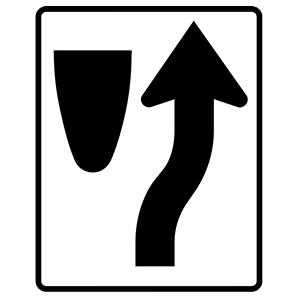
This sign means:
Divided highway ends.
One-way traffic ahead.
Two-way traffic ahead.
Keep to the right.
Q.32.
“Highway hypnosis” is a driving condition that can result from:
Staring at the roadway for long periods of time.
Frequent rest stops.
Too much sleep the night before your trip.
Short trips on expressways.
Q.33.
If you experience a tire blowout:
Take your foot of the gas.
Do not immediately use your brakes.
Gradually slow down and pull off the side of the road.
All of the above.
Support mcqgeeks.com by disabling your adblocker.
×
Please disable the adBlock and continue.
Thank you.
Reload page