Q.1.
When it is raining, it is usually best to:
Q.2.
Where is the greatest potential for conflict between motorcycle operators and other drivers?
Q.3.
A three-wheeled motorcycle:
Q.4.
If your motorcycle has convex mirrors and you are not familiar with this type of mirror, you should practice using the mirrors because:
Q.5.
Your lane position should do all of the following, except:
Q.6.
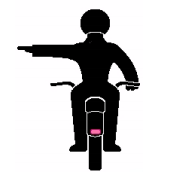
When an operator's left arm is extended straight out to the left, it means the operator:
Q.7.
Use a turn signal:
Q.8.
When selecting a helmet, make sure it is all of the following, except:
Q.9.
Motorcycle headlights are:
Q.10.
Several factors influence blood alcohol concentration (BAC). Which of the following does not play a role?
Q.11.
When braking, you should:
Q.12.
If you are transporting a passenger, they should:
Q.13.
To swerve correctly:
Q.14.
If your motorcycle starts to wobble, you should:
Q.15.
To lessen your chances of being involved in a crash, you should:
Q.16.
Which of the following will help you ride safely on slippery surfaces?
Q.17.
When preparing to pass another vehicle on the left, you should:
Q.18.
Before changing lanes, motorcycle riders should turn their heads to look over their shoulders because:
Q.19.
More than half of all crashes:
Q.20.
To reduce the amount of time you need to react to a hazard, you should:
Q.21.
Proper clothing for riding offers all of the following, except:
Q.22.
When riding in a group, inexperienced riders should position themselves:
Q.23.
The proper body position on a motorcycle:
Q.24.
When stopping, it is best to:
Q.25.
A motorcyclist is well-protected if they are wearing: