MCQGeeks
CBSE
JEE
NTSE
NEET
English
UK Quiz
Quiz
Driving Test
Practice
Games
Driving Test
Nebraska
Nebraska Motorcycle Driving Permit Test-11
Answers
Q.1.
The control for the front brake lever is usually located:
On the left handle grip.
On the right handle grip.
On both handle grips.
Q.2.
When riding behind another vehicle, you should position yourself:
To be seen in the vehicle’s side mirror.
To be seen in the vehicle’s rearview mirror.
To be seen through the vehicle's passenger window.
Q.3.
When approaching a blind intersection, you should:
Move into the portion of the lane that will bring you into another driver’s field of vision at the earliest possible moment.
Stop at the stop sign or signal and then proceed normally.
Flash your lights and sound your horn to alert other drivers to your presence.
Q.4.
If passing another vehicle:
You may exceed the speed limit until the pass is complete.
You may disregard no passing zone markings if you began the pass in a passing zone.
You must observe the posted speed limit.
Q.5.
The formation you should take when riding in a group:
Is always single-file.
Depends on the situation.
Is always staggered.
Q.6.
A benefit of keeping a cushion of space between you and surrounding vehicles is that:
You are better able to draft off of other vehicles.
You will be able to stop quickly.
You will have more time to react to the movements of other drivers.
Q.7.
Eye protection:
Is not necessary if your motorcycle is equipped with a windshield.
Is only necessary when riding in bad weather.
Should allow the rider a clear view to either side.
Q.8.
A plastic, shatter-resistant face shield can protect you from:
Noise.
Dust.
Glare.
Q.9.
When riding on a slippery surface, you should:
Avoid making sudden moves, as doing so could cause a skid.
Travel on the shoulder to be out of the way of traffic.
Use only the rear brake because the front brake is ineffective on slippery surfaces.
Q.10.
After riding over an object on the road, you should:
Continue riding because the danger has passed.
Pull to the side of the road and check your tires and rims for damage.
Stop to remove the object from the road.
Q.11.
You should operate the engine cut-off switch and pull in the clutch when:
The throttle is stuck and you cannot free it.
You start to lose control in a curve.
The motorcycle starts to wobble.
Q.12.
Oil drippings and debris often collect in ______ of a lane.
The left portion
The middle portion
The right portion
Q.13.
When entering a turn, you should:
Slow down.
Speed up.
Come to a complete stop.
Q.14.
To execute a turn safely, a motorcycle rider should always:
Lean in the direction of the curve.
Slow down in the turn.
Turn by using only the handle bars.
Q.15.
You have an improved chance of surviving a crash if you wear:
A DOT-compliant helmet.
A baseball cap.
Comfortable shoes.
Q.16.
If you need to react to a hazard in the road, do not:
Avoid communicating with other drivers.
Adjust your speed accordingly.
Make your presence known by sounding your horn and/or using lights or signals.
Q.17.
There is the greatest potential for conflict between a motorcycle and other traffic:
On the highway.
At intersections.
On rural roads.
Q.18.
When choosing a helmet, you should ensure that it:
Has no cracks or defects.
Looks nice.
Fits loosely.
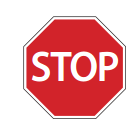
Q.19.
What does this sign mean?
Vehicles will be entering the roadway.
Signal ahead.
Come to a complete stop and proceed when it is safe to do so.
Q.20.
To reduce your reaction time, you should:
Ride more slowly than the speed limit.
Shift into neutral when slowing.
Cover the clutch and the brakes.
Q.21.
When traveling at night, you should:
Ride as fast as you would if riding during the day.
Ride more slowly than you would if riding during the day.
Ride faster than you would if riding during the day.
Q.22.
Unlike other beverages, alcohol:
Is absorbed into the bloodstream right away.
Needs to be digested.
Doesn’t affect humans.
Q.23.
The risk of a head or neck injury is reduced:
By wearing a helmet.
By riding more slowly.
By reading the owner’s manual.
Q.24.
When riding a motorcycle, you should:
Only ride in the left portion of the lane.
Vary your lane position depending on conditions.
Only ride in the right portion of the lane.
Q.25.
When consumed together, the effects of alcohol and drugs:
Are less dangerous than when either is consumed alone.
Often balance out.
Can be more pronounced than when either is consumed alone.
Support mcqgeeks.com by disabling your adblocker.
×
Please disable the adBlock and continue.
Thank you.
Reload page