Q.1.
A person's ability to drive can be impaired by:
Q.2.
When turning left, drivers must yield the right-of-way to:
Q.3.
The best way to avoid loss of control under wet conditions is to increase your vehicle's speed.
Q.4.
You are coming to an intersection with a flashing yellow light. You should:
Q.5.
On a freeway, you realize you missed your turn or exit. You should:
Q.6.
Headlights are legally required to be in use when people or vehicles cannot be clearly seen at a distance of 1,feet.
Q.7.
When you see or hear an emergency vehicle coming, you should:
Q.8.
This sign is a warning that you are approaching:

Q.9.
When should a driver consider driving more slowly than the posted speed limit?
Q.10.
The most common color of warning signs is:
Q.11.
A red flashing traffic light has the same meaning as a:
Q.12.
When approaching a stop sign that is not marked by a crosswalk, drivers should stop their vehicles before entering the intersection.
Q.13.
When approaching a disabled pedestrian using a guide dog, white cane, or other assistive device, a driver should yield the right-of-way.
Q.14.
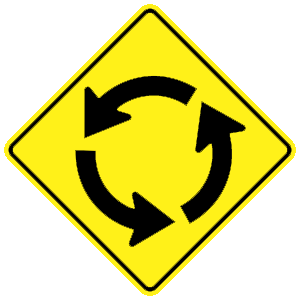
This sign means:
Q.15.
Hydroplaning is usually caused by:
Q.16.
You must yield to children playing in the streets.
Q.17.
Confirm that your passengers have buckled their seat belts:
Q.18.
If a traffic light shows both a red light and a green arrow, a driver may not turn in the direction of the arrow until the red light has changed.
Q.19.
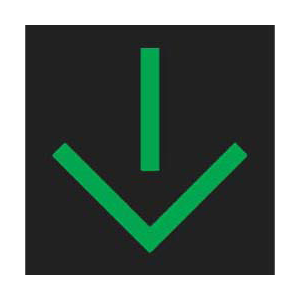
This green arrow on a lane use control signal means:
Q.20.
When you see other drivers around you acting or reacting in anger:
Q.21.
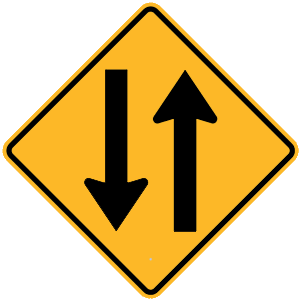
This sign means:
Q.22.
You must not drive your vehicle at a speed greater than:
Q.23.
If another car is in danger of hitting you, you should:
Q.24.
What is the appropriate action to take when approaching a railroad crossing that does not have signals to direct traffic?
Q.25.
Many crashes are caused by:
Q.26.
Drive below the posted speed limit when:
Q.27.
When you park uphill on a street with a curb:
Q.28.
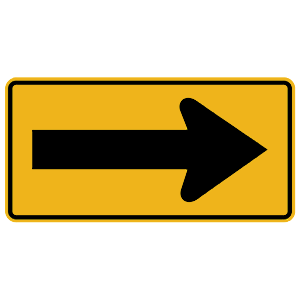
When you see this black and yellow sign, it means:
Q.29.
Vehicle stopping distances never depend on:
Q.30.
When dealing with pedestrians, a driver must:
Q.31.
This sign means:
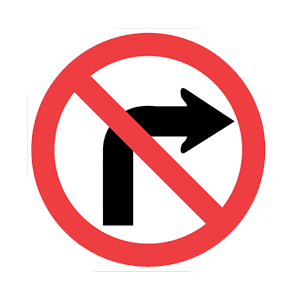
Q.32.
If another driver cuts you off in traffic, you should:
Q.33.
Traffic signals sometimes display arrows to control turns from specific lanes. A solid red arrow:
Q.34.
When merging onto a freeway, it is usually best to:
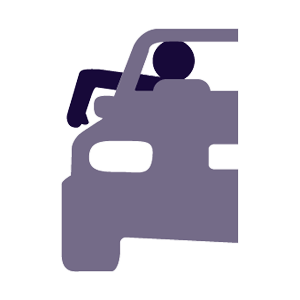
Q.35.
The driver's left arm and hand are extended downward. This hand signal means that the driver plans to:
Q.36.
You may drive around the gates at a railroad crossing:
Q.37.
When you hear a fire engine siren behind you, you must:
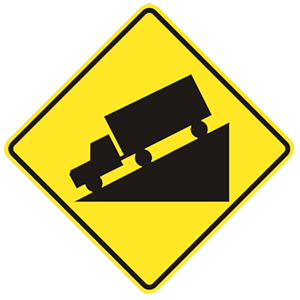
Q.38.
This road sign means:
Q.39.
Before turning left, it is important to:
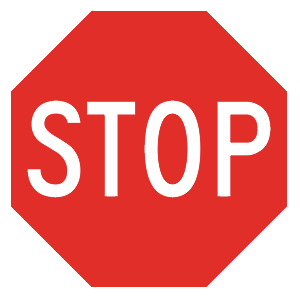
Q.40.
When you see this sign, you must:
Q.41.
When meeting a car with blinding headlights, you should:
Q.42.
When approaching a railroad crossing that has no warning signals (such as electric flashing lights or gates), a driver should slow down, look, and listen.
Q.43.
This sign means:
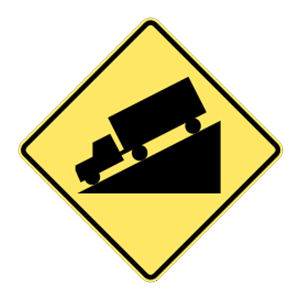
Q.44.
When driving on roads that may be slippery:
Q.45.
On a two-lane street, your vehicle is being followed by a fire engine that is not using its emergency signals. You should:
Q.46.
You have the right-of-way when turning left on which of the following traffic signals?
Q.47.
A solid yellow line on your side of the centerline means:
Q.48.
The most effective safety restraints in a traffic crash are:
Q.49.
This sign means:
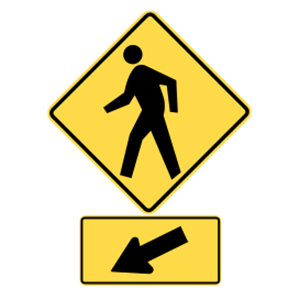
Q.50.
If you stop at a railroad crossing with more than one track: