MCQGeeks
CBSE
JEE
NTSE
NEET
English
UK Quiz
Quiz
Driving Test
Practice
Games
Driving Test
Nevada
Nevada Car Driving Permit Test-24
Answers
Q.1.
This road sign means:
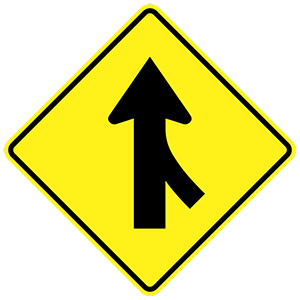
Cars in right lane must slow down.
No left turn.
Merge.
Pass only in the right lane.
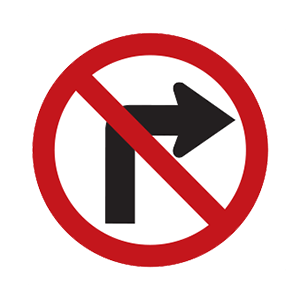
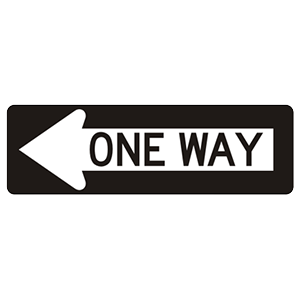
Q.2.
This sign means:
No right turn.
Keep right.
No U-turn.
Left lane must turn left.
Q.3.
Always signal when:
Changing lanes.
Pulling into or out of a parking space.
Pulling into traffic from an alley or parking area.
All of the above.
Q.4.
When approaching a roundabout, you should always:
Increase your speed.
Maintain your speed.
Come to a complete stop.
Decrease your speed.
Q.5.
A steady yellow light at an intersection means:
Go.
Yield to other cars.
Slow down and prepare to stop.
Stop.
Q.6.
A driver can legally pass on the right side of another vehicle:
If the vehicle is waiting to turn left and there is an available passing lane.
Even if it means driving off the pavement.
On a narrow bridge.
At any time.
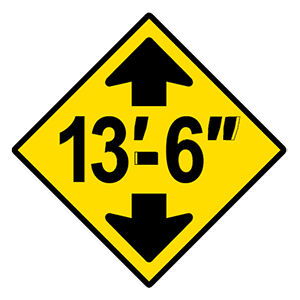
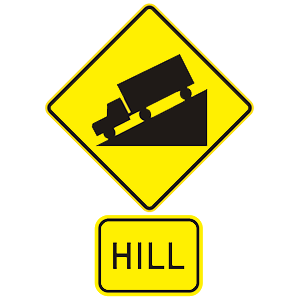
Q.7.
This road sign means:
Steep grade ahead.
Pedestrian crossing ahead.
Low ground railroad crossing.
Low clearance.
Q.8.
Two solid white lines painted across a traffic lane show the boundaries of a crosswalk. As a driver, you should know that:
Motor vehicles have the right-of-way over pedestrians in crosswalks.
When pedestrians are in crosswalks, they should be given the right-of-way.
No one has the right-of-way in a crosswalk.
Pedestrians are responsible to stay out of the way of all traffic.
Q.9.
You are turning onto a two-lane road divided by a broken yellow line. You know immediately that:
You are on a two-way road.
You are on a one-way road.
The road is under repair.
You must stay to the left of the broken yellow lines.
Q.10.
When driving on an interstate:
Stop on the shoulder of the road if you are tired.
You should always use cruise control.
Signal, check mirrors, and check blind spots before changing lanes.
You should change lanes often.
Q.11.
An "End school zone" sign indicates:
That the speed limit is 20 mph.
The beginning of a reduced speed zone.
The increased possibility of encountering pedestrians.
The end of a reduced speed zone.
Q.12.
How do you check your blind spots?
By looking in your side mirrors.
By turning your head and looking over your shoulders.
By looking in your rearview mirror.
By staring straight ahead.
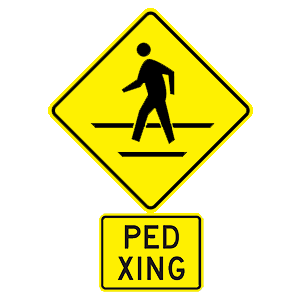
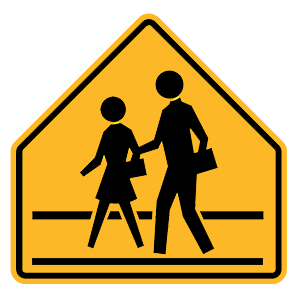
Q.13.
This sign means:
School ahead.
School crossing.
Pedestrian crossing.
Construction workers on or near the roadway.
Q.14.
Drivers who have consumed alcohol before getting behind the wheel:
Are always aware of the risks they are taking.
Do not have sufficient control over their bodies and minds or the vehicles being driven.
Are better drivers because they are more careful than sober drivers.
Have quicker reaction times.
Q.15.
If your vehicle begins to skid, you should:
Overcorrect.
Turn your steering wheel into traffic.
Turn your steering wheel in the direction you want to go.
Release the steering wheel.
Q.16.
You are coming to an intersection and have a green light. Pedestrians are crossing against the red. You should:
Honk your horn.
Speed up and pass in front of the pedestrians.
Stop to let the pedestrians cross safely.
Drive close to the pedestrians and frighten them so they’ll think twice before crossing against a red light.
Q.17.
If you begin to feel tired while driving, the best thing to do is to:
Get some coffee.
Open your window.
Stop driving.
Turn on the radio.
Q.18.
Signs that are colored orange are:
Work zone signs.
Regulatory signs.
School zone signs.
Guide signs.
Q.19.
You must yield to other drivers:
When entering a street from a garage or alley.
When they are on a road to your left and you have reached an unmarked intersection at the same time.
When your traffic signal is a green arrow.
All of the above.
Q.20.
Traffic signals sometimes display arrows to control turns from specific lanes. A green arrow:
Is used only on one-way streets.
Has the same meaning as a circular green traffic light, but traffic must turn in the direction indicated by the arrow.
Means that you may proceed, but only if the green arrow is accompanied by a circular green light.
Points the way to an airport.
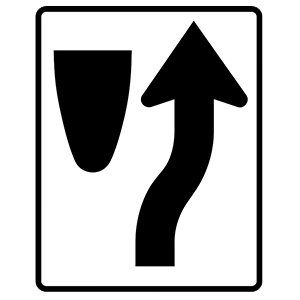
Q.21.
This sign means:
Divided highway ends.
One-way traffic ahead.
Two-way traffic ahead.
Keep to the right.
Q.22.
When driving on city streets, you should signal to turn ____ before beginning a turn.
20 feet
50 feet
100 feet
300 feet
Q.23.
You may not parallel park within ____ of a fire hydrant.
20 feet
15 feet
30 feet
45 feet
Q.24.
You do not have to stop for a school bus that is stopped with its red lights flashing if it is on a private road.
True
False
Q.25.
This road sign means:
No right turn.
Curve.
Turn right or left.
Traffic flows only in the direction of the arrow.
Q.26.
Your vehicle strikes an unattended parked vehicle and you cannot locate the vehicle’s owner. You:
Have done as much as you can.
Must stay until the police arrive.
Must leave a written notice containing your name, your address, and the circumstances of the accident.
May go on your way.
Q.27.
This sign means:
You must drive slowly and sound your horn.
A bus stop is ahead.
You are entering a school's parking lot.
A school zone is ahead.
Q.28.
You cannot pass safely on a two-way, two-lane street unless:
You are able to clearly see the road ahead.
You can return to your lane before meeting oncoming traffic.
Your vehicle is capable of the speed necessary to pass.
All of the above.
Q.29.
When sharing the road with a truck, it is important to remember that trucks generally:
Require longer distances to stop than smaller vehicles do.
Require less time to pass on a downgrade than smaller vehicles do.
Require a smaller turning radius than smaller vehicles do.
Require less time to pass on an incline than smaller vehicles do.
Q.30.
If you are turning onto a street with more than one lane traveling in your direction, you should:
Turn into the lane closest to your previous lane.
Turn into the lane marked with an arrow.
Turn into the middle lane.
Turn into any lane.
Q.31.
Large vehicles have blind spots that can extend up tofeet directly behind the vehicle.
TRUE
FALSE
Q.32.
A flashing red light on a traffic signal means:
The same thing as a stop sign.
The traffic signal is broken.
You do not have to come to a complete stop.
Driving conditions are dangerous.
Q.33.
This sign means:
Pedestrians only.
Intersection ahead.
Hiking trails ahead.
School crossing ahead.
Q.34.
You may not cross a single broken white or yellow line:
When doing so would interfere with traffic.
When turning left into a driveway.
When the car in front of you is disabled.
When passing to the right on a one-way street.
Q.35.
On slippery roads, you should:
Slow down.
Drive more quickly.
Drive the speed limit, with caution.
Not drive more quickly than 20 mph.
Q.36.
When turning or changing lanes, you must:
Always signal your intentions, even when no visible traffic is present.
Signal only if there is visible traffic.
Signal only when driving at night.
Signal only when driving in heavy traffic at night.
Q.37.
When changing lanes, you should:
Rely on your mirrors.
Begin signaling as you move into the next lane.
Signal at least 500 feet before your lane change when driving on residential streets.
Always check your blind spot.
Q.38.
You may drive in a High Occupancy Vehicle (HOV) lane if:
You are driving faster than the flow of traffic.
You are driving more slowly than the flow of traffic.
Your vehicle has multiple occupants.
You are in a hurry.
Q.39.
This sign means:
Trucks only.
Trucks are entering the highway.
Upcoming hill.
Trucks have the right-of-way.
Q.40.
The driver's left arm and hand are extended upward. This hand signal means that the driver plans to:
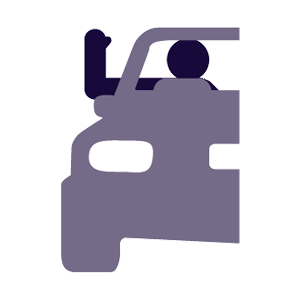
Turn left.
Turn right.
Come to a stop.
Go straight ahead.
Q.41.
A slow-moving vehicle emblem is:
A rectangular red sign.
A circular green sign.
A diamond-shaped yellow sign.
A triangular orange sign.
Q.42.
If a crossing guard is directing traffic in a school zone, you must:
Follow the directions given by the crossing guard.
Copy what surrounding traffic is doing, despite the crossing guard's instructions.
Assume the guard is not supposed to be directing traffic.
Follow rules that would be in place if no children were present.
Q.43.
When you want to make a right turn, your car must be:
Near the center of the street.
Close to the left side of the street.
Close to the right side of the street.
Past the center of the intersection when you begin to turn.
Q.44.
This road sign means:
Slow down or stop.
Stop, if necessary.
You must come to a complete stop.
Drive with caution and be ready to stop.
Q.45.
When parking uphill on a hill or incline with a curb:
Turn your front wheels sharply toward the curb.
Turn your front wheels slightly to the right.
Turn your front wheels sharply away from the curb.
Keep your front wheels straight.
Q.46.
Where may a motorcycle operator use a complete traffic lane?
Only on rural highways
Only on city streets
On all highways and streets where motorcycles are allowed
Nowhere. Motorcyclists must share lanes with other drivers.
Q.47.
Who is required to wear a seat belt in a moving vehicle?
The driver
Child passengers
Adult passengers
All of the above
Q.48.
This sign means:
One-way traffic.
Intersection ahead.
Merging traffic from the right.
Highway curves ahead.
Q.49.
When you see an emergency vehicle with flashing lights, you must:
Slow down and keep moving in your lane.
Keep driving in your lane.
Pull to the right curb and stop.
Stop exactly where you are.
Q.50.
If a vehicle using high beams comes toward you, you should look toward ____ of the road.
Either side
The center
The right side
The left side
Support mcqgeeks.com by disabling your adblocker.
×
Please disable the adBlock and continue.
Thank you.
Reload page