Q.1.
A helmet should not:
Q.2.
You should check your tires for all of the following, except:
Q.3.
When applying the front brake, you should:
Q.4.
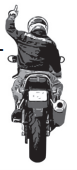
When riding in a group, what does it mean when the lead rider raises their left arm and extends their index finger, as shown in the image?
Q.5.
If operating a three-wheeled motorcycle or riding with a sidecar, do not ride too far to the right of your lane because:
Q.6.
When riding with a passenger, you should do all of the following, except:
Q.7.
Before changing lanes, motorcycle riders should turn their heads to look over their shoulders because:
Q.8.
If in a no passing zone:
Q.9.
Before mounting a motorcycle, you should check all of the following, except:
Q.10.
One way to tell if your rear tire has gone flat while riding is if:
Q.11.
The best way to stop quickly is to:
Q.12.
Which of the following is not a benefit of riding in a close group?
Q.13.
To get the best possible protection, wear a helmet that:
Q.14.
During the day, you should:
Q.15.
Which portion of the lane should be avoided?
Q.16.
When stopping behind a vehicle, you should:
Q.17.
When riding on a slippery surface, you should:
Q.18.
Maximum front-line braking is accomplished by:
Q.19.
Which types of brakes do most motorcycles have?
Q.20.
If you accidentally lock your rear wheel while braking on a good traction surface, you should:
Q.21.
If you think stopping your motorcycle will take longer than usual, you should:
Q.22.
Your lane position should:
Q.23.
Your motorcycle’s brake light is:
Q.24.
Which of the following does not offer protection to a motorcycle rider?
Q.25.
A way to lower the risk of being involved in a crash is to: