Q.1.
When may you not need to increase your following distance?
Q.2.
Generally, the body eliminates how many alcoholic drinks per hour?
Q.3.
The center portion of a lane:
Q.4.
Most crashes occur during the day. To lessen the chance of being involved in a crash, you should:
Q.5.
When riding downhill on a motorcycle with a sidecar:
Q.6.
When braking on a slippery surface, you should:
Q.7.
As you slow or stop, you should:
Q.8.
What does this hand signal mean?

Q.9.
If you are riding behind a car, you should:
Q.10.
The Motorcycle Safety Foundation recommends a SEE strategy to make safe judgments while riding. What does "SEE" stand for?
Q.11.
A face shield:
Q.12.
To effectively provide protection for a motorcycle rider, pants should:
Q.13.
To receive maximum protection, wear a helmet that is certified by the:
Q.14.
If you must brake and swerve to avoid a hazard, you should:
Q.15.
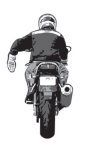
In the context of group riding, what does the hand signal pictured mean?
Q.16.
If you must stop quickly in a curve, you should:
Q.17.
When choosing a lane position, you should consider:
Q.18.
Taking a turn too fast:
Q.19.
You should do all of the following to lesson your chances of being in a crash, except:
Q.20.
Impairment from drinking alcohol occurs:
Q.21.
If you wait one hour to ride after having one alcoholic drink:
Q.22.
When riding a motorcycle, you should:
Q.23.
If another driver is following you too closely, it is best to:
Q.24.
Which of the following is a poor reason to sound your horn?
Q.25.
To lessen your chances of being involved in a crash, you should: