Q.1.
To receive maximum protection, wear a helmet that is certified by the:
Q.2.
When riding at night, you should travel:
Q.3.
When braking, you should:
Q.4.
A larger cushion of space may not be necessary if:
Q.5.
If you are riding when it starts to rain, it is a good idea to:
Q.6.
When riding a motorcycle, a jacket should be worn:
Q.7.
If you find your motorcycle being chased by a dog, you should:
Q.8.
Signals on a motorcycle:
Q.9.
When checking tire pressure:
Q.10.
When riding in traffic, it is important to remember that motorcycles:
Q.11.
As you slow or stop, you should:
Q.12.
During the day, your headlight should:
Q.13.
If your motorcycle begins to weave while you are riding over rain grooves or bridge gratings, you should:
Q.14.
When riding at night, a motorcyclist should maintain a minimum following distance of:
Q.15.
When entering a turn, a rider should:
Q.16.
When being passed from behind, you should:
Q.17.
To provide the best protection to the wearer, boots or shoes should:
Q.18.
Which of the following does not offer protection to a motorcycle rider?
Q.19.
When riding near stopped or slow-moving cars, a motorcyclist should:
Q.20.
When may you not need to increase your following distance?
Q.21.
In the context of group riding, what does the hand signal pictured mean?
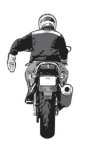
Q.22.
When loading cargo onto a motorcycle, you should:
Q.23.
A properly-fitted motorcycle:
Q.24.
When you are being passed by another vehicle, which part of the lane should you ride in?
Q.25.
When planning a long group ride, which of the following ideas should not be implemented?
Q.26.
To lessen your chances of being involved in an accident, you should:
Q.27.
If you are hit by a wind blast caused by a passing vehicle, you will have the most room for error if you are riding:
Q.28.
Riding on the far side of a lane when following another vehicle:
Q.29.
At a minimum, how often should a motorcycle's hydraulic fluid be checked?
Q.30.
You should completely check your motorcycle:
Q.31.
Engine braking:
Q.32.
Riding directly alongside another vehicle:
Q.33.
When downshifting, you should:
Q.34.
The proper clothing for riding a motorcycle should:
Q.35.
In general, the body gets rid of almost ______ per hour.
Q.36.
When using a motorcycle with which you are unfamiliar, you should:
Q.37.
If you must brake and swerve to avoid a hazard, you should:
Q.38.
When riding on a slippery surface, you should:
Q.39.
Impairment from alcohol:
Q.40.
Reflective clothing should:
Q.41.
Which of the following is not a benefit of riding in a close group?
Q.42.
Taking a turn too fast:
Q.43.
What can you do to increase your chances of being seen at an intersection?
Q.44.
A pre-ride inspection usually takes:
Q.45.
When riding with a heavy load, you will want to adjust the:
Q.46.
To help provide space for drivers attempting to merge into your lane from an entrance ramp, you should:
Q.47.
If a tire goes flat while you are riding and you must stop, you should:
Q.48.
When riding behind a car, you should ride:
Q.49.
When riding at night, you should:
Q.50.
If you are using an unfamiliar motorcycle, what should you do before riding?