Q.1.
What should you do if your vehicle’s right wheels leave the pavement?
Q.2.
You should be cautious when passing a bicycle because:
Q.3.
A “No standing” sign at a certain location means:
Q.4.
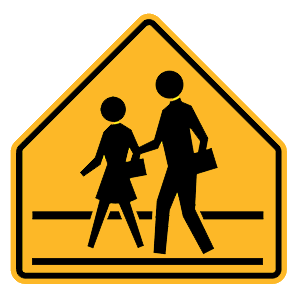
This sign means:
Q.5.
What is the appropriate action to take when approaching a railroad crossing that does not have signals to direct traffic?
Q.6.
When approaching a traffic signal displaying a flashing yellow arrow, drivers:
Q.7.
You may drive around or under a gate that is being lowered or raised at a railroad crossing:
Q.8.
While driving at night, a vehicle coming toward you has its high beams on, making it hard for you to see the road ahead. You should:
Q.9.
What are the consequences of driving under the influence of alcohol or other drugs?
Q.10.
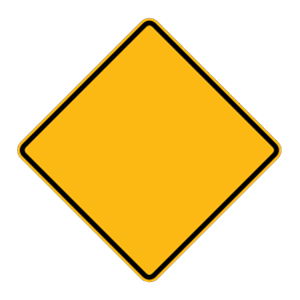
A diamond-shaped sign means:
Q.11.
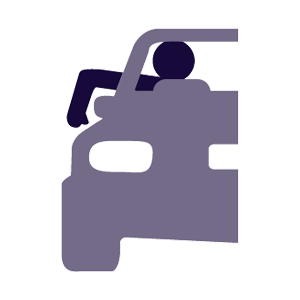
The driver's left arm and hand are extended downward. This hand signal means that the driver plans to:
Q.12.
Seat belts are most effective when they are worn by:
Q.13.
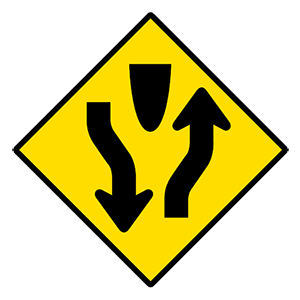
This road sign means:
Q.14.
If you’re going to turn left onto a one-way street, you should complete the turn into:
Q.15.
When the road is marked with a solid yellow line and a broken yellow line, with the broken line next to your lane, you may pass:
Q.16.
What might happen when alcohol is combined with another drug?
Q.17.
In general, you should pass vehicles that are traveling in the same direction as you:
Q.18.
Fines in a construction zone are:
Q.19.
Before turning, you should:
Q.20.
What happens if you refuse to take a chemical test?