MCQGeeks
CBSE
JEE
NTSE
NEET
English
UK Quiz
Quiz
Driving Test
Practice
Games
Driving Test
New York
New York Car Driving Permit Test-2
Answers
Q.1.
A fully loaded tractor-trailer traveling atmph could take up to ____ to come to a complete stop.
50 feet
125 feet
400 feet
750 feet
Q.2.
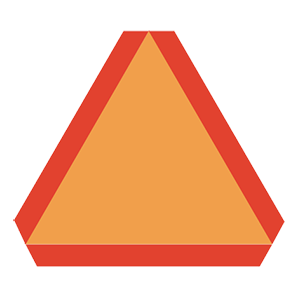
This symbol is used for:
Dangerous intersections.
Slow-moving vehicles.
Yield signs.
Q.3.
Allow extra space in front of your vehicle when following a:
Station wagon.
Passenger vehicle.
Motorcycle.
Q.4.
When entering the interstate, check for a gap in traffic in the nearest lane, adjust your speed to match traffic, signal, and:
Expect traffic to allow you to proceed into the lane, since you have the right-of-way.
Merge carefully into the gap.
Wait for the lane to clear before merging.
Q.5.
The car behind you begins to pass you. You should:
Maintain your speed so traffic will flow smoothly.
Pull to the right and stop so it can pass.
Slow down slightly and stay in your lane.
Blow your horn to signal that it to pass.
Q.6.
People driving under the influence of alcohol are:
Not a problem in New York State.
Every driver's problem.
A police enforcement problem only.
Only a problem to those who drink.
Q.7.
When two vehicles enter an intersection from different highways at the same time, which vehicle must yield the right-of-way?
Either one
The vehicle on the left
The vehicle on the right
Neither
Q.8.
Sudden wind gusts on highways:
Generally affect only the movement of large vehicles.
Only cause visibility problems.
Can cause problems for all vehicles.
Q.9.
Which of the following are used on some highways to direct drivers into the proper lanes for turning?
Flashing red lights
Flashing yellow lights
White lines on the side of the road
White arrows in the middle of the lanes
Q.10.
If you come to a railroad crossing with lowered gates and flashing warning lights, you should:
Drive around the crossing gates if you can't see a train.
Come to a complete stop well behind the gates, wait for the tracks to clear, and proceed once the gates are lifted.
Slow down and drive around the gates.
Q.11.
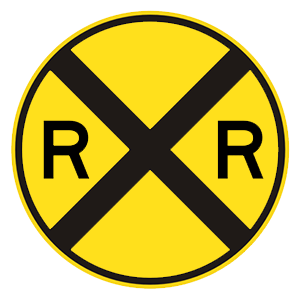
When you see this sign, you:
Are approaching a railroad crossing and should prepare to stop.
Will always stop at the upcoming railroad crossing.
Should stop and wait for a signal before crossing the railroad tracks.
Q.12.
Which of these statements is true about large trucks?
They take longer to stop than passenger vehicles.
They all have air brakes that allow them to stop quickly.
They are more maneuverable than passenger vehicles.
Q.13.
An inattentive driver is a driver who:
Stares at objects off the roadway or daydreams while driving.
Maintains eye contact during a conversation with a passenger while driving.
Only watches the vehicle ahead of their vehicle.
All of the above.
Q.14.
You may cross a single solid white line on the highway:
Whenever you want to.
If traffic conditions require you to do so.
Only to turn into a driveway.
Only to make a U-turn.
Q.15.
You are coming to an intersection and have a green light. Pedestrians are crossing against the red. You should:
Honk your horn.
Speed up and pass in front of the pedestrians.
Stop to let the pedestrians cross safely.
Drive close to the pedestrians and frighten them so they’ll think twice before crossing against a red light.
Q.16.
Which of the following does alcohol affect?
Recovery from headlight glare
Reaction time
Judgement of distances
All of these choices
Q.17.
A chemical test is used to measure:
Reaction time.
Blood alcohol content.
Vision.
Driving ability.
Q.18.
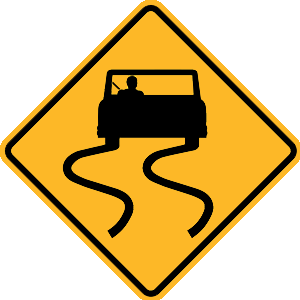
This sign means:
Don't drink if you are going to drive.
Slippery when wet.
Road curves ahead.
You are approaching a hill.
Q.19.
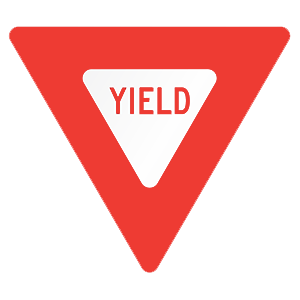
This sign means:
Slow down if an emergency vehicle is approaching.
Look both ways as you cross the intersection.
Always come to a full stop at the intersection.
Slow down and be prepared to stop if necessary.
Q.20.
Continuous hard braking on ice and snow often:
Helps you stop faster.
Locks the front wheels of a vehicle, causing a loss of steering.
Keeps the brakes from freezing.
Support mcqgeeks.com by disabling your adblocker.
×
Please disable the adBlock and continue.
Thank you.
Reload page