Q.1.
Which types of brakes do most motorcycles have?
Q.2.
Because of their small size, motorcycles seem to be:
Q.3.
A motorcycle operator can improve their visibility by:
Q.4.
When preparing to pass a vehicle on the left, it is important to ride on the left side of your lane because:
Q.5.
When riding at night, you should do all of the following, except:
Q.6.
In the context of group riding, what does the hand signal pictured mean?
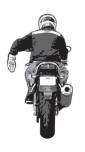
Q.7.
When changing lanes, riders should:
Q.8.
If your motorcycle begins to weave while you are riding over rain grooves or bridge gratings, you should:
Q.9.
Many over-the-counter drugs:
Q.10.
When adjusting your mirrors, you should focus on:
Q.11.
When preparing to pass another vehicle on the left, you should:
Q.12.
Your lane position should help you:
Q.13.
The front brake:
Q.14.
A person with a minimum blood alcohol concentration (BAC) of ______ is considered legally intoxicated.
Q.15.
Compared to riding during the day, a motorcycle operator who is riding at night should do all of the following, except:
Q.16.
Reflective material on your helmet:
Q.17.
On a motorcycle, a horn:
Q.18.
In New Hampshire, a person who is age 21 or older with a minimum blood alcohol concentration (BAC) of ______ is considered legally intoxicated.
Q.19.
Your lane position should:
Q.20.
When selecting footwear, you should choose:
Q.21.
Slippery surfaces can make it difficult to control a motorcycle. Which of the following would be considered a slippery surface?
Q.22.
Increase your following distance if:
Q.23.
A motorcycle “fits” you if:
Q.24.
If the road is wet, you should avoid:
Q.25.
Motorists entering a highway from an entrance ramp to your right may not see your motorcycle. To help the entering drivers, you should: