Q.1.
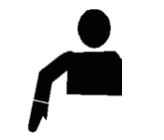
What does this hand signal mean?
Q.2.
A passenger should never:
Q.3.
You should use a larger cushion of space:
Q.4.
Smoothly downshifting on motorcycles:
Q.5.
As a motorcycle operator, you can help others see you by:
Q.6.
You should check your tires for all of the following, except:
Q.7.
Riding alongside a car:
Q.8.
____ can remove alcohol and its effects from your body.
Q.9.
The center portion of a traffic lane is where:
Q.10.
A passenger must wear a helmet if:
Q.11.
The gear shift lever is located:
Q.12.
Riding at night is usually:
Q.13.
When stopping:
Q.14.
When riding at night, you should do all of the following, except:
Q.15.
Taking corners too fast:
Q.16.
When riding with a passenger, you should:
Q.17.
Before changing lanes, motorcycle riders should turn their heads to look over their shoulders because:
Q.18.
The primary source of information about your motorcycle should come from:
Q.19.
When riding on a slippery surface, you should:
Q.20.
Goggles will:
Q.21.
If your motorcycle has convex mirrors and you are not familiar with this type of mirror, you should practice using the mirrors because:
Q.22.
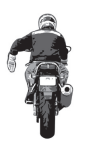
In the context of group riding, what does the hand signal pictured mean?
Q.23.
When riding with a passenger, the operator should:
Q.24.
When riding, you should:
Q.25.
When being passed, all of the following are potential hazards, except: