Q.1.
To swerve correctly:
Q.2.
When looking through a turn to see where you are going, you should:
Q.3.
A helmet will not provide the best possible protection:
Q.4.
Making eye contact with another driver:
Q.5.
Most crashes occur during the day. To lessen the chance of being involved in a crash, you should:
Q.6.
To get the best protection, be sure that your helmet:
Q.7.
During acceleration, a sidecar attached to a motorcycle will:
Q.8.
When downshifting, you should:
Q.9.
An advantage to keeping the size of a group of riders small is:
Q.10.
Where is the engine cut-off switch usually located?
Q.11.
A motorcyclist should:
Q.12.
Use your mirrors when stopped at an intersection:
Q.13.
When preparing to pass another vehicle on the left, which portion of the lane should you ride in?
Q.14.
The center portion of a lane often contains an oily strip. This strip:
Q.15.
Impairment from alcohol:
Q.16.
The best source of information for your motorcycle is:
Q.17.
It is important to flash your brake light when:
Q.18.
When riding in traffic, it is important to remember that motorcycles:
Q.19.
The Motorcycle Safety Foundation recommends a SEE strategy to make safe judgments while riding. What does "SEE" stand for?
Q.20.
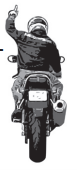
When riding in a group, what does it mean when the lead rider raises their left arm and extends their index finger, as shown in the image?
Q.21.
What does this hand signal mean?

Q.22.
Most motorcycles have rounded, or convex, mirrors. These mirrors:
Q.23.
How can you regain control if your rear tire locks up?
Q.24.
When entering a turn, a rider should:
Q.25.
If you lock the rear tire on a good traction surface, you should: