MCQGeeks
CBSE
JEE
NTSE
NEET
English
UK Quiz
Quiz
Driving Test
Practice
Games
Driving Test
Ohio
Ohio Car Driving Permit Test-12
Answers
Q.1.
This road sign means:
Keep right.
Keep left.
Pass with caution.
No passing.
Q.2.
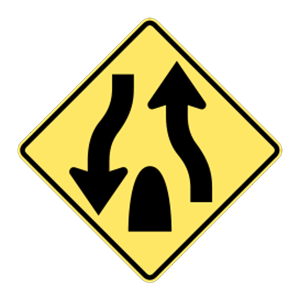
This sign means:
Curves ahead.
Divided highway starts.
Divided highway ends.
Bumps in the road.
Q.3.
Traffic signals sometimes display arrows to control turns from specific lanes. A solid red arrow:
Is never used as a traffic signal.
Has the same meaning as a circular red traffic light.
Means that drivers may turn in the direction indicated by the arrow.
Means that the traffic the arrow is pointing toward must stop.
Q.4.
You may not pass other vehicles within ____ of a railroad crossing.
100 feet
200 feet
250 feet
300 feet
Q.5.
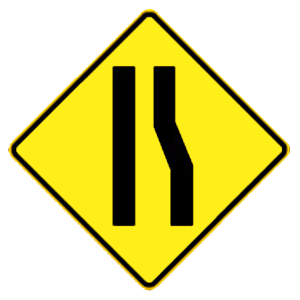
This sign means:
Narrow bridge ahead.
Lane ends or roadway narrows ahead.
Industrial area.
Freeway on-ramp ahead.
Q.6.
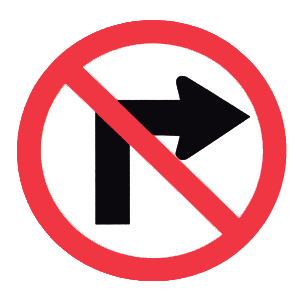
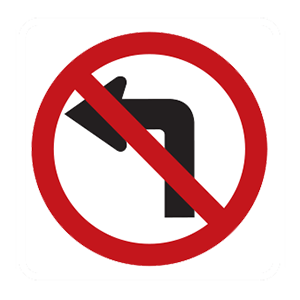
This sign means:
No U-turn.
No left turn.
No right turn.
No turning.
Q.7.
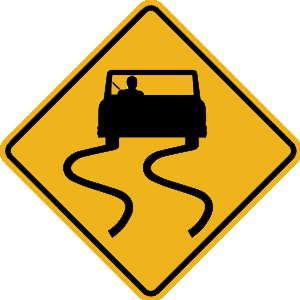
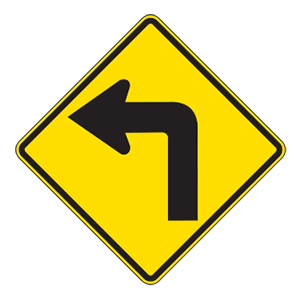
This sign means:
A left curve is ahead.
A series of curves is ahead.
An S-curve is ahead.
The road will be slippery when wet.
Q.8.
Two solid white lines painted across a traffic lane show the boundaries of a crosswalk. As a driver, you should know that:
Motor vehicles have the right-of-way over pedestrians in crosswalks.
When pedestrians are in crosswalks, they should be given the right-of-way.
No one has the right-of-way in a crosswalk.
Pedestrians are responsible to stay out of the way of all traffic.
Q.9.
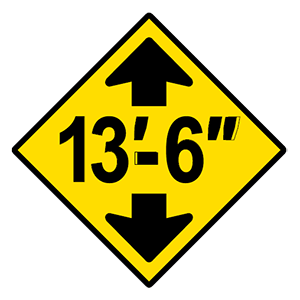
This road sign means:
Steep grade ahead.
Pedestrian crossing ahead.
Low ground railroad crossing.
Low clearance.
Q.10.
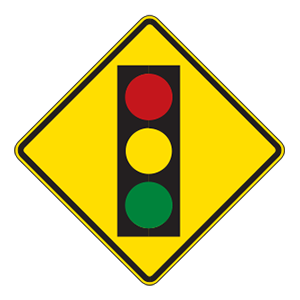
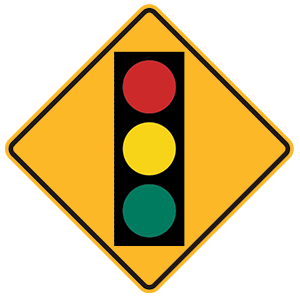
This sign means:
Traffic signal.
Fire station.
T intersection.
Left turn signal.
Q.11.
At an intersection with a yield sign, you should:
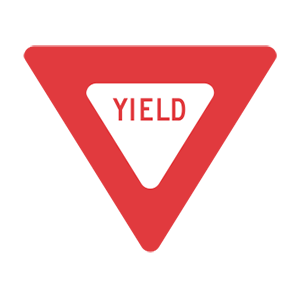
Always stop before entering the intersection.
Yield just to the traffic on the right.
Yield just to the traffic on the left.
Slow down and yield the right-of-way to other traffic.
Q.12.
Certain highway signs contain information about hazardous conditions. Such signs are known as:
Regulatory signs.
Warning signs.
Information signs.
Guide signs.
Q.13.
During normal weather and traffic conditions, keep a minimum following distance of:
One second.
Two seconds.
Three seconds.
Four seconds.
Q.14.
From the center lane, which maneuver(s) can you perform?
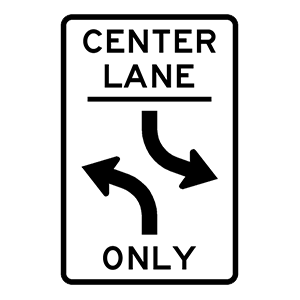
You may make left turns.
You may make U-turns.
You may pass slow-moving traffic.
All of the above.
Q.15.
As you drive, you're required to stop your vehicle:
At an intersection with a stop sign.
Where there is a red light.
When a traffic officer orders you to stop.
All of the above.
Q.16.
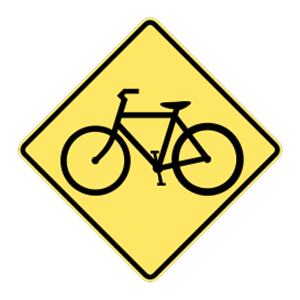
This sign means:
Watch for bicycles.
Bicycles not allowed.
Bicycle repair shop ahead.
Bicycles have the right-of-way.
Q.17.
Alcohol causes:
Loss of concentration.
Poor coordination.
Slower judgment.
All of the above.
Q.18.
In bad weather, increase your following distance to:
Four or five seconds.
Three seconds.
Two seconds.
One second.
Q.19.
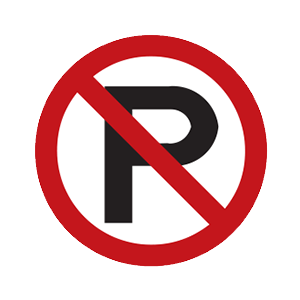
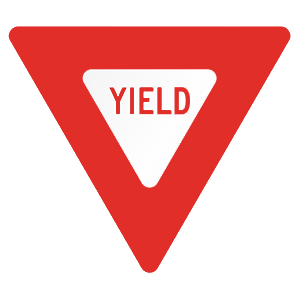
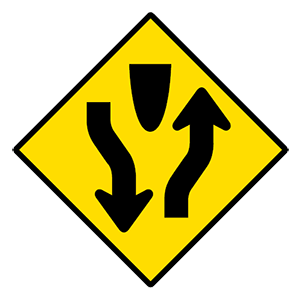
This sign means:
No parking.
Divided highway ahead.
Left turn signal.
Yield.
Q.20.
If you are approaching a school bus that has stopped to drop off children on a four-lane highway, you must come to a complete stop only if:
You are traveling in the same direction as the bus.
You can see children trying to cross the street.
You are driving on the opposite side of the highway.
The bus driver waves you ahead.
Q.21.
If traffic signals at an intersection are not functioning due to a power outage:
Park your vehicle as far off the road as possible and wait for power to be restored.
Use hand signals to indicate your intentions to other drivers.
Turn on your hazard lights and proceed through the intersection without stopping.
Treat the intersection as a four-way stop.
Q.22.
If you stop at a railroad crossing with more than one track:
Wait to proceed until you have a clear view of all tracks.
Stop on the first railroad track and watch for another train.
Go through as soon as the train passes.
Go through when one of the tracks is free.
Q.23.
This sign means:
Continue at your current speed.
You must stop ahead.
Speeding is not allowed.
There is a traffic signal ahead.
Q.24.
In general, when driving, you should drive:
Faster than the flow of traffic.
On the right half of the road.
Slower than the flow of traffic.
On the left half of the road.
Q.25.
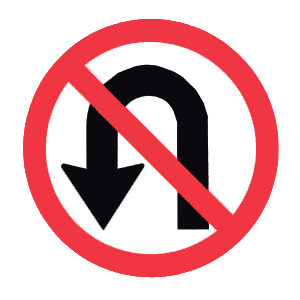
This sign means:
No U-turn.
No turning.
No left turn.
No right turn.
Q.26.
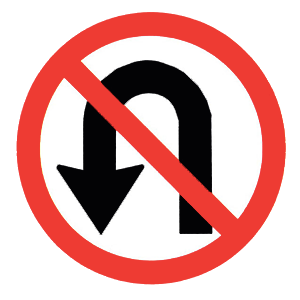
This sign means:
No left turn.
No stopping.
No U-turn.
Detour ahead.
Q.27.
Where is parking prohibited?
In a tunnel.
On a highway bridge.
On a crosswalk.
All of the above.
Q.28.
This sign means:
No left turn.
Flagger ahead.
Two-way left turn.
Turn right or go through.
Q.29.
This road sign means:
You are about to enter a one-way street from the wrong direction.
U-turns are prohibited.
You may proceed if the way is clear.
Come to a complete stop before proceeding.
Q.30.
If you are driving so slowly that traffic is backing up behind you, you should:
Decrease your speed.
Pull off the right side of the road and let traffic pass.
Not let the other cars pass your vehicle.
Use your four-way flashers.
Q.31.
The driver's left arm and hand are extended downward. This hand signal means that the driver plans to:
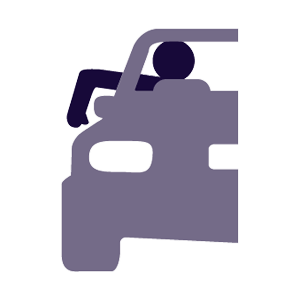
Turn left.
Turn right.
Stop.
Start up.
Q.32.
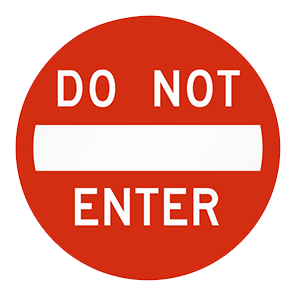
This is a ____ sign.
Stop
Wrong way
Yield
Do not enter
Q.33.
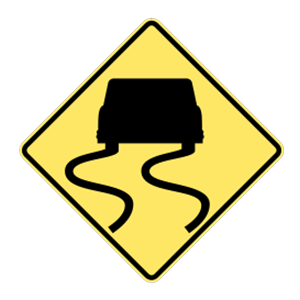
This sign means:
Watch for drunk drivers.
Curves ahead.
Slippery when wet.
Apply your brakes quickly.
Q.34.
Unless otherwise posted, the speed limit on freeways with paved shoulders is:
20 mph.
30 mph.
45 mph.
65 mph.
Q.35.
Stress can affect your driving by:
Lowing your ability to focus on driving.
Decreasing your chances of an accident.
Causing you to fall asleep at the wheel.
Making you more aware of others around you.
Q.36.
This sign means:
Sharp turn ahead, slow down.
Work crew ahead.
Side road.
Playground ahead.
Q.37.
You should be cautious when passing a bicycle because:
You are moving faster than the bicycle.
The bicycle always has the right-of-way.
Oncoming traffic may not see you pull out to pass the bicycle.
The cyclist may have to swerve into traffic to avoid an object on the road.
Q.38.
To help relieve fatigue on a long trip, it is a good idea to:
Stop and rest every two hours.
Do arm exercises every hour.
Drive with one eye open at a time.
Change feet on the gas pedal.
Q.39.
A driver license applicant under the age of ____ must have permission from their parent or legal guardian to apply for a driver license.
19
20
21
18
Q.40.
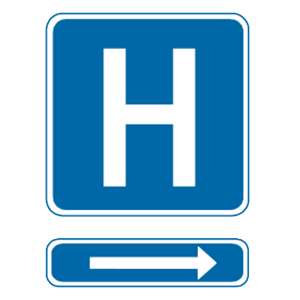
This sign means:
Highway changes ahead and to the right.
Hiking trails ahead and to the right.
Hotel ahead and to the right.
Hospital ahead and to the right.
Support mcqgeeks.com by disabling your adblocker.
×
Please disable the adBlock and continue.
Thank you.
Reload page