MCQGeeks
CBSE
JEE
NTSE
NEET
English
UK Quiz
Quiz
Driving Test
Practice
Games
Driving Test
Ohio
Ohio Car Driving Permit Test-3
Answers
Q.1.
This sign means:
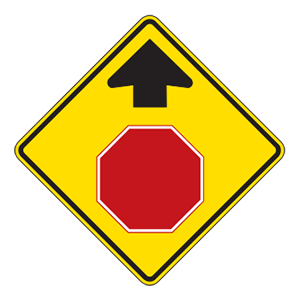
Stop ahead.
Buggy warning.
Limited parking.
Do not block intersection.
Q.2.
This sign means:
Slow down if an emergency vehicle is approaching.
Look both ways as you cross the intersection.
Always come to a full stop at the intersection.
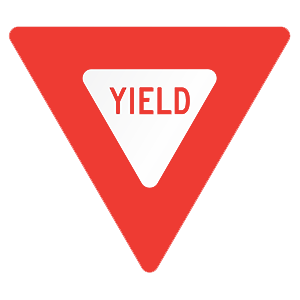
Slow down and be prepared to stop if necessary.
Q.3.
This road sign means:
You are about to enter a one-way street the wrong way.
School crossing ahead.
Do not drive in this lane.
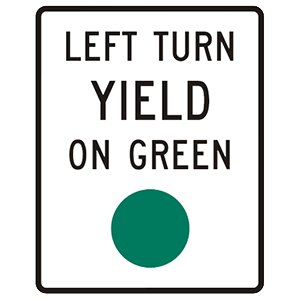
Traffic turning left on the green light must yield to oncoming traffic.
Q.4.
At a school crossing sign, you should:
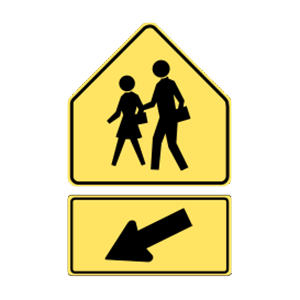
Always stop, whether there’s a stop sign or not.
Watch for children and be ready to stop.
Always sound your horn when you see children.
Be ready to help children crossing the street.
Q.5.
When approaching a traffic signal displaying a flashing yellow arrow, drivers:
Should merge into a lane in the direction of the arrow.
Should come to a complete stop.
May turn left after yielding to oncoming traffic and pedestrians.
Have the right-of-way and may expect oncoming traffic to stop for them.
Q.6.
You may drive around or under a gate that is being lowered or raised at a railroad crossing:
As long as an approaching train is not too close.
If your vehicle can do so without damaging the gate.
If you first look carefully in both directions.
Under no circumstances.
Q.7.
This sign means:
Trucks under 18,000 lbs. allowed.
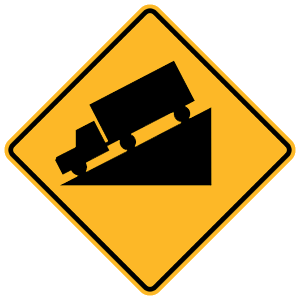
Hill ahead.
Truck stop ahead.
No trucks allowed.
Q.8.
You should signal to turn ____ before beginning your turn.
20 feet
50 feet
100 feet
300 feet
Q.9.
A diamond-shaped sign is a:
Road hazard sign.
Interstate route sign.
School crossing sign.
Speed limit sign.
Q.10.
This sign means:
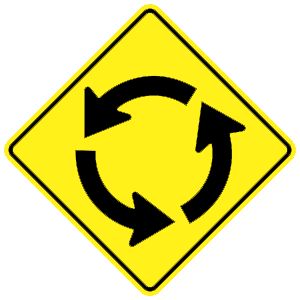
Roundabout ahead.
Lane ends, merge left.
Turn around.
Curve ahead.
Q.11.
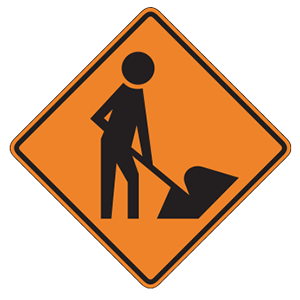
This sign means that:
A community service group is picking up trash along the highway ahead.
Workers are on or very close to the road in the work zone ahead.
Children are at play ahead.
There is a pedestrian crosswalk ahead.
Q.12.
A single broken yellow line down the center of a two-lane road indicates:
Lanes are moving in opposite directions and drivers are not permitted to pass.
Lanes are moving in opposite directions and drivers are permitted to pass when it is safe to do so.
Lanes are moving in the same direction and drivers are not permitted to pass.
Lanes are moving in the same direction and drivers are permitted to pass when it is safe to do so.
Q.13.
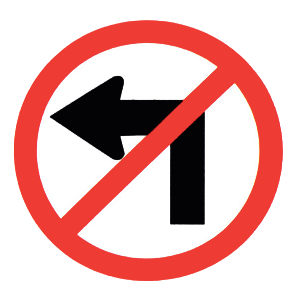
This sign means:
No left turn.
Flagger ahead.
Two-way left turn.
Turn right or go through.
Q.14.
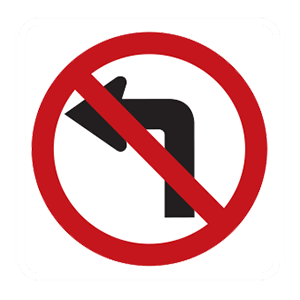
This sign means:
All traffic must turn left.
No left turn.
No U-turn.
Truck route to the left.
Q.15.
The most common color of warning signs is:
Red.
Yellow.
Green.
Blue.
Q.16.
If you are driving on a one-way street and an emergency vehicle using its flashing lights approaches your vehicle, you must:
Drive with your flashers turned on.
Drive toward the nearest roadside and stop.
Speed up and take the nearest exit.
Slow down until the vehicle passes you.
Q.17.
When two vehicles arrive to an intersection at the same time, which one has the right-of-way when no signs or signals indicate rules?
The car approaching from the right has the right-of-way.
The car approaching from the left has the right-of-way.
The car in which the driver sounds his horn first has the right-of-way.
The car that is traveling the fastest has the right-of-way.
Q.18.
Is it legal cross a double solid yellow centerline to pass?
No.
Yes.
If there is no oncoming traffic.
If the vehicle ahead of you is driving under the speed limit.
Q.19.
A red flashing traffic light has the same meaning as a:
Solid red light.
Stop sign.
Yield sign.
Caution sign.
Q.20.
What does a flashing yellow traffic light mean?
Merging traffic
Proceed with caution.
Pedestrian crossing
Come to a full stop.
Q.21.
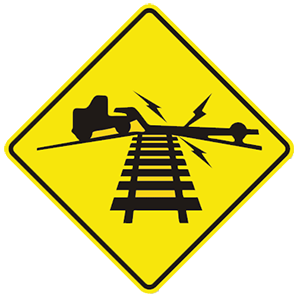
This road sign means:
No passing zone.
Winding road.
Pedestrian crossing.
Low ground railroad crossing.
Q.22.
When may you pass on the right shoulder of the road?
When the car in front of you is turning.
When the car in front of you is driving too slowly.
When you don't see any pedestrians.
Never.
Q.23.
A speed limit is:
The maximum or minimum legal speed you can travel on a road under dangerous conditions.
The maximum or minimum legal speed you can travel on a road under ideal conditions.
The suggested speed to travel on a road under ideal conditions.
None of the above.
Q.24.
This sign means:
All traffic must turn.
Turn right at the intersection.
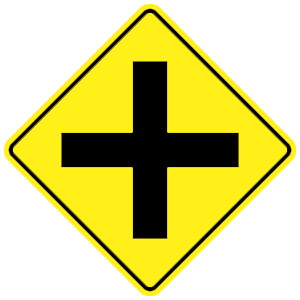
Parking area ahead.
Crossroad ahead. Watch for traffic.
Q.25.
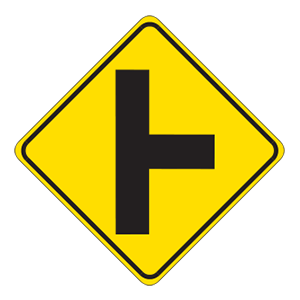
This sign means:
Side road.
Low clearance.
Merging traffic.
Prepare to stop.
Q.26.
When meeting a car with blinding headlights, you should:
Use your bright lights until the other vehicle dims theirs.
Flash your lights on and off to warn the other driver.
Dim your lights and then speed up to pass quickly.
Look toward the right side of the road.
Q.27.
This sign is used to warn drivers about:
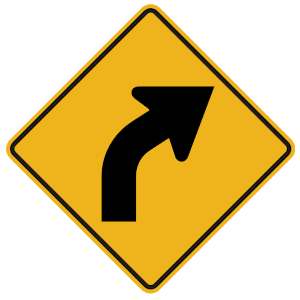
Upcoming intersections.
Road construction.
An upcoming curve in the road.
Changes in traffic lanes.
Q.28.
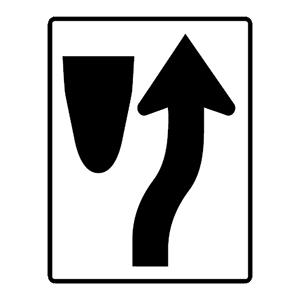
This road sign means:
Side road.
Keep to the side indicated by the arrow.
You may drive in the left lane.
You have the right-of-way.
Q.29.
What does a single dashed yellow line separating traffic mean?
Drivers may pass if it is safe to do so.
Both lanes travel in the same direction.
Drivers may not pass.
Drivers may pass, even if it could be dangerous.
Q.30.
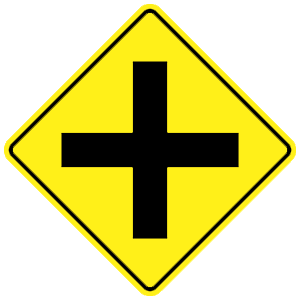
This road sign means:
Increase your speed.
Railroad crossing ahead.
Intersection ahead.
Four-way stop ahead.
Q.31.
What are the colors of warning signs indicating upcoming hazards?
Black letters or symbols on a white background
Black letters or symbols on a yellow background
White letters or symbols on a blue background
White letters or symbols on a green background
Q.32.
This sign means:
No right turn.
Keep right.
No U-turn.
Left lane must turn left.
Q.33.
You need to use extra caution when driving near a pedestrian using a white cane because:
He or she is deaf.
He or she is a police officer.
He or she is blind.
He or she has poor balance.
Q.34.
When a stop is required at an intersection and no markings appear to indicate a stop line or crosswalk, a driver:
Is not required to stop.
Is required to slow down to make sure crossing traffic is clear.
Should stop only at a place where they can see at least 200 feet on either side, even if they have to enter the intersecting roadway.
Should stop where they have a clear view of approaching traffic before they enter the intersecting roadway.
Q.35.
The sign with this shape and color is a ____ sign.
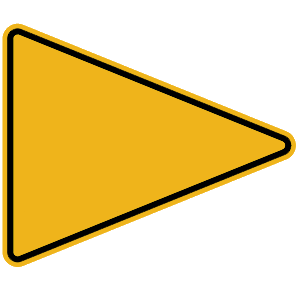
No passing zone
Wrong way
Railroad crossing
Stop
Q.36.
When traveling on a multilane roadway with traffic moving in opposite directions, how should drivers use the shared center lane?
To pass other vehicles.
To slow down or stop before turning left.
As a through-traffic lane when traffic is moving too slowly.
As a parking lane.
Q.37.
If you miss your exit on an interstate expressway:
Stop and make a U-turn.
Get off at the next exit and come back to the exit you missed.
Roll down your window and ask the driver next to you for help.
Back up on the highway.
Q.38.
Unless otherwise posted, the speed limit on freeways with paved shoulders is:
20 mph.
30 mph.
45 mph.
65 mph.
Q.39.
Passing is prohibited:
On hills and curves.
At intersections.
At railroad crossings.
All of the above.
Q.40.
This road sign means:
Sharp turn to the right.
Double curve.
Winding road.
Pavement ends.
Support mcqgeeks.com by disabling your adblocker.
×
Please disable the adBlock and continue.
Thank you.
Reload page