MCQGeeks
CBSE
JEE
NTSE
NEET
English
UK Quiz
Quiz
Driving Test
Practice
Games
Driving Test
Ohio
Ohio Car Driving Permit Test-8
Answers
Q.1.
You may drive across a dashed white line:
At any time.
Only during daylight hours.
When it is safe to change lanes.
Only when passing a motorcycle.
Q.2.
This road sign means:
No right turn.
Curve.
Turn right or left.
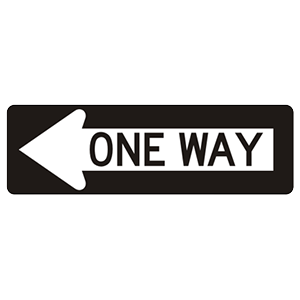
Traffic flows only in the direction of the arrow.
Q.3.
Many crashes are caused by:
Drivers traveling too fast for conditions.
Drivers consistently checking their mirrors and blind spots.
Drivers yielding the right-of-way.
Drivers maintaining a four-second following distance.
Q.4.
The speed limit in school zones is:
20 mph.
30 mph.
45 mph.
50 mph.
Q.5.
This road sign means:
You are about to enter a one-way street the wrong way.
School crossing ahead.
Do not drive in this lane.
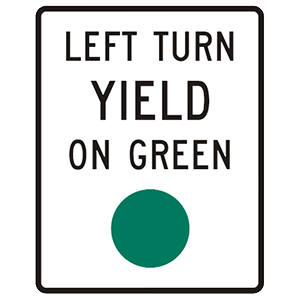
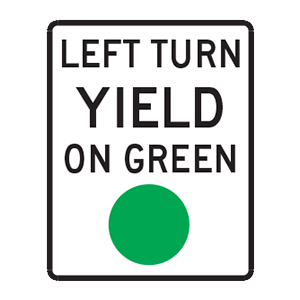
Traffic turning left on the green light must yield to oncoming traffic.
Q.6.
On slippery roads, you should:
Slow down.
Drive more quickly.
Drive the speed limit, with caution.
Not drive more quickly than 20 mph.
Q.7.
This road sign means:
Turn right after making a complete stop.
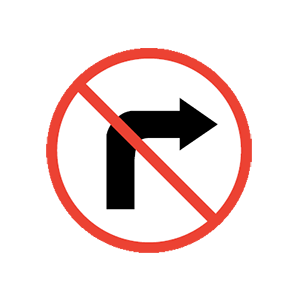
Right turns are not permitted.
Left turns are permitted.
None of the above.
Q.8.
This sign means:
Heavy traffic ahead.
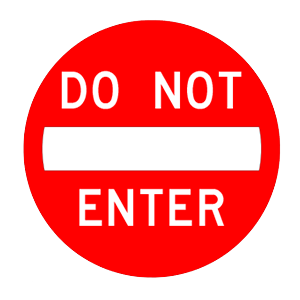
Do not enter.
Railroad crossing.
Yield.
Q.9.
Texting while driving is:
Always legal, but not recommended.
Illegal.
A safe activity.
Legal if the driver is using voice-to-text technology.
Q.10.
Look over your shoulder to check your blind spot when:
Pulling toward or away from a curb.
Turning left or right.
Changing lanes.
All of the above.
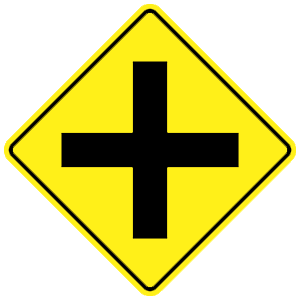
Q.11.
This road sign means:
Increase your speed.
Railroad crossing ahead.
Intersection ahead.
Four-way stop ahead.
Q.12.
This sign means:
Don't drink if you are going to drive.
Slippery when wet.
Road curves ahead.
You are approaching a hill.
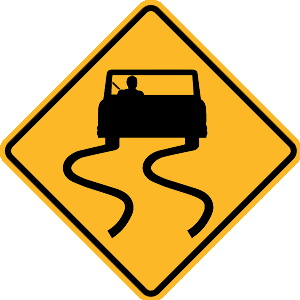
Q.13.
This sign tells you that:
No turns are allowed on this road.
The road narrows ahead.
There are a series of curves ahead.
The road may be slippery when wet.
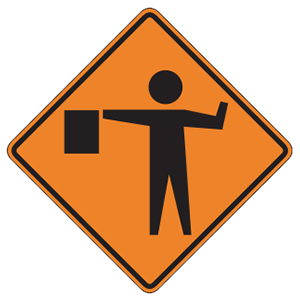
Q.14.
This sign means:
Pedestrians ahead.
End of construction zone.
School crossing ahead.
Flagger ahead.
Q.15.
You may not pass other vehicles within ____ of a bridge, viaduct, or tunnel.
200 feet
100 feet
500 feet
350 feet
Q.16.
What are the colors of warning signs indicating upcoming hazards?
Black letters or symbols on a white background
Black letters or symbols on a yellow background
White letters or symbols on a blue background
White letters or symbols on a green background
Q.17.
You should signal to turn ____ before beginning your turn.
20 feet
50 feet
100 feet
300 feet
Q.18.
Another driver is trying to pass your car. You should:
Pull off the road.
Signal to the other driver when it is safe for them to pass.
Check for oncoming traffic and adjust your speed to allow safe passing.
Speed up.
Q.19.
If you are following a school bus or tank truck, you should:
Pass them on the right.
Decrease your following distance.
Be prepared to stop at all railroad crossings.
Drive in their blind spots.
Q.20.
A “No stopping” sign means that, unless directed to do so by a police officer, you may stop only:
Long enough to unload packages.
To avoid conflict with other traffic.
To discharge passengers.
For less than five minutes.
Q.21.
When changing lanes, you can check your blind spots by:
Using the inside rearview mirror.
Using the outside rearview mirror.
Using both inside and outside rearview mirrors.
Turning your head and looking over your shoulder.
Q.22.
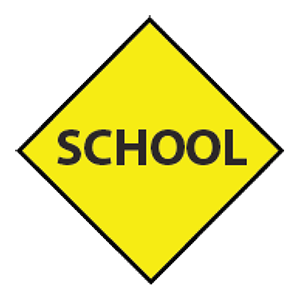
This sign means:
You must drive slowly and sound your horn.
A bus stop is ahead.
You are entering a school's parking lot.
A school zone is ahead.
Q.23.
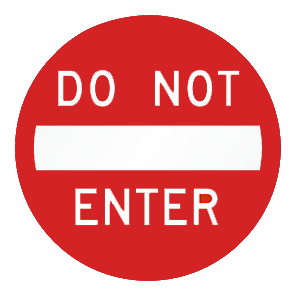
This sign means:
Stop.
No U-turn.
Yield.
Do not enter.
Q.24.
When the driver behind you wants to pass, you should:
Speed up.
Go the same speed.
Slow down to allow room in front of your vehicle for the other driver to complete the pass easily.
Change lanes.
Q.25.
What should you do if your vehicle’s right wheels leave the pavement?
Stop quickly.
Immediately pull all the way off of the road and get back on when it is safe.
Accelerate and steer back on the road quickly.
Take your foot off the accelerator, slow down, then ease back onto the road when it is safe to do so.
Q.26.
Before switching on the ignition, you should:
Be sure only backseat passengers have buckled their seat belts.
Be sure only adult passengers have buckled their seat belts.
Be sure only child passengers have buckled their seat belts.
Be sure all of the vehicle's occupants have buckled their seat belts.
Q.27.
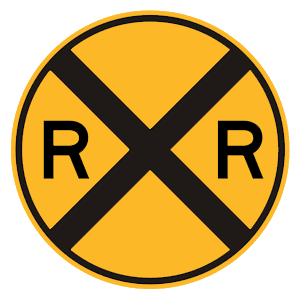
This sign is a warning that you are approaching:
An intersection.
A crosswalk.
A railroad crossing.
A blasting zone.
Q.28.
The amount of space you need to cross traffic depends on the:
Road conditions, weather conditions, and oncoming traffic.
Presence of a stop sign.
Use of your turn signals.
Cars behind you.
Q.29.
You may drink alcoholic beverages in a vehicle on a public highway:
As long as you aren't driving.
If you are riding in the back seat.
If you are riding in the back of a pick-up truck.
Under no circumstances.
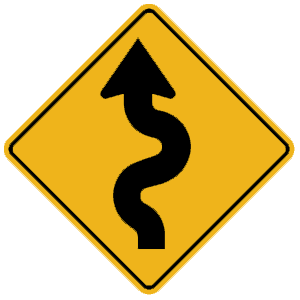
Q.30.
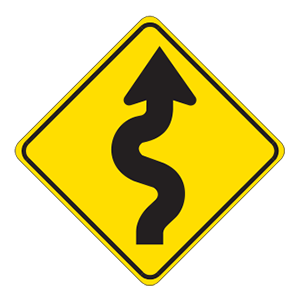
This sign means:
Winding road.
No parking.
Right lane closed.
Multiple turns.
Q.31.
When is street racing acceptable?
During the night.
During periods of low traffic.
In clear weather.
Never.
Q.32.
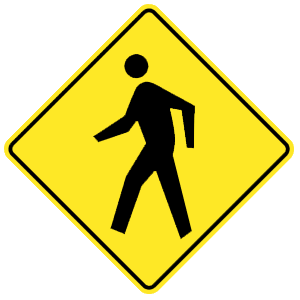
This road sign means:
School crossing.
Pedestrian crossing.
Jogging trail.
Busy sidewalk.
Q.33.
When driving near heavy trucks, other drivers and highway users must make allowances for:
The increased stopping distance required by large vehicles.
The decreased stopping distance required by large vehicles.
The decreased noise of larger vehicles.
The increased speed of larger vehicles.
Q.34.
A yellow and black diamond-shaped sign:
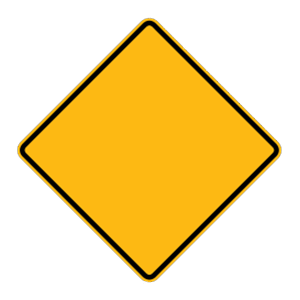
Warns you about conditions on or near the road.
Helps direct you to cities and towns ahead.
Tells you about traffic laws and regulations.
Tells you about road construction ahead.
Q.35.
When passing an emergency vehicle stopped on the side of the road, drivers should:
Increase their speed.
Vacate the lane closest to the emergency vehicle or slow down.
Ask the emergency worker if they need help.
Move to the lane closest to the stationary vehicle.
Q.36.
This sign means:
Left turn yield on green.
One-way.
Cattle crossing.
Two-way left turn.
Q.37.
Your ability to stop is affected by:
Signal lights.
Other cars on the road.
The time of day.
The condition of the road.
Q.38.
This road sign means:
Do not pass.
Do not enter.
No turn on red.
Keep right.
Q.39.
A “No standing” sign at a certain location means:
You may never stop your vehicle there.
You may park there if the driver remains in the vehicle.
You may stop temporarily only to pickup or discharge passengers.
You may stop to load or unload merchandise.
Q.40.
This sign means:
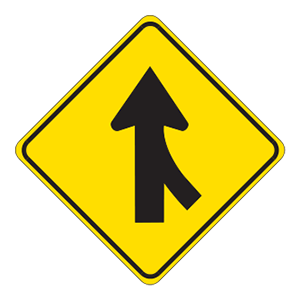
Merging traffic.
Multiple turns.
Lane shifting.
Do not block intersection.
Support mcqgeeks.com by disabling your adblocker.
×
Please disable the adBlock and continue.
Thank you.
Reload page